MENU
AT | EUR
-
-
-
- Pichia 2026
- Future Labs Live 2026
- BioProScale Sympposium 2026
- ASGCT 2026
- Eppendorf Automation Forum 2026
- ECB 2026
- WoTS 2026
- ELRIG Drug Discovery 2026
- 75th JAMT Congress & IFBLS2026
- JASIS2026
- GSCN 2026
- BPI EAST 2026
- Bioprocess Days 2026
- Bioprocess Day 2026, Texas, USA
- Bioprocess Day 2026, Philadelphia, USA
- Cell 2026
- FPP x CMS Amsterdam
-

-
-
-
- Pichia 2026
- Future Labs Live 2026
- BioProScale Sympposium 2026
- ASGCT 2026
- Eppendorf Automation Forum 2026
- ECB 2026
- WoTS 2026
- ELRIG Drug Discovery 2026
- 75th JAMT Congress & IFBLS2026
- JASIS2026
- GSCN 2026
- BPI EAST 2026
- Bioprocess Days 2026
- Bioprocess Day 2026, Texas, USA
- Bioprocess Day 2026, Philadelphia, USA
- Cell 2026
- FPP x CMS Amsterdam
-
AT | EUR
-
- All Pipettes, Dispensers & Automated Liquid Handlers
- All Micropipettes
- Mechanical Pipettes
- Electronic Pipettes
- Multi-Channel Pipettes
- Positive Displacement Pipettes & Dispensers
- Bottle-Top Dispensers
- Pipette Controllers
- Dispenser & Pipette Accessories
- Automated Pipetting
- Automation Consumables
- Automation Accessories
- Liquid Handler & Pipette Services
Sorry, we couldn't find anything on our website containing your search term.
Sorry, we couldn't find anything on our website containing your search term.
- Home
- Products
- Lab Consumables
- Plates
Plates - 96-Well Plates, 384-Well Plates, Microplates, and More
In the lab, plates – also known as multiwell plates, microtiter plates, or microplates – are essential consumables, being used for a whole range of different applications, including nucleic acid and protein quantification assays, and cell viability and proliferation assays. When searching for a plate, quality, durability, and suitability for your applications are all key considerations.
Browse Eppendorf plates below, including microplates, 96-well plates, 384-well plates, PCR plates, and deep well plates. Explore reasons why you should choose our plates, and find information to help you select the right plate type for your lab.
Browse Eppendorf plates below, including microplates, 96-well plates, 384-well plates, PCR plates, and deep well plates. Explore reasons why you should choose our plates, and find information to help you select the right plate type for your lab.
Read more
Why choose Eppendorf lab plates?
Which Eppendorf plates should you use?
How much do Eppendorf plates cost?
Resources
Why choose Eppendorf lab plates?
Quality and centrifugation stability
Quality is a given with each and every Eppendorf plate, ensuring robust, consistent, and efficient assays. Our plates are made of high quality polymers that offer high resistance to chemicals, temperature, and mechanical stress. Our plate range is also designed with centrifugation stability in mind, with our Microplates and Deepwell plates stable at speeds up to 6,000 x g. Whether you’re looking for centrifuge microplates, centrifuge 96-well plates or 384-well plates, or any other type of centrifuge plate, we have a broad range of high quality consumables to suit your needs.
Read more
Simple, yet smart features to suit your application
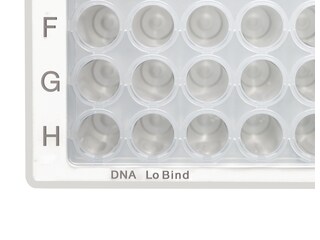
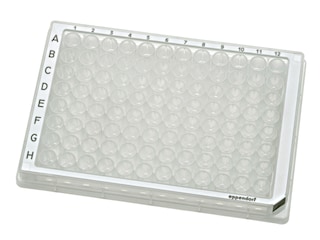
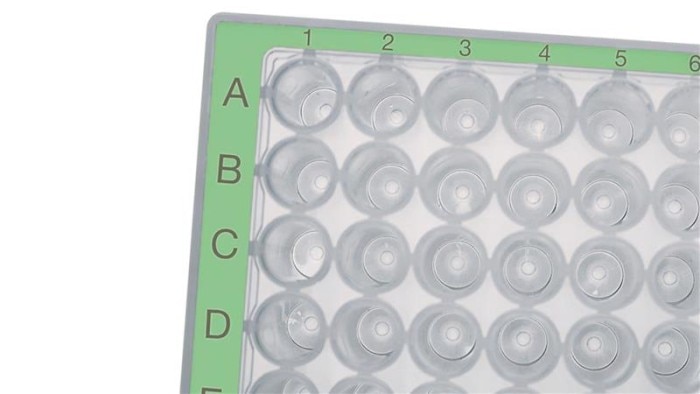
Eppendorf plates have several simple, yet smart features to enhance your lab workflows. All our plates have OptiTrack® matrix labeling that reduces pipetting errors and accelerates sample identification by up to 30%.
Our Microplates and Deepwell plates also have RecoverMax® well design, with the geometry of the wells maximizing sample mixing and recovery, while minimizing the risk of cross-contamination.
We also have various plate types that are optimized for specific applications, including:
- SafeCode plates - customized barcodes for elevated traceability.
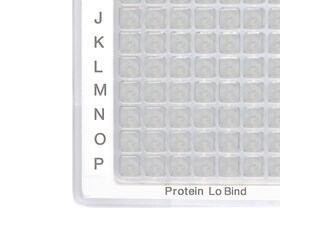
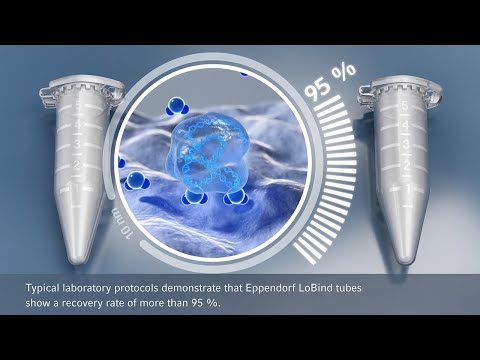
- Eppendorf LoBind® plates – LoBind technology reduces sample binding to the surface, maximizing the recovery of DNA or proteins.
- Eppendorf Assay and Reader Microplates – Completely black or white wells for enhanced signal detection, and minimized autofluorescence and autoluminescence.
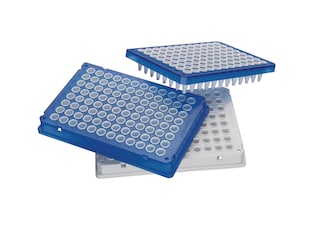
- Eppendorf twin.tec ® real-time PCR Plates – PCR plates with white wells, designed to increase fluorescence signals in real-time PCR (qPCR) and other fluorescence assays.
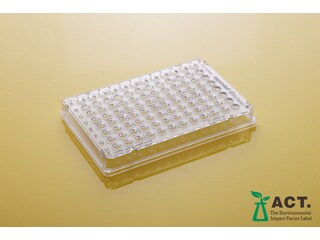
- Eppendorf twin.tec ® Trace PCR Plates BioBased - PCR plates made of a biobased polymer, helping you reduce your lab’s carbon footprint.
Two barcoded options for plates
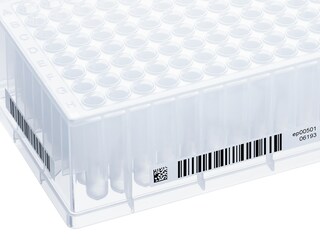
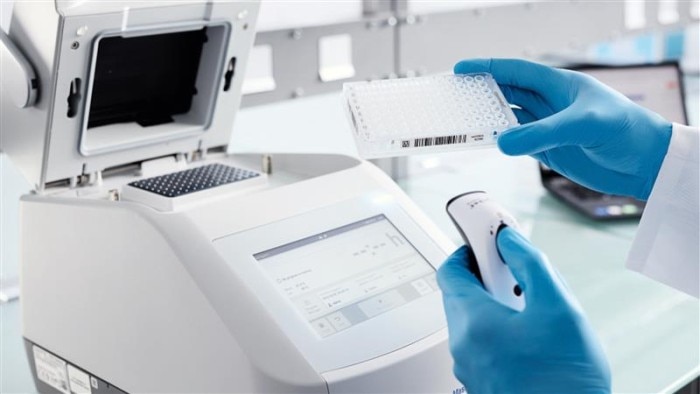
1. SafeCode plates – pre-barcoded with a unique „serial number“ (ID), printed in 3 different formats for elevated traceability and automated systems
2. Customized barcodes – design your own bardcode that fits to your needs and workflows online during the ordering process
1. SafeCode plates – pre-barcoded with a unique „serial number“ (ID), printed in 3 different formats for elevated traceability and automated systems
- No sticker: long-lasting with a high chemical stability
- Linear code on three sides of the plate for flexibility
2. Customized barcodes – design your own bardcode that fits to your needs and workflows online during the ordering process
- Scannable and human-readable stickers
- Coding possible on all sides of the plate
Read more
Videos not loading, because cookies have been rejected. Change your
You can learn more about our various plate types and their features in our brochure .
Read more
Which Eppendorf plates should you choose?
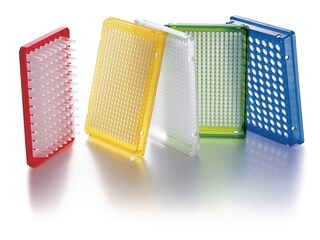
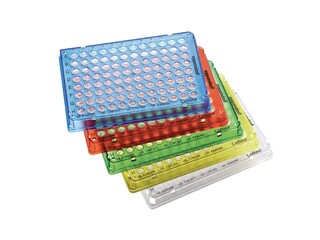
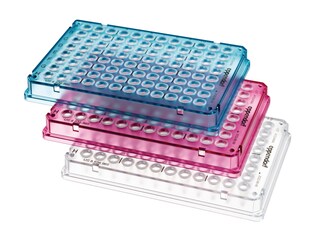
At Eppendorf, we offer three main types of plates: Eppendorf twin.tec® PCR plates , Deepwell plates , and Microplates.
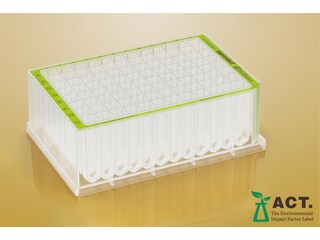
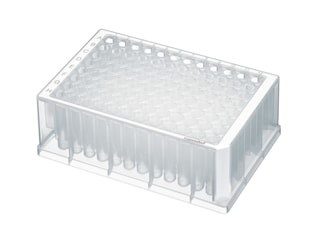
Eppendorf Microplates are a versatile option for a wide range of assays, including those requiring high chemical or temperature resistance. Eppendorf Deepwell plates offer the same high quality, versatility, and performance as our microplates, but with deeper wells to support larger sample volumes. And finally – as suggested by their name, twin.tec PCR plates are a reliable choice for PCR assays, with thin-walled polypropylene wells for optimal heat transfer to the sample, and robust polycarbonate frames for high rigidity.
Once you’ve selected the appropriate plate type for your lab needs, there are many other factors to consider, including the number of wells (96-well plates or 384-well plates), well shape, plate color, and sample volume. Below, find further information to help you choose which Eppendorf plate variant is right for you.
Eppendorf Microplates are a versatile option for a wide range of assays, including those requiring high chemical or temperature resistance. Eppendorf Deepwell plates offer the same high quality, versatility, and performance as our microplates, but with deeper wells to support larger sample volumes. And finally – as suggested by their name, twin.tec PCR plates are a reliable choice for PCR assays, with thin-walled polypropylene wells for optimal heat transfer to the sample, and robust polycarbonate frames for high rigidity.
Once you’ve selected the appropriate plate type for your lab needs, there are many other factors to consider, including the number of wells (96-well plates or 384-well plates), well shape, plate color, and sample volume. Below, find further information to help you choose which Eppendorf plate variant is right for you.
Read more
Flat-, U-, or V-bottom-shaped wells?
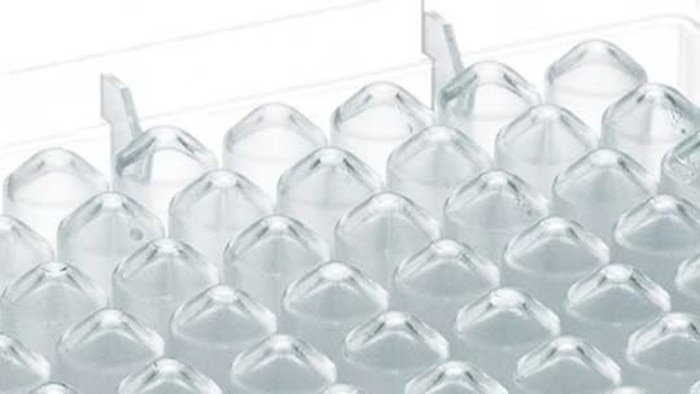
Eppendorf Microplates are available in different well shapes, which are designed to suit varied needs:
- 96-well flat-bottom plates - Microtiter plate wells with flat bottoms are usually preferred for fluorescence and luminescence-based assays, ensuring even light transmission. They are also ideal when using plate readers that analyze samples from below, and when culturing adherent cells.
- 96-well V-bottom plates - These are an ideal choice if you’re looking for centrifuge microplates, as their V-shape (conical wells) maximizes sample recovery during centrifugation, which is particularly beneficial when working with costly or limited samples.
- 96-well U-bottom plates – The U-shaped (rounded) wells makes these plates well-suited for a range of centrifugation tasks including sample mixing, washing, and pelleting.
Which well color is best for my assays?
- Transparent plates - Transparent wells offer enhanced sample visibility, which is particularly beneficial for teaching automation devices. Transparent wells are usually the default choice, if you are not using your plates for luminescence or fluorescence assays.
- Black plates - Offer an excellent signal-to-noise ratio, even with low-concentration samples.
- White plates - Maximize reflection for exceptionally sensitive luminescence detection.
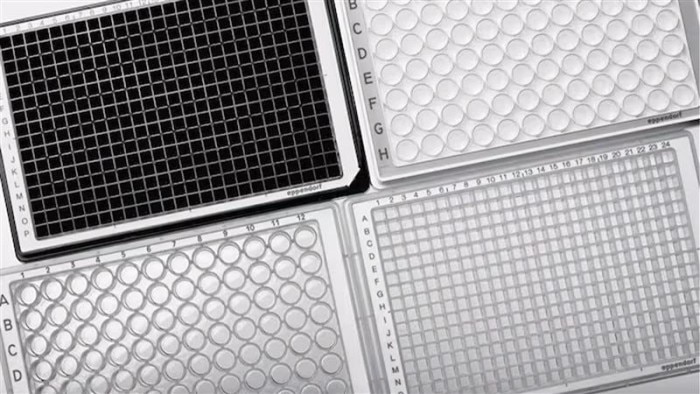
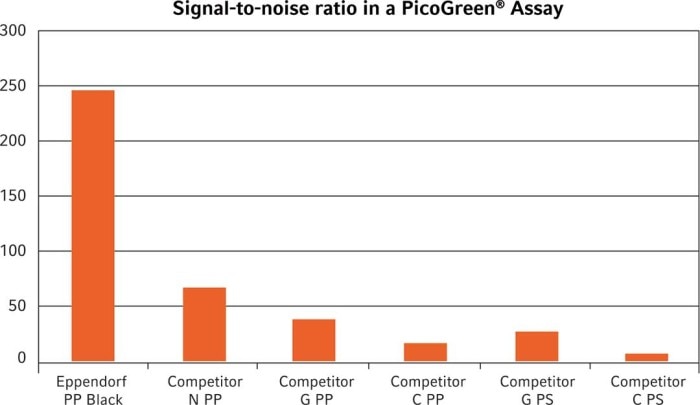
Need more help deciding on the right well shape and color? Read this blog.
What sample volumes and numbers are you working with?
Our Microplates, Deepwell plates, and PCR plates are typically available in 96- or 384-well formats. 96-well microtiter plates are suited for applications requiring lower sample numbers or larger well volumes, whereas 384-well plates are a great choice for higher throughput screening.
Click here for more details on plate formats and working volumes.
Read more
How much do Eppendorf plates cost?
We strive for all Eppendorf plates to be affordable, without ever compromising on quality or performance. For price information on specific plate types, visit individual product pages or contact our sales team.
Read more
Videos not loading, because cookies have been rejected. Change your
Read more

Brochure