MENU
AE | USD

AE | USD
-
- Toutes les centrifugeuses
- Centrifugeuses de paillasse
- Centrifugeuses au sol
- Centrifugeuses réfrigérées
- Microcentrifugeuses
- Centrifugeuses polyvalentes
- Centrifugeuses haute vitesse
- Ultracentrifugeuses
- Concentrateur
- Consommables pour centrifugeuses haute vitesse et ultracentrifugeuses
- Tubes à centrifuger
- Plaques de centrifugeuse
- Logiciel de gestion d’appareils
- Gestion des échantillons et des informations
-
- Pipettes, distributeurs et dispositifs de manipulation de liquides automatisée
- Pipettes mécaniques
- Pipettes électroniques
- Pipettes multicanaux
- Pipettes et distributeurs à déplacement positif
- Pointes de pipette
- Distributeurs sur flacon
- Auxiliaires de pipetage
- Accessoires pour pipettes et distributeurs
- Pipetage automatisé
- Consommables d’automatisation
- Accessoires d’automatisation
- Services pour pipettes et distributeurs
Sorry, we couldn't find anything on our website containing your search term.
Vous vous apprêtez à quitter ce site.
Veuillez noter que votre panier actuel n’est pas encore enregistré et ne pourra pas être affiché sur le nouveau site ou lors de votre prochaine visite. Si vous souhaitez enregistrer votre panier, veuillez vous connecter sur votre compte.
Sorry, we couldn't find anything on our website containing your search term.
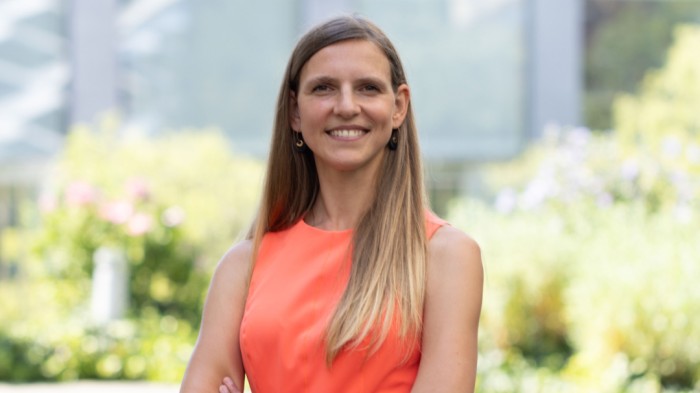
- 2024 Prize Finalist Dr. Claudia Kathe
2024 Prize Finalist Dr. Claudia Kathe
University of Lausanne, Department of Fundamental Neurosciences, Switzerland
Claudia Kathe completed her undergraduate degree in Neuroscience at King’s College London. She continued her studies at King’s College London, earning her Ph.D. in the laboratories of Dr. Lawrence Moon and Prof. Stephen McMahon, where she developed novel therapies for forelimb spasticity. Claudia then secured a postdoctoral fellowship and joined Prof. Grégoire Courtine’s laboratory at the Swiss Federal Institute of Technology Lausanne (EPFL), where she identified a single population of neurons in the spinal cord that restores walking after paralysis. Claudia is now an Assistant Professor at the Department of Fundamental Neurosciences, University of Lausanne, with a laboratory focused on elucidating the role of spinal circuits in sensorimotor disorders.
Essay: “Rewiring movements”
Walking is seemingly effortless for most of us. For individuals with spinal cord injuries, where the communication between the brain and the spinal cord is disrupted, this natural, almost automatic ability to step is often lost leading to significant mobility impairments, and, in many cases, permanent paralysis. A major priority in spinal cord injury research has been restoring communication between the brain and the spinal cord. However, a deeper understanding of how we can target neurons located in the spinal cord itself could provide an alternative strategy for improving motor function. Dr. Claudia Kathe and colleagues identified a single neuronal population within the spinal cord that emerges to be necessary and sufficient to restore walking after paralysis, whereas its role in healthy conditions seems less imperative. When rehabilitative therapies, enabled by electrical epidural stimulation are applied, these neurons rewire to become important integrators of sensory and motor information that facilitate the recovery of motor function. This discovery highlights the importance of identifying which neuronal populations are targeted by neuromodulating therapies and suggests that future therapeutic interventions may benefit from being further refined and selective.
Essay: “Rewiring movements”
Walking is seemingly effortless for most of us. For individuals with spinal cord injuries, where the communication between the brain and the spinal cord is disrupted, this natural, almost automatic ability to step is often lost leading to significant mobility impairments, and, in many cases, permanent paralysis. A major priority in spinal cord injury research has been restoring communication between the brain and the spinal cord. However, a deeper understanding of how we can target neurons located in the spinal cord itself could provide an alternative strategy for improving motor function. Dr. Claudia Kathe and colleagues identified a single neuronal population within the spinal cord that emerges to be necessary and sufficient to restore walking after paralysis, whereas its role in healthy conditions seems less imperative. When rehabilitative therapies, enabled by electrical epidural stimulation are applied, these neurons rewire to become important integrators of sensory and motor information that facilitate the recovery of motor function. This discovery highlights the importance of identifying which neuronal populations are targeted by neuromodulating therapies and suggests that future therapeutic interventions may benefit from being further refined and selective.
Lire la suite
Downloads

PDF 0,47 MB