
-
- All Pipettes, Dispensers & Automated Liquid Handlers
- All Micropipettes
- Mechanical Pipettes
- Electronic Pipettes
- Multi-Channel Pipettes
- Positive Displacement Pipettes & Dispensers
- Bottle-Top Dispensers
- Pipette Controllers
- Dispenser & Pipette Accessories
- Automated Pipetting
- Automation Consumables
- Automation Accessories
- Liquid Handler & Pipette Services
You are about to leave this site.
Please be aware that your current cart is not saved yet and cannot be restored on the new site nor when you come back. If you want to save your cart please login in into your account.
- Home
- Company & Careers
- Sustainability
- Products
- Centrifuges
- Resources
Resources in Production
Different resources are needed to assemble a centrifuge. To create a more sustainable product, we aim to reduce the total resources used and increase the proportion of recycled materials in manufacturing and assembly.
Exact calculation of the recycling shares of metal used in manufacturing remains challenging: Steel, for example, is melted in large vessels where both iron ore and recycled steel are combined. Detailed documentation of these ratios by the suppliers is essential to determine exactly what percentage of new or recycled material ends up in the metal sheets used to manufacture a particular product. This mass balance approach depends on averages and assumptions, as the actual amount can vary based on the metal production site's supply chain.
Like most Eppendorf production facilities, our centrifuge manufacturing sites based in the United States and Germany are powered by 100% renewable power from external sources. This commitment to sustainability reflects our dedication to innovation and our responsibility to caring for our planet and future generations.
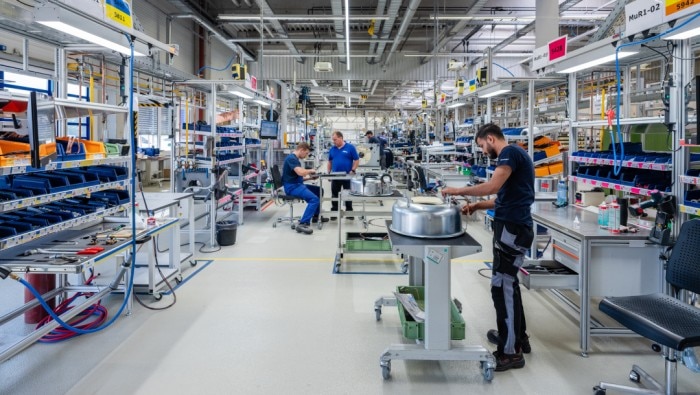
- Factory in Germany: High (40-80%)
- Factory in USA: Low-to-medium (20%)
- Factory in China: High (40-80%)
- Factory in Japan: Medium-to-high (20-40%)
Read more