MENU
BR | BRL

BR | BRL
-
- All Pipettes, Dispensers & Automated Liquid Handlers
- All Micropipettes
- Mechanical Pipettes
- Electronic Pipettes
- Multi-Channel Pipettes
- Positive Displacement Pipettes & Dispensers
- Bottle-Top Dispensers
- Pipette Controllers
- Dispenser & Pipette Accessories
- Automated Pipetting
- Automation Consumables
- Automation Accessories
- Liquid Handler & Pipette Services
Sorry, we couldn't find anything on our website containing your search term.
Sorry, we couldn't find anything on our website containing your search term.
- Home
- Lab Academy
- Applied Industries
- Bioprocessing
- Interview: FyoniBio
Data-Driven Bioprocess Development from Molecule to GMP Manufacturing
Lab Academy
- Bioprocessing
- Cell Therapy
- Bioprocess
- Interview
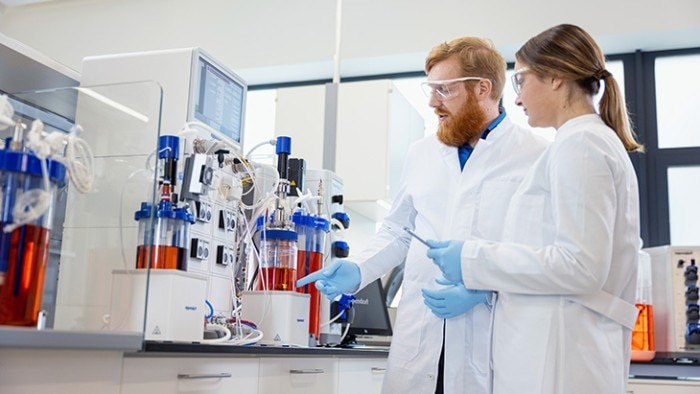
FyoniBio provides services across the biopharmaceutical development value chain. In this interview, Lena Tholen, the Director of Cell Line Development and Bioprocess Development, highlights the importance of flexible bioreactor systems to suit various project demands, and the role of data-driven strategies in optimizing bioprocesses and transferring them from R&D to commercial production.
Read on to find out more about the success factors of FyoniBio: how they overcome challenges in bioprocess development , why they chose Eppendorf , how they address scale-up challenges , and how they leverage bioprocess data for process optimization and tech-transfer.
Read more
Q: Please tell us a bit about FyoniBio
A: At FyoniBio , we provide specialized services across the entire biopharmaceutical development value chain — from cell line development and upstream/downstream process development (USP/DSP) to comprehensive analytical solutions. Beyond molecular analytics, we also conduct functional bioassays to evaluate biological activity. Our services span both preclinical and clinical stages — supporting clinical studies in GCLP compliant pharmacokinetic and immunogenicity testing from Phase I to Phase IV.
Our analytical portfolio includes advanced mass spectrometry-based services to characterize critical quality attributes (CQAs), such as glycan profiling, peptide mapping, and in-depth analysis of post-translational modifications (PTMs). We are fully equipped to deliver complete IND/IMPD-compliant biochemical characterization packages.
Our scientific approach is deeply molecule-centered: we tailor each project based on the specific characteristics and development needs of the client’s biotherapeutic.
Our analytical portfolio includes advanced mass spectrometry-based services to characterize critical quality attributes (CQAs), such as glycan profiling, peptide mapping, and in-depth analysis of post-translational modifications (PTMs). We are fully equipped to deliver complete IND/IMPD-compliant biochemical characterization packages.
Our scientific approach is deeply molecule-centered: we tailor each project based on the specific characteristics and development needs of the client’s biotherapeutic.
Read more
“We find the optimization of client-provided processes particularly rewarding, as they require successful technology transfer, detailed data analysis, and a targeted, science-driven approach to process improvement.”
Q: Which upstream bioprocess services do you offer? Which products do you produce using which cell lines?
A: At FyoniBio, upstream process development is a central pillar of our service portfolio and a key success factor in the development of biopharmaceuticals. We specialize in the development and optimization of upstream processes using mammalian expression systems , including our proprietary GlycoExpress® and CHOnamite® platforms. Our CHOnamite platform is a versatile CHO-based production system comprising CHO-K1, CHO-GS-KO, and CHO-DG44 host cell lines. It is designed for the efficient production of a broad range of biologics — including monoclonal antibodies, complex antibody formats, and biosimilars.
In contrast, GlycoExpress is our glyco-optimized human cell line platform, particularly well-suited for difficult-to-express proteins that require human-like glycosylation patterns, specific post-translational modifications, or optimized folding and secretion. This platform has been successfully used for the production of hormones, growth factors, blood coagulation factors, and enzymes used in enzyme replacement therapies (ERTs). We bring deep expertise across a range of process formats — from fed-batch to perfusion processes — and always assess the most appropriate approach for each biologic based on its specific molecular and functional requirements.
In addition to de novo process development based on our own platforms, we frequently engage in optimization of client-provided processes. These projects often involve challenges such as suboptimal product quality, non-ideal glycosylation patterns, or insufficient productivity. We find such collaborations particularly rewarding and technically stimulating, as they require successful technology transfer, detailed data analysis, and a targeted, science-driven approach to process improvement.
In contrast, GlycoExpress is our glyco-optimized human cell line platform, particularly well-suited for difficult-to-express proteins that require human-like glycosylation patterns, specific post-translational modifications, or optimized folding and secretion. This platform has been successfully used for the production of hormones, growth factors, blood coagulation factors, and enzymes used in enzyme replacement therapies (ERTs). We bring deep expertise across a range of process formats — from fed-batch to perfusion processes — and always assess the most appropriate approach for each biologic based on its specific molecular and functional requirements.
In addition to de novo process development based on our own platforms, we frequently engage in optimization of client-provided processes. These projects often involve challenges such as suboptimal product quality, non-ideal glycosylation patterns, or insufficient productivity. We find such collaborations particularly rewarding and technically stimulating, as they require successful technology transfer, detailed data analysis, and a targeted, science-driven approach to process improvement.
Read more
Q: What challenges you face in your various bioprocess development projects?
A: Bioprocess development projects at FyoniBio come with a wide range of challenges, most of which are highly dependent on the specific characteristics of the target biologic. Each molecule presents its own set of demands, and our approach is to address these scientifically and systematically. One of the core objectives is always to find the optimal balance between product quality and process productivity. Achieving this requires the development of robust and scalable bioprocesses through systematic variation of key parameters — such as media composition, feed strategies, and cultivation conditions (e.g. pH, DO, temperature).
Read more
“It’s essential to account for differences between development-scale and GMP-scale bioreactor systems from the very beginning to ensure a smooth and efficient transition from benchtop to production scale.”
In more complex cases — for instance, when a specific glycosylation profile (N- or O-glycans) is required — tailored process adaptations are needed. These efforts demand in-depth molecular understanding of the host cell’s biology, a strategic experimental design, and smart decision-making throughout the project lifecycle. Looking ahead, we believe that advanced process modeling, combined with integrated online analytics and process automation, will be key enablers to accelerate and streamline process optimization — especially for challenging molecules.
In addition to molecular and process-related hurdles, we frequently encounter challenges related to tech transfer and scale-up. It’s essential to account for differences between development-scale and GMP-scale bioreactor systems from the very beginning. This includes careful consideration of factors such as raw material scalability, gassing strategies, and sensor configurations, to ensure a smooth and efficient transition from benchtop to production scale.
In addition to molecular and process-related hurdles, we frequently encounter challenges related to tech transfer and scale-up. It’s essential to account for differences between development-scale and GMP-scale bioreactor systems from the very beginning. This includes careful consideration of factors such as raw material scalability, gassing strategies, and sensor configurations, to ensure a smooth and efficient transition from benchtop to production scale.
Read more
Q: Why did you choose Eppendorf? What were the main reasons for choosing the SciVario twin system?
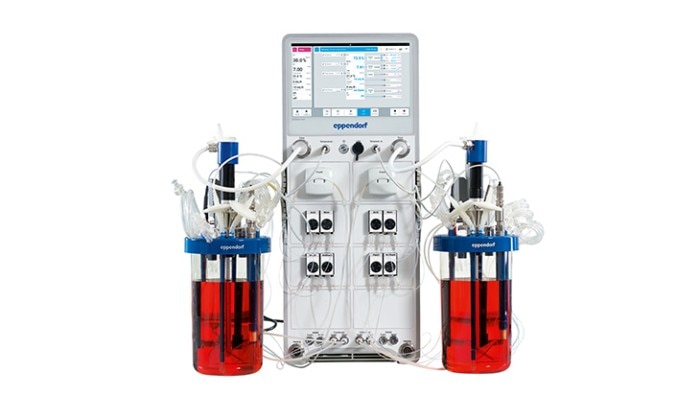
A: At FyoniBio, selecting the right bioreactor system was a strategic decision based on clearly defined criteria tailored to the flexibility and scalability required by our diverse service portfolio. As a professionals in USP development we place great value on modular and adaptable systems that support both small-scale process development and larger-scale benchtop production. The SciVario® twin system from Eppendorf meets these needs perfectly by allowing us to conduct bioprocesses in a range from 500 mL up to 50 L — all within a consistent and intuitive system framework.
Read more
“One of the standout features of the SciVario twin system is its flexible compatibility with both glass and single-use vessels, which allows us to adapt quickly to varying project demands.”
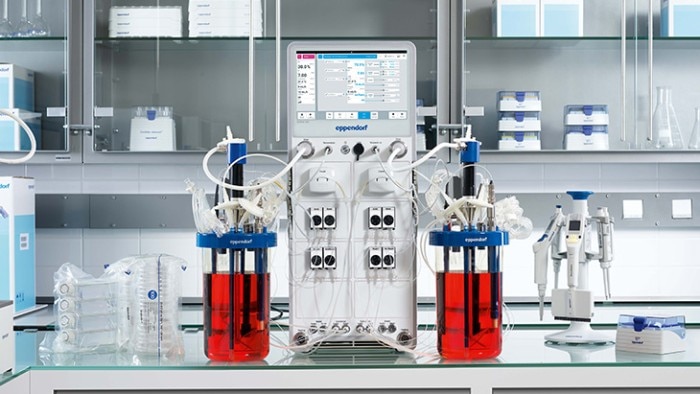
This scalability enables us to customize processes based on individual project needs: for some clients, 1 L process runs are sufficient for early-stage optimization, while others may require significantly larger quantities of material, for example for preclinical animal studies.One of the standout features of the SciVario twin system is its flexible compatibility with both glass and single-use vessels, which allows us to adapt quickly to varying project demands. This flexibility not only helps streamline timelines and reduce costs, but also simplifies tech transfer and decision-making throughout development. Beyond the hardware, Eppendorf's digital ecosystem — including DASware® software and the BioNsight® cloud platform — provides robust tools for remote monitoring and data management, both online and offline. This gives us peace of mind and operational transparency — whether we’re on-site or, for example, attending a conference overseas while a process run is ongoing.
Finally, Eppendorf has proven to be a reliable and responsive partner, offering excellent support, smooth communication, and a convincing cost-performance ratio, which further solidified our decision.
Finally, Eppendorf has proven to be a reliable and responsive partner, offering excellent support, smooth communication, and a convincing cost-performance ratio, which further solidified our decision.
Read more
“Eppendorf has proven to be a reliable and responsive partner, offering excellent support, smooth communication, and a convincing cost-performance ratio.”
Q: Your customers would eventually like to scale-up and transfer the developed bioprocess to a GMP facility. Could you tell us a bit about the challenges and how you overcome them to enable a smooth transfer?
A: Ensuring a smooth transfer from development to GMP manufacturing is a critical success factor for our clients — and a clear focus area in our project strategies at FyoniBio. A key prerequisite for successful scale-up is the early integration of scalability considerations into the upstream development process. That starts with clone selection: rather than focusing solely on the top-producing clone, we routinely evaluate multiple high-performing clones — typically the top four — under benchtop bioprocess conditions to assess their scalability potential.
During this evaluation phase, we closely monitor parameters such as:
- Cell growth and viability
- Metabolic indicators (e.g. ammonia, lactate, osmolarity)
- Process robustness and tolerance to stress conditions (e.g. gassing behavior)
- This early-stage data forms the basis for identifying the most suitable clone for large-scale, GMP-compliant production.
Once a robust production process is established, technology transfer to a GMP facility presents its own set of challenges — particularly regarding data continuity and equipment compatibility.
For example, differences in offline measurement devices (e.g. for cell counting) can lead to significant deviations in process control. We’ve experienced such a case during a perfusion process transfer, where divergent cell counting results between R&D and GMP devices caused major variations in bioprocess performance.
Read more
“A key prerequisite for successful scale-up is the early integration of scalability considerations into the upstream development process.”
To mitigate such risks, we emphasize:
- Detailed and transparent process documentation, including specifics on bioreactor types, sensors, and control strategies
- Rigorous communication between R&D and manufacturing teams
- Proactive alignment on critical parameters, such as offline analytics or probe calibration
Read more
Q: Process optimization and tech transfer depend on bioprocess data. Which process parameters do you typically analyze and can you suggest any improvements in bioprocess technology ?
A: Bioprocess data acquisition and monitoring are central elements in ensuring the success and consistency of upstream development. At FyoniBio, we apply a combination of online and offline analytical methods to gain the most comprehensive picture possible of the process state.
Read more
“Technological advancements that allow for real-time monitoring of metabolites and product quality indicators will be key to the future of bioprocessing — making development cycles faster, more data-driven, and ultimately more robust.”
For online monitoring, we currently rely on standard dissolved oxygen (DO) and pH sensors, which are essential for maintaining stable culture conditions and ensuring an optimal environment for biologics production. These parameters form the baseline for real-time control and adjustment during cultivation. In parallel, we perform a range of offline analyses to support process regulation and assess cellular health and stress responses. This includes the quantification of key metabolites such as glucose, lactate, glutamine, glutamate, and ammonia, along with osmolarity measurements. We also carry out detailed cell counting, including viability, aggregation behavior, and cell size distribution. While offline analytics are valuable, they come with notable limitations. The accuracy and reproducibility of results are highly dependent on proper sampling procedures, which require well-trained personnel to minimize operator-related variability. Additionally, offline methods typically offer only limited temporal resolution, providing snapshots of the process once or twice daily — which may not fully capture dynamic changes in the system. To overcome these limitations, we are actively exploring ways to enhance our monitoring strategy through advanced online sensing technologies. One promising direction is the integration of Raman spectroscopy-based analytics, which could allow for real-time, non-invasive monitoring of metabolite concentrations and potentially even product quality indicators. This would not only improve process understanding but also increase efficiency by enabling more proactive and informed process adjustments. From our perspective, such technological advancements will be key to the future of bioprocessing — making development cycles faster, more data-driven, and ultimately more robust.
Read more
Q: How do you view the current and future role of artificial intelligence in bioprocess development?
A: In my view, bioprocess optimization is an ideal field for the integration of artificial intelligence. We are already witnessing a clear trend towards the application of machine learning and data-driven modeling in bioprocess development. A growing number of software solutions are entering the market, offering accessible and powerful tools to support decision-making in process design and optimization. One example is DataHowLab, a platform developed by DataHow, which enables predictive modeling of bioprocesses based on historical and real-time data.
Read more
“I believe AI-driven tools twill become a standard component of modern bioprocess development and will play a key role in improving efficiency, robustness, and product quality.”
Solutions like this are becoming increasingly user-friendly and are beginning to find their way into routine workflows — not only in big pharma, but also in agile CDMO environments like ours. Looking ahead, I believe AI-driven tools will become a standard component of modern bioprocess development, supporting the transition from empirical process design to model-informed and adaptive strategies. They will play a key role in improving efficiency, robustness, and product quality, particularly when integrated with advanced sensing technologies and automated control systems. Ultimately, the use of artificial intelligence has the potential to accelerate development timelines, reduce cost, and support more targeted, data-driven decision-making — which is especially valuable in the increasingly complex landscape of biologics development.
Read more
Q: Is there any advice you would give to others who are just starting to develop a new bioprocess?
A: My main advice for anyone starting to develop a new bioprocess is: always put the biology at the center of your strategy. Understanding your molecule — its structure, modifications, and critical quality attributes — is the foundation for every downstream decision. These characteristics will guide not only process design, but also the selection of the most suitable host cell line, as expression behavior and product quality can vary significantly depending on the system used. Once you’ve laid this groundwork, the next critical step is to become intimately familiar with your bioreactor system. Introducing and validating a new bioreactor setup takes time and care, but it's essential to ensure consistent results and avoid surprises during scale-up or transfer.
Throughout development, you’ll find that small process changes — be it in feeding strategy, temperature shifts, or pH control — can have a big impact on both product quality and productivity. Strive to design a robust and reproducible process, while keeping complexity to a minimum. Overly complex setups may seem attractive in development, but can become a liability during tech transfer or GMP implementation, where simplicity and clarity are essential. In short: know your molecule, choose your system wisely, and keep your process as elegant as it is effective.
Throughout development, you’ll find that small process changes — be it in feeding strategy, temperature shifts, or pH control — can have a big impact on both product quality and productivity. Strive to design a robust and reproducible process, while keeping complexity to a minimum. Overly complex setups may seem attractive in development, but can become a liability during tech transfer or GMP implementation, where simplicity and clarity are essential. In short: know your molecule, choose your system wisely, and keep your process as elegant as it is effective.
Read more
“Know your molecule, choose your system wisely, and keep your bioprocess as elegant as it is effective.”
Lena Tholen was interviewed by Eppendorf in 2025.
Read more