-
- All Pipettes, Dispensers & Automated Liquid Handlers
- Mechanical Pipettes
- Electronic Pipettes
- Multi-Channel Pipettes
- Positive Displacement Pipettes & Dispensers
- Bottle-Top Dispensers
- Pipette Controllers
- Dispenser & Pipette Accessories
- Automated Pipetting
- Automation Consumables
- Automation Accessories
- Liquid Handler & Pipette Services
realtime PCR Consumables
Read more
Why choose Eppendorf qPCR consumables?
Which Eppendorf qPCR consumables should I choose?
Eppendorf qPCR consumable price information
Resources
Why choose Eppendorf qPCR consumables?
Eppendorf lab consumables are globally renowned for their high quality and durability. With Eppendorf qPCR consumables, you can experience: Read more
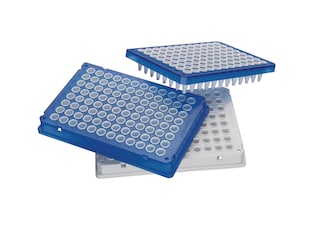
Enhanced fluorescence signal detection – twin.tec® real-time PCR plates have white wells that reflect fluorescent signals toward the detector. This increases signal intensity and assay sensitivity.
Reduced background noise – Optimized plate design minimizes background fluorescence, while enhancing consistency and reproducibility.
High optical clarity sealing – Masterclear® PCR cap strips have excellent optical transparency. This reduces your signal interference and helps you accurately measure fluorescence.
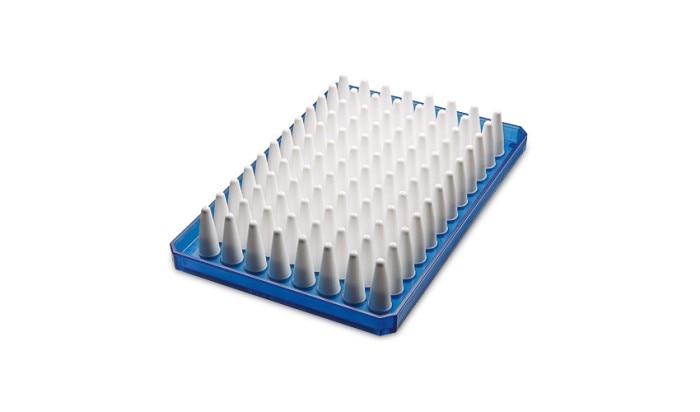
Optimized thermal performance – Thin-walled polypropylene wells enable fast, even heat transfer, so you can maintain precise amplification conditions.
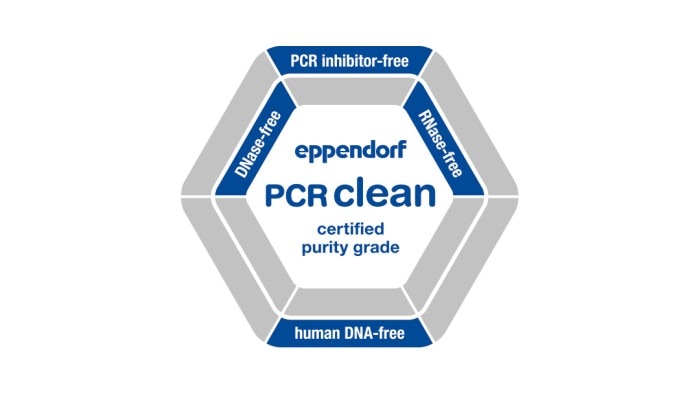
Purity you can trust – All qPCR consumables are available in the PCR clean purity grade, being certified free from DNA, DNase, RNase, and PCR inhibitors, reducing contamination risk in your qPCR workflows.
Which Eppendorf qPCR consumables are right for your lab?
Our qPCR consumables include high-quality plates and cap strips. Here is further information to help you decide if these products are the right choice for you:
Read more
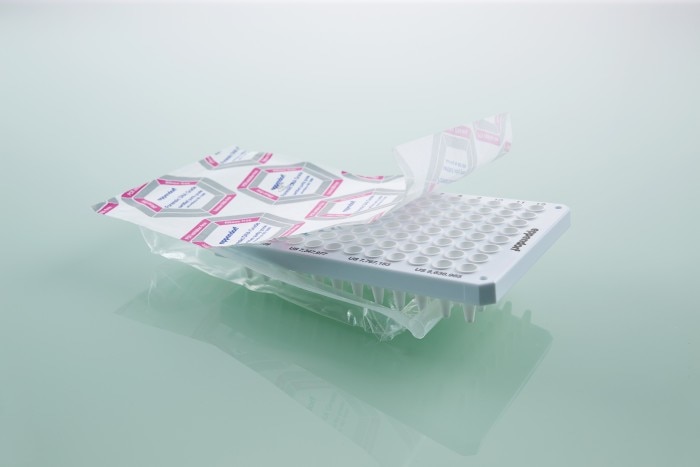
twin.tec® real-time PCR plates
Eppendorf twin.tec® real-time PCR plates are specifically engineered for qPCR applications, with the following features:
- White wells for enhanced fluorescence – Reflect signal toward the detector, increasing sensitivity
- Reduced well-to-well variation – Support consistent replicate results
- Rigid polycarbonate frame – Keeps plates stable during handling and cycling
- Available in a range of formats – 96-well plates are available in 150 µL or 250 µL volumes, with a range of purity grades, two different frame colors, and skirting options. This flexibility helps you match your plate to your workflow.
PCR cap strips
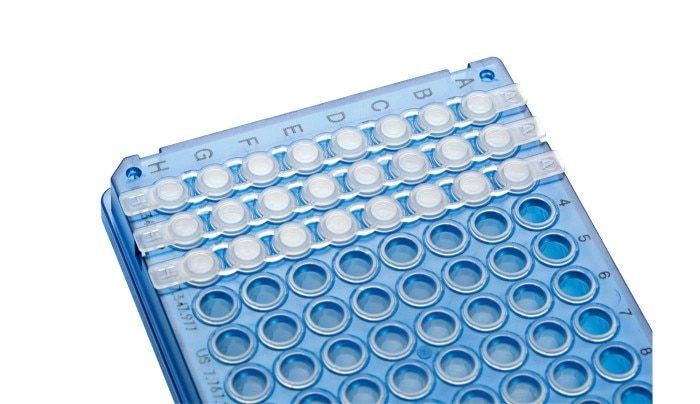
Eppendorf PCR cap strips are essential to avoid sample contamination or evaporation. Our PCR cap strips are designed with performance, sealing, and efficiency in mind:
- High optical transparency – Optically clear variants, including Masterclear® cap strips, minimize signal loss during fluorescence detection
- Reliable sealing – Protects against evaporation and contamination
- Easy handling – Designed for efficient workflow integration
Purity requirements
Contamination control is critical in qPCR workflows – helping you avoid false positives and variability. That’s why our qPCR consumables are available in the ‘PCR clean’ certified purity grade, being free from qPCR contaminants including DNA, DNAse, RNAse, and PCR inhibitors. Our twin.tec real-time PCR plates are also available in Forensic DNA Grade purity, meeting ISO 18385 standards for forensic applications.
Eppendorf qPCR consumable price information
The price of Eppendorf qPCR consumables depends on several factors, including product type, size, and format. For more detailed price information, please visit individual product pages.
Read more
Resources

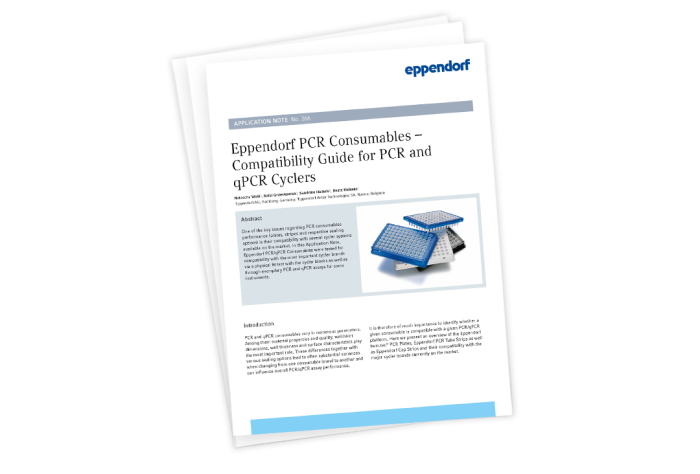
Application Note 266 – Eppendorf PCR Consumables - Compatibility Guide for PCR and qPCR Cyclers
Eppendorf PCR Consumables-Compatibility Guide for PCR and qPCR Cyclers