MENU
CN | CNY

CN | CNY
-
- All Pipettes, Dispensers & Automated Liquid Handlers
- All Micropipettes
- Mechanical Pipettes
- Electronic Pipettes
- Multi-Channel Pipettes
- Positive Displacement Pipettes & Dispensers
- Bottle-Top Dispensers
- Pipette Controllers
- Dispenser & Pipette Accessories
- Automated Pipetting
- Automation Consumables
- Automation Accessories
- Liquid Handler & Pipette Services
Sorry, we couldn't find anything on our website containing your search term.
Sorry, we couldn't find anything on our website containing your search term.
- Home
- Company & Careers
- Scientific Awards
- Eppendorf Award for Young European Investigators
- All Award Winners & Finalists
- 2026 Award Finalist Dr. Martina Pacesa
2026 Award Winner: Dr. Martin Pačesa
Appointment at time of winninig the Award
Assistant Professor and Group Leader at University of Zurich, Institute of Pharmacology, Switzerland.
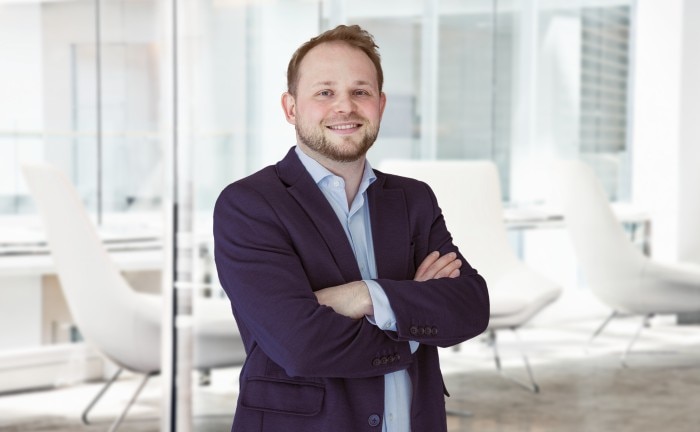
Martin Pačesa, born 1993, receives the € 20.000,-- award for his research on AI-guided de novo design of functional protein binders. The jury members were excited by his outstanding research and acknowledged the importance of his contributions to this field and the impact of the tools that he had developed for the research community.
Martin Pačesa: “It still feels a bit unreal to receive the 2026 Eppendorf Award for Young European Investigators. This recognition reflects our work on deep learning-based protein design, particularly BindCraft, which enables accurate and accessible design of protein binders. Much of biology can be framed as a binder-target problem, and the ability to design these interactions on demand opens new possibilities in biological research. I am grateful to my colleagues at EPFL, especially Prof. Bruno Correia, Lennart Nickel, and Christian Schellhaas, as well as to my wife, my new lab at the University of Zurich, and support from the ERC. There’s still a lot to figure out, but it feels like we’re moving towards a point where protein design can become genuinely routine for the everyday biologist.”
The official prize ceremony took place on July 16, 2026 at the Advanced Training Centre of the EMBL in Heidelberg. The laudation honoring Martin Pačesa‘s achievements was written by Award Jury Member Prof. Ben Lehner, Wellcome Sanger Institute, Cambridge, UK and CRG, Barcelona, Spain.
Read more
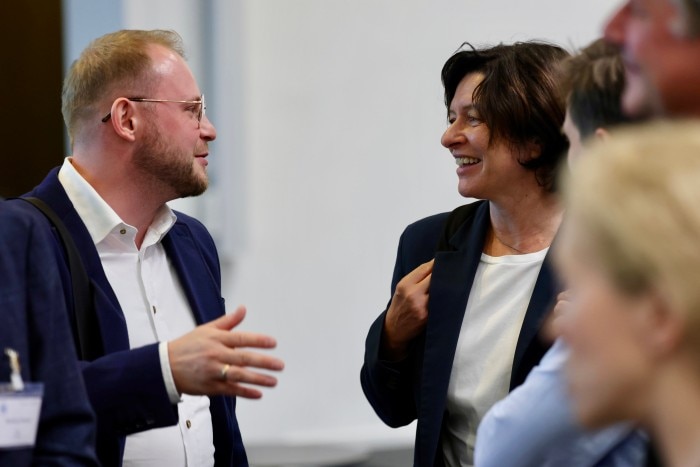
Dr. Martin Pačesa und Dr. Christine Munz, CEO Eppendorf Group
2026 Finalists
Dr. Sebastiaan De Schepper
VIB-Center for Molecular Neurology (CMN), Wilrijk, Belgium
Dr. Tanita Wein
Weizmann Institute of Science, Rehovot, Israel
VIB-Center for Molecular Neurology (CMN), Wilrijk, Belgium
Dr. Tanita Wein
Weizmann Institute of Science, Rehovot, Israel
Read more

PDF 0.14 MB
JPG 4.30 MB
PDF 0.75 MB
PDF 0.09 MB
“Aim for your craziest blue sky dream”
Martin, what inspired you to become a scientist?
I was terrified by the idea of having a job where I do the same thing every day. Science seemed to me a good way to satisfy my curiosity and have to freedom to build my own way. I think if I weren’t a scientist, I would probably go into the arts, like script writing. Also, I hate waking up early, and being in academia I can come into work anytime (unfortunately, that also means evenings and weekends).
What led you to choose your academic field, and how did you decide where to go for your Ph.D.?
I hated chemistry and biology always seemed too hand-wavy, so I settled for biochemistry, haha. I really wanted to see if life can be broken down and explained by simple components, and biochemistry seemed like the best way to investigate that. I went to Martin Jinek’s lab for a Ph.D. to learn how we could manipulate and edit genetic material, and instead discovered the beauty of structural biology of macromolecules.
Did you have any mentors that helped you in your career?
Many! And I still do. You should try to surround yourself with people who are smarter than you so that you don’t get comfortable and are always pushed to improve yourself. These are the people who mentored me directly, helped me become the scientist I am today, and to whom I am eternally grateful: Juraj Galeta, Marek Sebesta, Lumir Krejci, Silvio Hemmi, Urs Greber, Martin Jinek, and Bruno Correia.
In January 2026 you started your own lab at the University of Zurich, Switzerland. Looking back, what challenges did you face that you didn’t expect?
Setting up a lab from scratch is a lot of work. A lot of small details that one does not consider at the beginning, when just thinking of the picture, that can set you back several weeks. But overall, it has been pretty smooth sailing, I got lucky that I got an amazing team of people from the start who have made it a lot more enjoyable and easier.
What advice would you give to someone seeking independence?
You need to have a long term vision beyond the few projects you currently have in mind. It took me a while to figure that out. How does your current work tie into what you want to do later? Do you already have a follow up in mind to what you are doing right now? How are you different from an already established and bigger lab? I think it helps to be a wide-eyed optimist and try to aim for your craziest blue sky dream. Even though the goal may sound far fetched, it will help you shoot further than anyone else with a more grounded goal.
What are the main questions your lab is currently trying to answer?
As a long term vision, we are trying to develop methods to more accurately describe and design biomolecules, with the goal to be able to one day design a cell or even an entire organism from the ground up. There are thousands of problems we have to solve first and many obstacles standing between us and that dream, but it is the shiny beacon showing us the way whenever we forget why we are doing this.
What is your advice on establishing good collaborations?
As scientists we are often proud of our work, but the hardest thing is to not let your ego get in the way of a good collaboration. And every interaction has the potential to be a great collaboration! Being nice and civil to your colleagues goes a very long way, also for your career. Science is primarily a "reputation-based business” after all. And scientists are fun people! I would certainly encourage everyone to join the odd happy hour or stay for a drink after the poster session at a conference, that’s where the real science happens :-)
Finally, could you tell us an interesting fact about yourself that people wouldn’t know by looking at your CV?
I work a ridiculous amount of hours per week but I actually have many hobbies outside of the lab! I love playing video games, watching classic movies, reading books, playing squash, snowboarding, and playing bass guitar (though I haven’t touched it for a while now).
Read more