-
- All Pipettes, Dispensers & Automated Liquid Handlers
- Mechanical Pipettes
- Electronic Pipettes
- Multi-Channel Pipettes
- Positive Displacement Pipettes & Dispensers
- Bottle-Top Dispensers
- Pipette Controllers
- Dispenser & Pipette Accessories
- Automated Pipetting
- Automation Consumables
- Automation Accessories
- Liquid Handler & Pipette Services
Quest for Life in the Most Hostile Environment
Jens Oliver Bonnet Lab Academy
- Nature
- Biotechnology
- Health & Medicine
- Pharma
- Lab Routine
- Pipetting & Dispensing
- Lab Life
- Ergonomics
- Efficiency
- Accuracy
- Pipettes
- Dispensers
- Essay
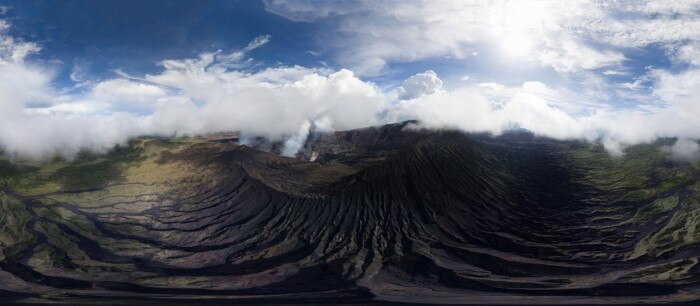
The Marum crater with its 1,100 °C hot lava lake on the volcanic island of Ambrym belongs to the island nation of Vanuatu in the South Pacific - and is certainly one of the most hostile places on our planet. It's hard to imagine that any life form could survive in this environment, next to the bubbling lava from which red-hot fountains are spewed again and again. But to be absolutely sure, a closer look has to be taken. And that's exactly what Jens Kallmeyer did. With his colleague Jeffrey Marlow from Harvard University, the geomicrobiologist ventured down into the volcanic crater and its 400-meter-high walls bathed in toxic gases. At the bottom of the crater, he dressed in a heat protection suit and gas mask and approached the lava lake to retrieve samples.
He is leading the Group for Aquatic Geochemistry of the Section Geomicrobiology at the Helmholtz Centre Potsdam , GFZ German Research Centre for Geosciences. “We are interested in interactions between the biosphere and the geosphere, so we look everywhere where conditions allow for life to persist. This can be close to Earth’s surface like in soils or deep underground, which is one of my main research topics.” The questions addressed are equally diverse, ranging from pure basic research, for example understanding specific adaptations of microbes to certain conditions, to very applied topics like managing microbial activity in geothermal reservoirs or assessing the risk of microbially induced corrosion in radioactive storage facilities.
Read more
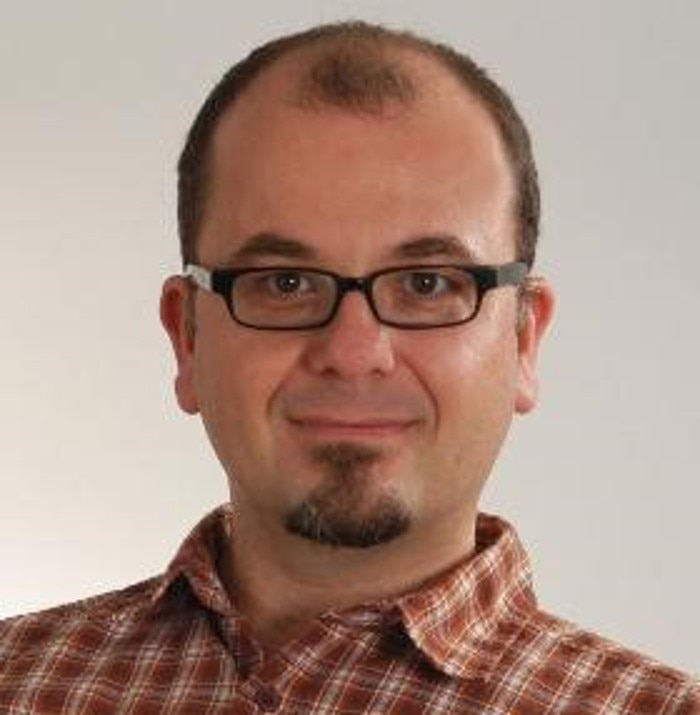
Dr. Jens Kallmeyer
As geomicrobiologist, Dr. Kallmeyer is primarily studying the effects of extreme nutrient depletion on microorganisms in deep sediments, but also the influence of extreme temperatures.
Another part of his work deals with fundamental questions of the coupling of geosphere and biosphere. In this context, he frequently works in very remote areas and under conditions that are far different from those in the laboratory environment.