MENU
NZ | NZD

NZ | NZD
-
- All Pipettes, Dispensers & Automated Liquid Handlers
- All Micropipettes
- Mechanical Pipettes
- Electronic Pipettes
- Multi-Channel Pipettes
- Positive Displacement Pipettes & Dispensers
- Bottle-Top Dispensers
- Pipette Controllers
- Dispenser & Pipette Accessories
- Automated Pipetting
- Automation Consumables
- Automation Accessories
- Liquid Handler & Pipette Services
Sorry, we couldn't find anything on our website containing your search term.
Sorry, we couldn't find anything on our website containing your search term.
- Home
- Lab Academy
- Topics, Methods & Technology
- Storage
- Manual Labeling Versus Barcoding
Manual Labeling Versus Barcoding
Lab Academy
- Biotechnology
- Freezer
- Vessels
- Essay
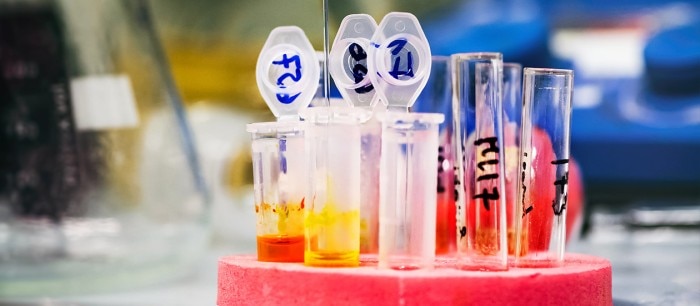
Trying to Encipher Some Vessel Labels? “Stored vessels must be labeled” – in principle, every lab member confirms this. In reality you always find some (or even more) vessels in your freezer without any labeling or with a labeling looking like art. In many labs, there is a second rule: Label-free vessels are disposed as soon as they are found.
Printed labels on vessels (plain writing or barcode) are recommended to make reading as easy as possible for everyone else besides the author.
Labels
In a first step of improvement from handwriting, printed labels made of office paper secured by transparent duct tape can be used. Special adhesive labels based on water-resistant paper and water-resistant printing are the next step. Labels should be attached to the side of the tube. The lid surface is challenging due to the small area.
Barcodes
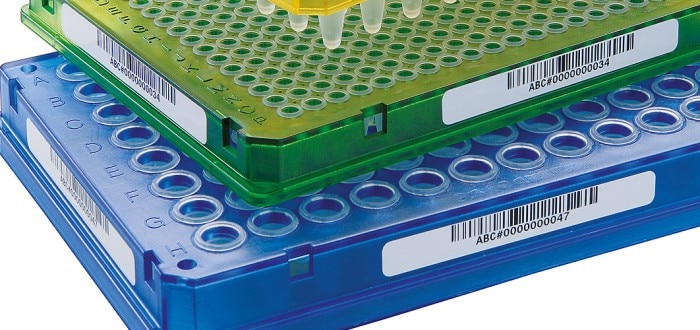
The top class of safe sample identification are barcodes. A barcode is an optical representation of data, which is machine-readable. Machine-readable means readable by a scanner, e.g. a handheld barcode-scanner. We are used to them from e.g. the daily shopping at the supermarket. The label can be limited to the pure barcode or barcode plus plain writing for human reading. The barcode can be printed on adhesive labels or directly printed/ lasered on vessels.
Labels
In a first step of improvement from handwriting, printed labels made of office paper secured by transparent duct tape can be used. Special adhesive labels based on water-resistant paper and water-resistant printing are the next step. Labels should be attached to the side of the tube. The lid surface is challenging due to the small area.
Barcodes
The top class of safe sample identification are barcodes. A barcode is an optical representation of data, which is machine-readable. Machine-readable means readable by a scanner, e.g. a handheld barcode-scanner. We are used to them from e.g. the daily shopping at the supermarket. The label can be limited to the pure barcode or barcode plus plain writing for human reading. The barcode can be printed on adhesive labels or directly printed/ lasered on vessels.
Read more
1D barcodes
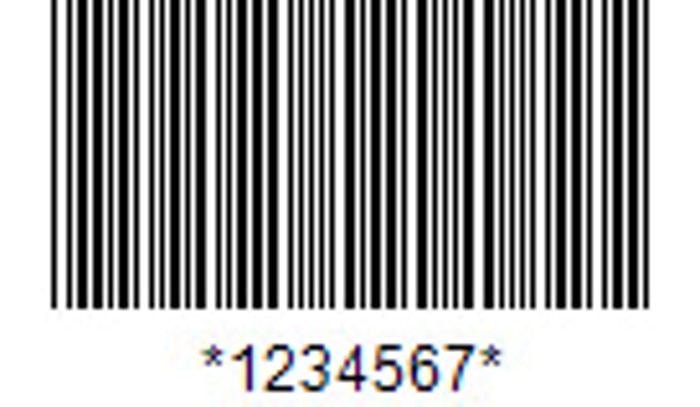
A classic 1D barcode codes data by varying the width of the parallel lines as well as their spacings.
1D barcodes are based on different types (i.e. languages), e.g. type 128.
2D barcodes
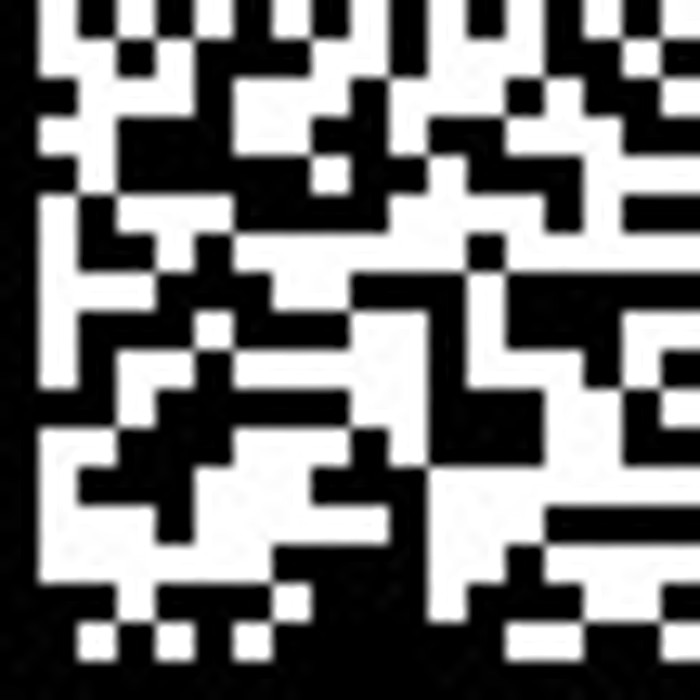
Two-dimensional codes (2D) are based on dots, hexagons, rectangles, or other geometric patterns. The codes can handle far more information on same area compared to 1D barcodes. These codes have different languages as well.
QR codes are commonly known from internet addresses which can be scanned by mobile devices to open the related webpage. QR codes can easily recognized by their three spots at the corners. Some people also use them to code samples.

2D datamatrix codes are based on the following specifications:
# The finder pattern consists of two constant lines at left and bottom, „clock track“
# The quiet zone surrounds the finder pattern, it should be free of any black-white contrast
The data matrix code can be handled with white signal on black background (black quiet zone, white modules, black corners, inverse image) or with black signal on white background (white quiet zone, black modules, white corner, reverse image).
Proper labeling of sample vessels is crucial for safe results.
Read more