MENU
AE | USD

AE | USD
-
- Pipettes, distributeurs et dispositifs de manipulation de liquides automatisée
- Toutes les micropipettes
- Pipettes mécaniques
- Pipettes électroniques
- Pipettes multicanaux
- Pipettes et distributeurs à déplacement positif
- Distributeurs sur flacon
- Auxiliaires de pipetage
- Accessoires pour pipettes et distributeurs
- Pipetage automatisé
- Consommables d’automatisation
- Accessoires d’automatisation
- Services pour pipettes et distributeurs
Sorry, we couldn't find anything on our website containing your search term.
Vous vous apprêtez à quitter ce site.
Veuillez noter que votre panier actuel n’est pas encore enregistré et ne pourra pas être affiché sur le nouveau site ou lors de votre prochaine visite. Si vous souhaitez enregistrer votre panier, veuillez vous connecter sur votre compte.
Sorry, we couldn't find anything on our website containing your search term.
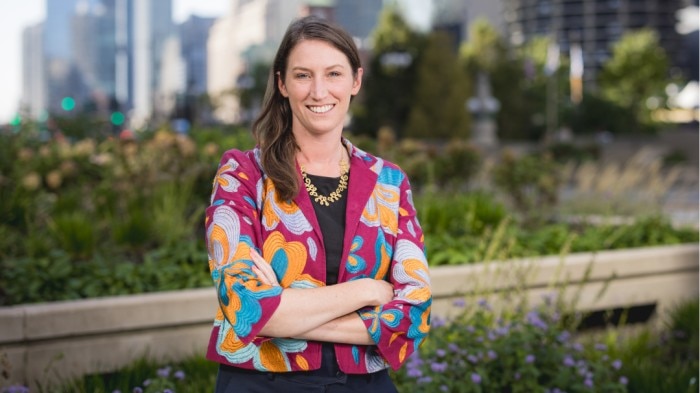
- 2024 Prize Winner Dr. Laura Seeholzer
2024 Prize Winner Dr. Laura Seeholzer
University of California School of Medicine, San Francisco, USA
Laura Seeholzer is a neurophysiologist investigating how our airways sense external threats. Following degrees in Entomology and Biology from Cornell University, she earned her Ph.D. with Dr. Vanessa Ruta at The Rockefeller University, studying the evolution of neural circuitry underlying species-specific behaviors. During her post-doctoral studies with Dr. David Julius at the University of California, San Francisco, she described the molecular and cellular mechanisms by which airway neuroendocrine cells detect and clear noxious aspirated stimuli. Her work, which is supported by Helen Hay Whitney and IRACDA fellowships and funding from the NIH and Tobacco Related Disease Research Program, illustrates how sensory epithelial cells and neurons collaborate to execute essential, life-saving reflexes.
Essay: “(Don’t) Take My Breath Away”
When water “goes down the wrong pipe” or stomach acid is refluxed into our airways, most people have an immediate and strong reaction: they start coughing, gagging and swallowing. An inability to clear these and other noxious stimuli can lead to trouble breathing, aspiration pneumonia or lung damage. Sensory neurons play an important role in initiating protective reflexes by directly detecting the external environment, but they can also be activated by sentinel cells embedded within the epithelium. We found that tracheal and laryngeal neuroendocrine (NE) cells, a rare epithelial cell type, directly detect two noxious aspirated stimuli: water and acid. Upon stimulation, NE cells release protective reflexes like swallowing and coughing. Our research identifies laryngeal and tracheal NE cells as a critical, previously overlooked cell population that protects our airways. In the future, it will be important to understand whether NE cell dysregulation contributes an increased likelihood of aspiration as people age or in diseases where critical airway reflexes are compromised.
Essay: “(Don’t) Take My Breath Away”
When water “goes down the wrong pipe” or stomach acid is refluxed into our airways, most people have an immediate and strong reaction: they start coughing, gagging and swallowing. An inability to clear these and other noxious stimuli can lead to trouble breathing, aspiration pneumonia or lung damage. Sensory neurons play an important role in initiating protective reflexes by directly detecting the external environment, but they can also be activated by sentinel cells embedded within the epithelium. We found that tracheal and laryngeal neuroendocrine (NE) cells, a rare epithelial cell type, directly detect two noxious aspirated stimuli: water and acid. Upon stimulation, NE cells release protective reflexes like swallowing and coughing. Our research identifies laryngeal and tracheal NE cells as a critical, previously overlooked cell population that protects our airways. In the future, it will be important to understand whether NE cell dysregulation contributes an increased likelihood of aspiration as people age or in diseases where critical airway reflexes are compromised.
Lire la suite
Videos not loading, because cookies have been rejected. Change your
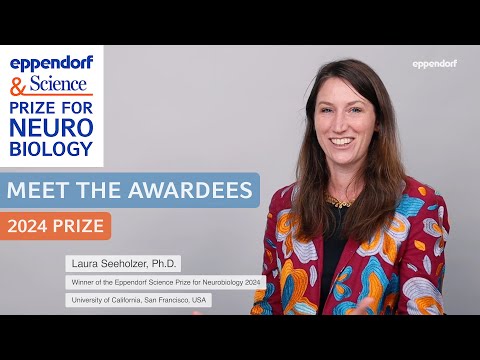
Meet the Awardees 2024
Watch to find out more about the 2024 prize winner Laura Seeholzer and prize finalists Claudia Kathe and Rosemary Cater. Learn about their research, what motivates them in the lab, and why they applied for the Eppendorf & Science Prize for Neurobiology.
Lire la suite
Downloads

PDF 0,07 MB
Research on airway protective reflexes wins 2024 Eppendorf & Science Prize
JPG 0,12 MB
Laura Seeholzer
PDF 0,53 MB
PDF 2,19 MB
2024 Eppendorf & Science Prize Winner and Finalists