
-
- Pipettes, distributeurs et dispositifs de manipulation de liquides automatisée
- Toutes les micropipettes
- Pipettes mécaniques
- Pipettes électroniques
- Pipettes multicanaux
- Pipettes et distributeurs à déplacement positif
- Distributeurs sur flacon
- Auxiliaires de pipetage
- Accessoires pour pipettes et distributeurs
- Pipetage automatisé
- Consommables d’automatisation
- Accessoires d’automatisation
- Services pour pipettes et distributeurs
Vous vous apprêtez à quitter ce site.
Veuillez noter que votre panier actuel n’est pas encore enregistré et ne pourra pas être affiché sur le nouveau site ou lors de votre prochaine visite. Si vous souhaitez enregistrer votre panier, veuillez vous connecter sur votre compte.
- Page d'accueil
- Lab Academy
- Topics, Methods & Technology
- Pipetting & Dispensing
- Cleaning Pipettes Can Protect Your Sample
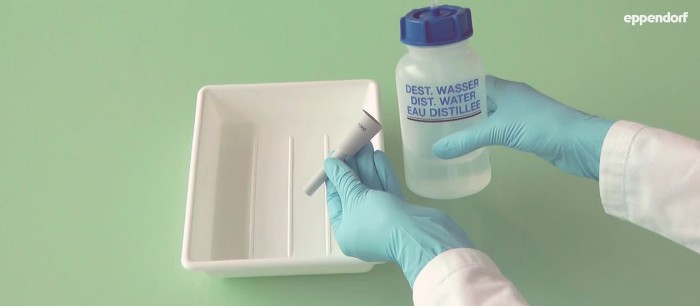
Cleaning Pipettes Can Protect Your Sample
Lab Academy
- Biotechnologie
- Maintenance et étalonnage
- Liquid Handling
- Distributeurs
- Test
No matter whether you use manual or electronic pipettes, both can get contaminated and dirty from all the different liquids and solutions they are exposed to. Common contamination points are the outside of the pipette as well as the inside of the lower part. A pipette should be cleaned regularly to guarantee contamination-free working and sample safety.
The worst contamination scenario is when solutions enter the pipette cone inside the pipette. This can happen when more liquid is aspirated than the tip volume allows. It is also possible that the pipette is placed onto a table or turned upside down with a filled pipette tip causing the liquid to flow into the pipette cone. Another huge problem can be the formation of aerosols. These are tiny liquid drops evaporating naturally from each liquid containing contamination such as virus, DNA, RNA or bacteria. These liquid drops rise into the pipette cone. Inner contaminations of the pipette can lead to cross-contamination of multiple samples ruining entire applications. Pipette tips containing a filter can prevent aerosols from entering the pipette cone. And special blocking filters made of swelling material block the tip when the filter comes in contact with liquids.
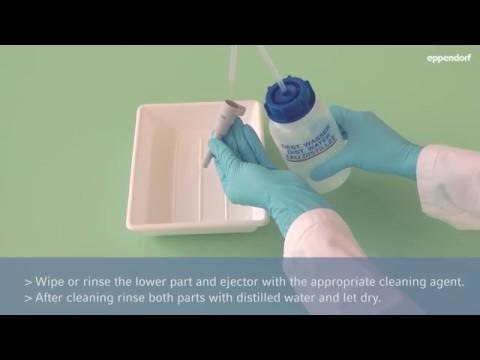
Nevertheless, apart from all preventive procedures such as filter tips and careful handling, once the pipette is contaminated it needs to be cleaned. This is perfectly done by a professional service. But many things can be done in your own lab if the pipette fulfills some requirements. Pipettes should be cleaned regularly to make sure that hidden contamination is removed. Therefore, the lower part of pipettes should be removable. This is especially important when using electronic pipettes, as this is no standard yet. The lower part of electronic pipettes should be easily removable and cleanable. A removable lower part enables rinsing on the inside and thorough cleaning of the whole pipette. The pipette should be resistant to common cleaning agents and DNA/RNA cleaning solutions to make sure the pipette can be wiped from the outside and rinsed on the inside. Most contamination can be removed by wiping and rinsing. If sterility is an issue, choose a pipette that can be autoclaved without dismounting to simplify pipette maintenance. When using Eppendorf electronic pipettes, the lower part is removable and autoclavable to inactivate microorganisms that entered the pipette cone.
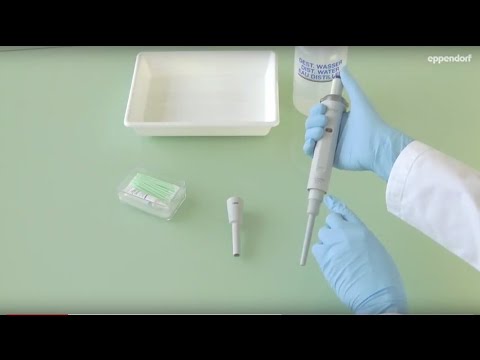
Proper cleaning of our pipettes can be seen in short pipette cleaning tutorials:
Lire la suite
Videos not loading, because cookies have been rejected. Change your
Lire la suite
Videos not loading, because cookies have been rejected. Change your
Lire la suite
Related links
Lire la suite
Eppendorf solutions
- Pipette Calibration Service
Lire la suite