MENU
AT | EUR

AT | EUR
-
- All Centrifuges
- Benchtop Centrifuges
- Floor-Standing Centrifuges
- Refrigerated Centrifuges
- Microcentrifuges
- Multipurpose Centrifuges
- High-Speed Centrifuges
- Ultracentrifuges
- Concentrator
- IVD Products
- High-Speed and Ultracentrifuge Consumables
- Centrifuge Tubes
- Centrifuge Plates
- Device Management Software
- Sample and Information Management
-
- All Pipettes, Dispensers & Automated Liquid Handlers
- Mechanical Pipettes
- Electronic Pipettes
- Multi-Channel Pipettes
- Positive Displacement Pipettes & Dispensers
- Pipette Tips
- Bottle-Top Dispensers
- Pipette Controllers
- Dispenser & Pipette Accessories
- Automated Pipetting
- Automation Consumables
- Automation Accessories
- Liquid Handler & Pipette Services
Sorry, we couldn't find anything on our website containing your search term.
Sorry, we couldn't find anything on our website containing your search term.
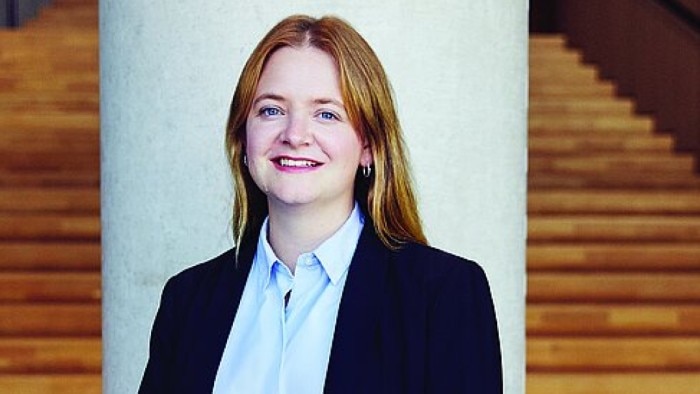
2025 Award Finalist Dr. Fena Ochs
Dr. Fena Ochs earned her Ph.D. in 2018 from the Novo Nordisk Foundation Centre for Protein Research at the University of Copenhagen. Under the mentorship of Professor Jiri Lukas, Dr. Ochs identified a novel function for the tumor suppressor protein 53BP1 in DNA repair.
Dr. Ochs then joined the laboratory of Professor Kim Nasmyth at the University of Oxford as Postdoctoral Fellow. There, she deciphered the stoichiometry of the essential protein complex cohesin during cell division. Throughout her career, Fena has been developing cutting-edge super-resolution microscopy technology, instrumental in these discoveries.
In 2023, Dr. Ochs was appointed Principal Investigator and Associate Professor at the University of Copenhagen in Denmark. Her laboratory focuses on understanding the mechanisms that maintain genome integrity and how their dysregulation leads to diseases, particularly cancer and neurodevelopmental disorders.
Synopsis of the research:
Illuminating the cohesin complex during cell division
Cell division is the foundation of life, responsible for constructing our tissues, organs, and entire bodies. Each cell division is a delicate process, ensuring the accurate distribution of our genetic code from one mother cell to two daughter cells. This critical task is orchestrated by a group of proteins known as the cohesin complex.
Cohesin holds together newly duplicated sister chromatids from their genesis during DNA replication until their segregation during mitosis, in a process called sister chromatid cohesion. Despite its discovery nearly three decades ago, the molecular mechanism underlying sister chromatid cohesion remains incompletely understood. Utilizing single molecule super-resolution imaging in human cells, I have discovered the nature of cohesin mediating sister chromatid cohesion. Monomers of cohesin, in conjunction with an accessory factor called Sororin, entrap identical chromosomes and facilitate their symmetrical distribution to daughter cells. These mechanistic insights advance our understanding of how sister chromatid cohesion is established and have implications for conditions where this process is impaired, such as age-related infertility.
Dr. Ochs then joined the laboratory of Professor Kim Nasmyth at the University of Oxford as Postdoctoral Fellow. There, she deciphered the stoichiometry of the essential protein complex cohesin during cell division. Throughout her career, Fena has been developing cutting-edge super-resolution microscopy technology, instrumental in these discoveries.
In 2023, Dr. Ochs was appointed Principal Investigator and Associate Professor at the University of Copenhagen in Denmark. Her laboratory focuses on understanding the mechanisms that maintain genome integrity and how their dysregulation leads to diseases, particularly cancer and neurodevelopmental disorders.
Synopsis of the research:
Illuminating the cohesin complex during cell division
Cell division is the foundation of life, responsible for constructing our tissues, organs, and entire bodies. Each cell division is a delicate process, ensuring the accurate distribution of our genetic code from one mother cell to two daughter cells. This critical task is orchestrated by a group of proteins known as the cohesin complex.
Cohesin holds together newly duplicated sister chromatids from their genesis during DNA replication until their segregation during mitosis, in a process called sister chromatid cohesion. Despite its discovery nearly three decades ago, the molecular mechanism underlying sister chromatid cohesion remains incompletely understood. Utilizing single molecule super-resolution imaging in human cells, I have discovered the nature of cohesin mediating sister chromatid cohesion. Monomers of cohesin, in conjunction with an accessory factor called Sororin, entrap identical chromosomes and facilitate their symmetrical distribution to daughter cells. These mechanistic insights advance our understanding of how sister chromatid cohesion is established and have implications for conditions where this process is impaired, such as age-related infertility.
Read more
Downloads

PDF 2.59 MB
PDF 0.76 MB