MENU
BE | EUR
-
-
-
- Service pour centrifugeuses et rotors
- Service pour pipette
- Étalonnage pour pipette neuve
- Service pour Mastercycler
- Service pour systèmes d’automatisation
- Services pour bioprocédés
- Service pour congélateurs
- Service pour incubateurs
- Service pour agitateurs
- Service de contrôle de la température et de l’agitation
-
-
- WHX Labs Dubai 2026
- analytica 2026
- Forum Labo 2026
- SLAS Europe 2026
- Forum Labo 2026 Bioprocess
- Bioprocessing Summit Europe 2026
- BioProcess International 2026
- Swiss Biotech Day 2025
- ISCT 2026
- Pichia 2026
- Future Labs Live 2026
- BioProScale Sympposium 2026
- ASGCT 2026
- Eppendorf Automation Forum 2026
- ESACT 2026
- ELRIG Drug Discovery 2026

-
-
-
- Service pour centrifugeuses et rotors
- Service pour pipette
- Étalonnage pour pipette neuve
- Service pour Mastercycler
- Service pour systèmes d’automatisation
- Services pour bioprocédés
- Service pour congélateurs
- Service pour incubateurs
- Service pour agitateurs
- Service de contrôle de la température et de l’agitation
-
-
- WHX Labs Dubai 2026
- analytica 2026
- Forum Labo 2026
- SLAS Europe 2026
- Forum Labo 2026 Bioprocess
- Bioprocessing Summit Europe 2026
- BioProcess International 2026
- Swiss Biotech Day 2025
- ISCT 2026
- Pichia 2026
- Future Labs Live 2026
- BioProScale Sympposium 2026
- ASGCT 2026
- Eppendorf Automation Forum 2026
- ESACT 2026
- ELRIG Drug Discovery 2026
BE | EUR
-
- Pipetage manuel & distribution
- All Micropipettes
- Mechanical Pipettes
- Connected Pipettes
- Multi-Channel Pipettes
- Positive Displacement Pipettes & Dispensers
- Bottle-Top Dispensers
- Pipette Controllers
- Accessoires
- Automates de pipetage
- Automation Consumables
- Automation Accessories
- Liquid Handler & Pipette Services
Sorry, we couldn't find anything on our website containing your search term.
Sorry, we couldn't find anything on our website containing your search term.
- Page d'accueil
- Entreprise et carrières
- Actualités et médias
- Actualités
- 2026 Eppendorf & Science Prize honors breakthrough in 3D mapping of brain lipids
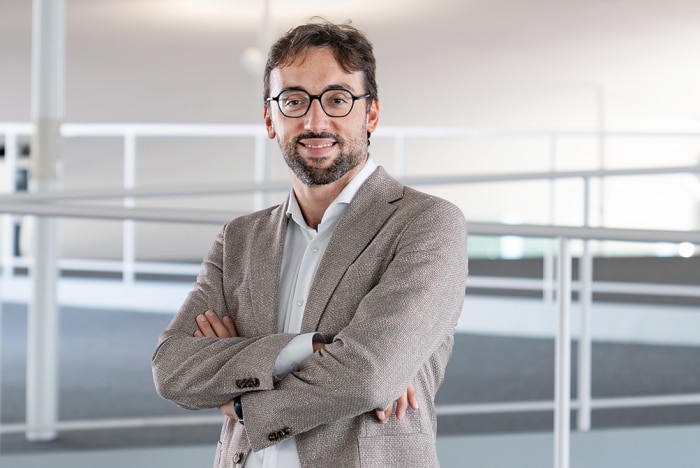
2026 Eppendorf & Science Prize honors breakthrough in 3D mapping of brain lipids
news
- Récompenses
- Communiqués de presse
- Nouvelles de l’entreprise
A pioneering 3D map of lipids across the adult mouse brain has earned Gioele La Manno, Ph.D., of EPFL, the 2026 Eppendorf & Science Prize for Neurobiology. His work reveals a previously overlooked layer of neural diversity. One in which distinct lipid patterns help define brain regions, cellular identities, and physiological states.
Congratulations to Gioele La Manno, Ph.D., at École polytechnique fédérale de Lausanne (EPFL), Switzerland, on winning the 2026 Eppendorf & Science Prize for Neurobiology for his pioneering work of whole-brain 3D lipid mapping, providing an atlas of a hidden layer of neural diversity.
“Gioele La Manno’s winning essay describes a new way of thinking about lipids,” said Mattia Maroso, Senior Editor at Science and Chair of the Prize Jury. “Lipids are well-known cellular components that have been considered almost exclusively as structural molecules. Dr. La Manno’s work suggests that lipid heterogeneity defines a hierarchical map of ‘lipizones’ that help define brain regions, cell identities, and physiological states. Deciphering the lipizone map will bring to light new principles of brain organization.”
Lipids form the membranes of brain cells and the myelin that surrounds nerve fibers, but their diversity has been much more difficult to map than the diversity of genes. La Manno and his colleagues developed computational methods to combine millions of imaging mass spectra into the first three-dimensional lipid atlas of the adult mouse brain.
“The findings reveal a layer of brain diversity that has been largely overlooked,” said La Manno. “By making it possible to study where lipids are located and how their distributions change, our work provides a foundation for testing how lipid composition contributes to cell identity, brain function, and disease.”
Zuri Sullivan, Ph.D., Zuri Sullivan, Ph.D., Member of the Whitehead Institute for Biomedical Research and the Whitehead Career Development Professor of Biology at MIT in Cambridge USA, is honored for her work on how the brain distinguishes between different immune challenges to generate distinct states of sickness. Alexander Shakeel Bates, Ph.D., Research Fellow at Harvard Medical School in Boston, USA, is recognized for building and analyzing central nervous system connectomes in the fruit fly.
Eppendorf and the journal Science have been awarding this prestigious prize since 2002. Since its inception, the Prize has recognized nearly 80 winners and finalists - brilliant young scientists at an early stage of their careers.
This year’s prize will be presented for the 25th time on November 15, 2026, in Washington, D.C., USA, during the week of the Society for Neuroscience meeting.
“Gioele La Manno’s winning essay describes a new way of thinking about lipids,” said Mattia Maroso, Senior Editor at Science and Chair of the Prize Jury. “Lipids are well-known cellular components that have been considered almost exclusively as structural molecules. Dr. La Manno’s work suggests that lipid heterogeneity defines a hierarchical map of ‘lipizones’ that help define brain regions, cell identities, and physiological states. Deciphering the lipizone map will bring to light new principles of brain organization.”
Lipids form the membranes of brain cells and the myelin that surrounds nerve fibers, but their diversity has been much more difficult to map than the diversity of genes. La Manno and his colleagues developed computational methods to combine millions of imaging mass spectra into the first three-dimensional lipid atlas of the adult mouse brain.
“The findings reveal a layer of brain diversity that has been largely overlooked,” said La Manno. “By making it possible to study where lipids are located and how their distributions change, our work provides a foundation for testing how lipid composition contributes to cell identity, brain function, and disease.”
Two finalists recognized for pioneering contributions in neurobiology
Zuri Sullivan, Ph.D., Zuri Sullivan, Ph.D., Member of the Whitehead Institute for Biomedical Research and the Whitehead Career Development Professor of Biology at MIT in Cambridge USA, is honored for her work on how the brain distinguishes between different immune challenges to generate distinct states of sickness. Alexander Shakeel Bates, Ph.D., Research Fellow at Harvard Medical School in Boston, USA, is recognized for building and analyzing central nervous system connectomes in the fruit fly.
Eppendorf and the journal Science have been awarding this prestigious prize since 2002. Since its inception, the Prize has recognized nearly 80 winners and finalists - brilliant young scientists at an early stage of their careers.
This year’s prize will be presented for the 25th time on November 15, 2026, in Washington, D.C., USA, during the week of the Society for Neuroscience meeting.
Lire la suite
Downloads

Press Release
PDF 0,36 MB

Press Image
PNG 1,06 MB