MENU
IN | INR

IN | INR
-
- All Pipettes, Dispensers & Automated Liquid Handlers
- All Micropipettes
- Mechanical Pipettes
- Electronic Pipettes
- Multi-Channel Pipettes
- Positive Displacement Pipettes & Dispensers
- Bottle-Top Dispensers
- Pipette Controllers
- Dispenser & Pipette Accessories
- Automated Pipetting
- Automation Consumables
- Automation Accessories
- Liquid Handler & Pipette Services
Sorry, we couldn't find anything on our website containing your search term.
Sorry, we couldn't find anything on our website containing your search term.
- Home
- Beyond Science
- Off the Bench
- Inspiring Science
- Lights off
Lights Off!
Beyond Science
- Sustainability
- Off the Bench
- Off the Bench
- Inspiring Science
We pollute not only the oceans and the air, but also the skies – with light. Light pollution sounds harmless, but it is in fact a serious problem with consequences for humans, animals and nature. What can be done about it?
When Samyukta Manikumar sets out into nature on foot, it is mostly in the dark. She is neither looking for wild animals nor beautiful scenery, but the night sky. “There are very few places where the sky is as clear, and constellations as impressive, as right here”, recounts the 28-year-old from Kenya who, close to Nairobi, can only occasionally spot the Big Dipper or the Milky Way. Apart from that, it is mostly the high beams of cars and streetlights that dominate the views of the sky.
Light pollution is the name for this phenomenon – when artificial light sources outshine the light of the stars and the moon. “Those who want to enjoy an undisturbed view of the stars must leave civilization behind”, advises Manikumar. As a tour guide, she takes people with her on her night walks. Together, they lie on the ground and gaze at the shining stars through their binoculars or cameras, or simply with the naked eye. “In the beginning, some can’t stop being amazed as they experience true darkness for the very first time.”
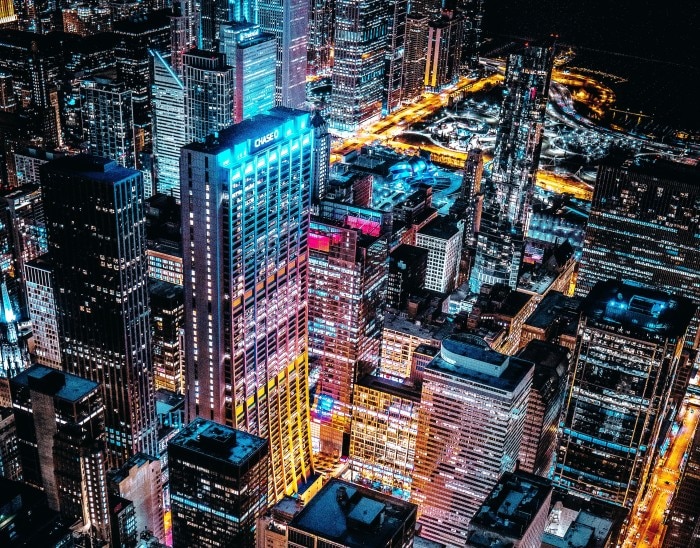
Exposed to light smogNeon lights, floodlights and industrial lighting, as well as car lights, generate light domes in the night which brighten the sky within a radius of several kilometers. Even a seemingly clear night sky is affected by light scatter which becomes evident through astrophotography and its extended exposure times. “Whereas in a deep dark environment, the naked eye should be able to detect more than 6,000 stars, it is often only dozens within cities”, says Manikumar. Since most people live in settlements or cities, up to 80 percent of the world population, and 99 percent of those living in Europe, are directly affected by light smog.
Furthermore, multiple studies have been able to demonstrate the negative effects on humans and on nature. For example, the nightly exposure to light influences our hormone balance. The release of the sleep hormone melatonin is delayed, which makes falling asleep in the evening, as well as waking up in the morning, more difficult. Problems sleeping may contribute to the onset of diabetes, hypertension, obesity or depression. And, according to a report issued by the European Commission, there may even exist a connection with an elevated risk of cancer.
Light pollution is the name for this phenomenon – when artificial light sources outshine the light of the stars and the moon. “Those who want to enjoy an undisturbed view of the stars must leave civilization behind”, advises Manikumar. As a tour guide, she takes people with her on her night walks. Together, they lie on the ground and gaze at the shining stars through their binoculars or cameras, or simply with the naked eye. “In the beginning, some can’t stop being amazed as they experience true darkness for the very first time.”
Exposed to light smogNeon lights, floodlights and industrial lighting, as well as car lights, generate light domes in the night which brighten the sky within a radius of several kilometers. Even a seemingly clear night sky is affected by light scatter which becomes evident through astrophotography and its extended exposure times. “Whereas in a deep dark environment, the naked eye should be able to detect more than 6,000 stars, it is often only dozens within cities”, says Manikumar. Since most people live in settlements or cities, up to 80 percent of the world population, and 99 percent of those living in Europe, are directly affected by light smog.
Furthermore, multiple studies have been able to demonstrate the negative effects on humans and on nature. For example, the nightly exposure to light influences our hormone balance. The release of the sleep hormone melatonin is delayed, which makes falling asleep in the evening, as well as waking up in the morning, more difficult. Problems sleeping may contribute to the onset of diabetes, hypertension, obesity or depression. And, according to a report issued by the European Commission, there may even exist a connection with an elevated risk of cancer.
Read more
Science has been pointing the finger at this development for some time now, but not much is happening. We need support from governments ...”
Samyukta Manikumar
Death by disorientation
The impact of light pollution, however, is magnified when it comes to animals and plants. Due to the artificial light at night, it is possible that deciduous trees will lose their leaves later in the fall and thus become more susceptible to frost damage, and on heavily illuminated beaches, young sea turtles will not find their way to the sea. Even migratory birds can lose their orientation and collide with buildings at night when the lights are on.
But it is nocturnal insects which suffer the most from continuous light. Typically, they take their cue from the light of the night sky. Attracted by the many artificial light sources, the creatures circle the lamps until they are completely exhausted, thus becoming easy prey to predators. Needless to say, direct contact with the hot light source will often prove fatal. Studies show that up to 150 insects will die in a single night near a streetlamp. Multiplied by approximately 10 million streetlamps in Germany alone, this leaves 1.5 billion dead insects.
More research is needed
Which animal and plant species are affected, and how strongly, is being revealed very slowly – Samyukta Manikumar is discovering that the science of light pollution is only in its infancy. For this reason, she has created a database with available studies on the implications for the affected animal species in her home country – to strengthen awareness of the negative effects of light pollution. Manikumar is also active in the International Dark-Sky Association (IDA) which is promoting education, research and networking around the world.
The goal ahead is clear for all involved: they intend to protect places which thus far have been spared from light pollution, as well as limit the extent of stress in other areas through education and collaboration with municipalities and cities. But what can actively be done against light pollution? Just turn the lights off, advises Manikumar, and adds: “If we are talking about private households, it is actually often small decisions that turn out to be very effective: turning off building or property lights at night or installing a timer; using lamps with a low Kelvin number – those with a warm yellow light – in the garden and ensuring they only face down and not give off light in other directions.”
The largest proportion of light pollution, however, originates from industry. According to Manikumar, this problem requires a different approach: “People must first become aware of the problem. Science has been pointing the finger at this development for some time now, but not much is happening. We need support from governments in order to become truly effective – not only locally, but nationally, and ideally, internationally. After all, the problem of light pollution affects us all.”
The impact of light pollution, however, is magnified when it comes to animals and plants. Due to the artificial light at night, it is possible that deciduous trees will lose their leaves later in the fall and thus become more susceptible to frost damage, and on heavily illuminated beaches, young sea turtles will not find their way to the sea. Even migratory birds can lose their orientation and collide with buildings at night when the lights are on.
But it is nocturnal insects which suffer the most from continuous light. Typically, they take their cue from the light of the night sky. Attracted by the many artificial light sources, the creatures circle the lamps until they are completely exhausted, thus becoming easy prey to predators. Needless to say, direct contact with the hot light source will often prove fatal. Studies show that up to 150 insects will die in a single night near a streetlamp. Multiplied by approximately 10 million streetlamps in Germany alone, this leaves 1.5 billion dead insects.
More research is needed
Which animal and plant species are affected, and how strongly, is being revealed very slowly – Samyukta Manikumar is discovering that the science of light pollution is only in its infancy. For this reason, she has created a database with available studies on the implications for the affected animal species in her home country – to strengthen awareness of the negative effects of light pollution. Manikumar is also active in the International Dark-Sky Association (IDA) which is promoting education, research and networking around the world.
The goal ahead is clear for all involved: they intend to protect places which thus far have been spared from light pollution, as well as limit the extent of stress in other areas through education and collaboration with municipalities and cities. But what can actively be done against light pollution? Just turn the lights off, advises Manikumar, and adds: “If we are talking about private households, it is actually often small decisions that turn out to be very effective: turning off building or property lights at night or installing a timer; using lamps with a low Kelvin number – those with a warm yellow light – in the garden and ensuring they only face down and not give off light in other directions.”
The largest proportion of light pollution, however, originates from industry. According to Manikumar, this problem requires a different approach: “People must first become aware of the problem. Science has been pointing the finger at this development for some time now, but not much is happening. We need support from governments in order to become truly effective – not only locally, but nationally, and ideally, internationally. After all, the problem of light pollution affects us all.”
Read more
ABOUT “IDA”
The International Dark-Sky Association (IDA) is a consortium of researchers, astrophotographers and enthusiasts who have made it their goal to protect the night sky and provide education about light pollution. Globally, IDA comprises more than 500 official representatives, like Samyukta Manikumar from Kenya, who advocate for the aims of the organization on the local level.
Read more