MENU
LT | EUR
-
-
-
- Pichia 2026
- Future Labs Live 2026
- BioProScale Sympposium 2026
- ASGCT 2026
- Eppendorf Automation Forum 2026
- ECB 2026
- WoTS 2026
- ELRIG Drug Discovery 2026
- 75th JAMT Congress & IFBLS2026
- JASIS2026
- GSCN 2026
- BPI EAST 2026
- Bioprocess Days 2026
- Bioprocess Day 2026, Texas, USA
- Bioprocess Day 2026, Philadelphia, USA
- Cell 2026
- FPP x CMS Amsterdam
-

-
-
-
- Pichia 2026
- Future Labs Live 2026
- BioProScale Sympposium 2026
- ASGCT 2026
- Eppendorf Automation Forum 2026
- ECB 2026
- WoTS 2026
- ELRIG Drug Discovery 2026
- 75th JAMT Congress & IFBLS2026
- JASIS2026
- GSCN 2026
- BPI EAST 2026
- Bioprocess Days 2026
- Bioprocess Day 2026, Texas, USA
- Bioprocess Day 2026, Philadelphia, USA
- Cell 2026
- FPP x CMS Amsterdam
-
LT | EUR
-
- All Pipettes, Dispensers & Automated Liquid Handlers
- All Micropipettes
- Mechanical Pipettes
- Electronic Pipettes
- Multi-Channel Pipettes
- Positive Displacement Pipettes & Dispensers
- Bottle-Top Dispensers
- Pipette Controllers
- Dispenser & Pipette Accessories
- Automated Pipetting
- Automation Consumables
- Automation Accessories
- Liquid Handler & Pipette Services
Sorry, we couldn't find anything on our website containing your search term.
Sorry, we couldn't find anything on our website containing your search term.
- Home
- Company & Careers
- Scientific Awards
- Eppendorf & Science Prize for Neurobiology
- All Prize Winners & Finalists
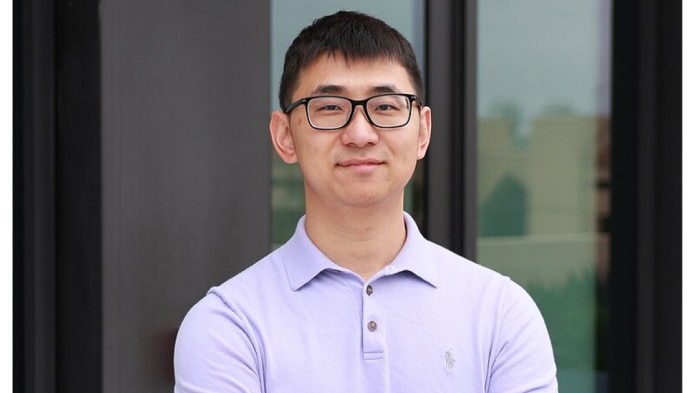
- 2025 Prize Winner Dr. Cheng Lyu
2025 Prize Winner Dr. Cheng Lyu
University Stanford, California, USA
Cheng Lyu earned his bachelor’s and master’s degrees in physics from Peking University and completed his Ph.D. in Gaby Maimon’s lab at Rockefeller University, where he studied the neural basis of path integration in Drosophila. He is currently a postdoctoral researcher in Liqun Luo’s lab at Stanford University, investigating how neural circuits are precisely assembled during development. Supported by the Stanford Science Fellows and the Gatsby Foundation, his work has shown that rewiring specific groups of olfactory neurons in flies can alter their behavioral responses to the same odors. Cheng will soon establish his own laboratory at Westlake University, where he aims to further explore how developmental changes in neural circuits shape animal behavior in ethologically meaningful ways. Essay: “Respecifying partners”
How do neural circuits assemble with remarkable precision during brain development, and how can changes in this process alter behavior? Using the fruit fly olfactory system—where ~50 types of sensory neurons connect 1-to-1with ~50 types of partner neurons—our research uncovered how the fly olfactory circuit reduces a seemingly intractable 3D wiring problem into simpler 1D choices. By systematically tracing, quantifying, and perturbing neuron development across many cell types, we revealed that partner selection occurs along constrained trajectories, greatly simplifying the molecular codes for specificity. Building on this framework, we demonstrated that by tuning the combinatorial balance of attraction and repulsion, it is possible to rewire single neuron types to form alternative connections. These rewired circuits not only altered neural activity patterns but also reshaped social behaviors, such as male courtship. Together, our work links genetic variation to circuit assembly, function, and behavior, providing a foundation for understanding how developmental variations influence brain evolution and neurodevelopmental disease.
Read more
Video of the presentation
Read more
Downloads

PDF 0.37 MB
Research on rewiring neural circuit in fruit flies wins 2025 Eppendorf & Science Prize
JPG 0.41 MB
Cheng Lyu
PDF 0.14 MB