MENU
LT | EUR
-
-
-
-
- Pichia 2026
- Future Labs Live 2026
- BioProScale Sympposium 2026
- ASGCT 2026
- Eppendorf Automation Forum 2026
- ECB 2026
- WoTS 2026
- ELRIG Drug Discovery 2026
- 75th JAMT Congress & IFBLS2026
- JASIS2026
- GSCN 2026
- BPI EAST 2026
- Bioprocess Days 2026
- Bioprocess Day 2026, Texas, USA
- Bioprocess Day 2026, Philadelphia, USA

-
-
-
-
- Pichia 2026
- Future Labs Live 2026
- BioProScale Sympposium 2026
- ASGCT 2026
- Eppendorf Automation Forum 2026
- ECB 2026
- WoTS 2026
- ELRIG Drug Discovery 2026
- 75th JAMT Congress & IFBLS2026
- JASIS2026
- GSCN 2026
- BPI EAST 2026
- Bioprocess Days 2026
- Bioprocess Day 2026, Texas, USA
- Bioprocess Day 2026, Philadelphia, USA
LT | EUR
-
- All Pipettes, Dispensers & Automated Liquid Handlers
- All Micropipettes
- Mechanical Pipettes
- Electronic Pipettes
- Multi-Channel Pipettes
- Positive Displacement Pipettes & Dispensers
- Bottle-Top Dispensers
- Pipette Controllers
- Dispenser & Pipette Accessories
- Automated Pipetting
- Automation Consumables
- Automation Accessories
- Liquid Handler & Pipette Services
Sorry, we couldn't find anything on our website containing your search term.
Sorry, we couldn't find anything on our website containing your search term.
- Home
- Lab Academy
- Training & Education
- Webinars
- Customer voices: automation in the real world
Webinar
Customer voices: automation in the real world
Webinars
- Gene Therapy
- Automation
- Solutions
- Recorded Webinars
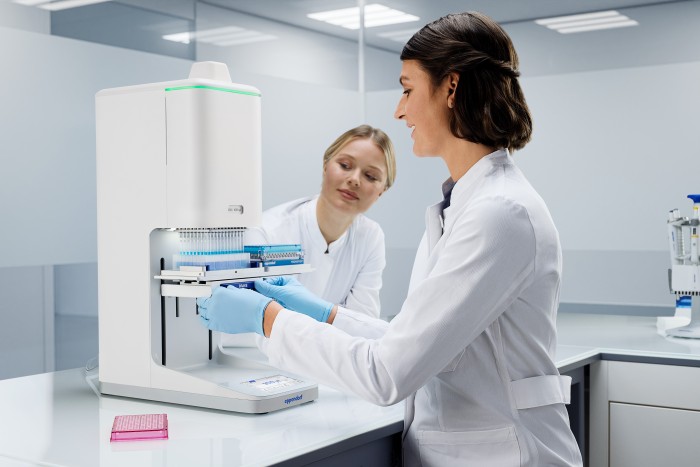
What does automation look like in a working laboratory? At the recent Eppendorf Automation User Forum, four experienced scientists shared practical insights from their own journeys—from streamlining molecular biology workflows and automating Promega chemistry to integrating automation into clinical NGS delivery.
Catch up on their presentations on demand and discover how laboratories are using the epMotion® system to improve efficiency, precision and reproducibility in real-world workflows.
Read more
Precision science: epMotion® as a multifunctional tool in the molecular biology laboratory
From manual ELISAs to 2.5\times throughput: Pronacera’s automation journey with epMotion® .
Follow Pronacera’s journey from manual plate work to automated ELISAs and microbiome assays — and see how automation is helping deliver precision health insights across Spain and Latin America.Chief Technical Officer Jorge A. Ramírez Tejero introduces the Seville-based company and its work in:
- Reproductive genetics, including endometrial receptivity, microbiome and immune profiling
- Intestinal, vaginal and seminal microbiome testing
- Genetically based thrombophilia testing
- A pioneering molecular tool for fibromyalgia, aiming toward future IVD compliance
With more than 12,000 tests per year across 10+ countries, growing demand prompted Pronacera to rethink manual ELISA and plate-based workflows. Discover how automation and strong vendor support helped multiply capacity, unlock new markets and free scientists to focus on more than pipetting.
Read more
Rebuilding the Clinical Lab: Automation at the Core of NGS Delivery
From COVID Swabs to 6,800+ Cancer Patients: How Automation Scaled the Nonacus Lab.
Discover how Nonacus Clinical Services grew from a small COVID-testing lab into a high-throughput clinical genomics service powered by automation.Laboratory Operations Manager Dr. Inderpreet Kaur explains how the team used its automation infrastructure to build hereditary cancer, bladder cancer and tumor-profiling services.
You'll see how the lab:
- Overcame the manual ceiling of 12–16 extractions and libraries per operator
- Scaled gDNA extraction from 12–16 to 96 samples per run using epMotion®, reducing hands-on time from approximately five hours to under one
- Achieved a <1% extraction failure rate with fully on-deck lysis, bead-based extraction, washes and elution
- Reduced DNA normalisation from a two-person, three-hour task to one operator in approximately 30 minutes
- Expanded NGS library preparation from 16 to 96 libraries per run, with bead clean-ups handled on deck
The result: 6,841 hereditary cancer results delivered with a <1% failure rate.
Read more
Automating Promega chemistry on epMotion®: Practical Tips, Pitfalls and Real Lab Results
See how Promega and Eppendorf turned manual DNA extraction into a robust, semi-automated workflow — with practical advice for your laboratory.
If you’re evaluating automation for Promega kits or similar chemistries, this talk provides a practical roadmap from readiness and method design to optimisation and reliable, validated clinical results.
Field Support Scientist Ismail Cisse explains:
- How Promega supports automation projects free of charge, subject to conditions, while remaining platform-agnostic
- The three levels of automation and why this session focuses on modular liquid handling with epMotion®
- When a workflow is ready for automation: validated manual processes, sufficient sample volume, consistency, audit trails and the opportunity to free staff time
If you’re evaluating automation for Promega kits or similar chemistries, this talk provides a practical roadmap from readiness and method design to optimisation and reliable, validated clinical results.
Read more
From manual to automated: Implementing epMotion® in an NGS workflow
Follow Hvidovre Hospital’s Department of Clinical Biochemistry through its 10-year journey from a fully manual NIPT workflow to a robust, semi-automated setup using Eppendorf epMotion® . Laboratory Specialist Lena Werge shows how the team streamlined cfDNA library preparation for Illumina NextSeq, reducing more than 200 pipetting steps per eight-sample run while improving hands-on time, reproducibility and error rates.
The workflow also enabled clinical research, including the COBOL study, where cfDNA analysis helped show that approximately 50% of miscarriages in the cohort were associated with chromosomal abnormalities.
You'll hear how the lab:
- Implemented NIPT using maternal plasma cell-free DNA
- Chose epMotion® after evaluating different automation platforms
- Optimised bead clean-up and PCR, and removed entire QC steps through reliable automation
- Reduced operator-dependent variation and “pipetting thumb pain”
- Trained 11 staff members to run the workflow confidently
The workflow also enabled clinical research, including the COBOL study, where cfDNA analysis helped show that approximately 50% of miscarriages in the cohort were associated with chromosomal abnormalities.
Register now and watch all four webinars on demand at your inconvenience.
Read more
Speakers
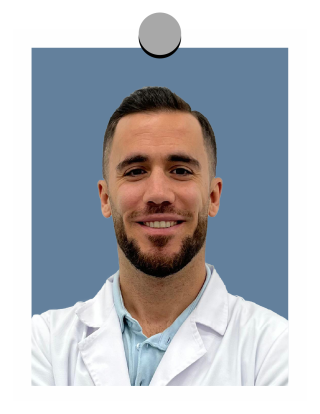
Jorge A. Ramírez Tejero; Chief Technical Officer. Pronacera, Spain
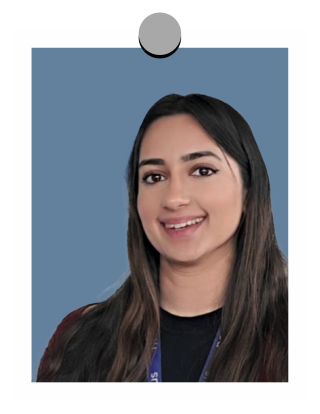
Dr. Inderpreet Kaur; Laboratory Operations Laboratory Manager. Nonacus Clinical Services, UK
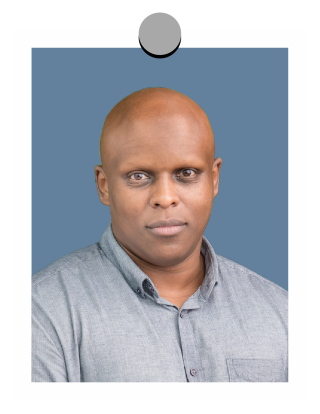
Ismail Cisse, Field Support Scientist; Promega.