-
- Pipettes, distributeurs et dispositifs de manipulation de liquides automatisée
- Toutes les micropipettes
- Pipettes mécaniques
- Pipettes électroniques
- Pipettes multicanaux
- Pipettes et distributeurs à déplacement positif
- Distributeurs sur flacon
- Auxiliaires de pipetage
- Accessoires pour pipettes et distributeurs
- Pipetage automatisé
- Consommables d’automatisation
- Accessoires d’automatisation
- Services pour pipettes et distributeurs
Vous vous apprêtez à quitter ce site.
Veuillez noter que votre panier actuel n’est pas encore enregistré et ne pourra pas être affiché sur le nouveau site ou lors de votre prochaine visite. Si vous souhaitez enregistrer votre panier, veuillez vous connecter sur votre compte.
- Page d'accueil
- Lab Academy
- Life Science
- Molecular Biology
- Efficient & Automated qPCR Setup Without Cross Contamination
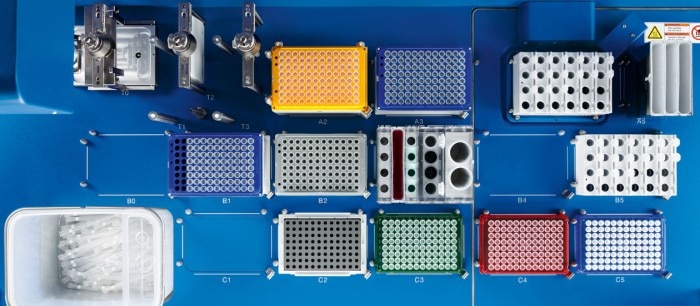
How qPCR Automation Boosts Efficiency While Preventing Cross-Contamination
Lab Academy
- Biologie moléculaire
- PCR
- Reproductibilité
- Automatisation
- Postes de manipulation de liquides
- Test
Standard PCR combined with fluorescent reporter monitoring, real-time quantitative PCR (qPCR), allows you to amplify, detect, and quantify the targeted molecule in a single step. However, manual qPCR set-up is time-consuming, tedious, and requires a lot of practice, because the most probable source of imprecision is the operator itself.
Automated qPCR setup is an effective way to overcome the issues associated with manual qPCR. In this article, we explore how qPCR automation can improve your workflow efficiency, reduce contamination risks, and deliver reliable, reproducible results for routine and high-throughput qPCR.
A real-world example of qPCR automation
Lire la suite
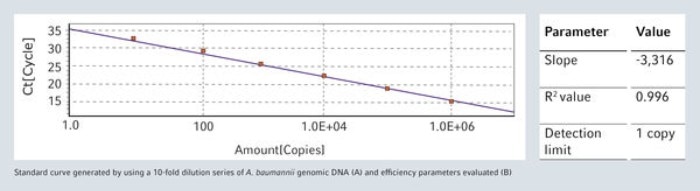
How to understand and prevent qPCR contamination
The three possible sources of contamination are:
- cross-contamination between samples
- contamination from laboratory equipment
- carryover contamination by amplified products from previous qPCRs.
Precautions can be taken to reduce the risk of contamination: uracil DNA glycosylase (UDG) can be used to prevent DNA carryover contamination between reactions, materials can be systematically decontaminated, and separate workstations for each step of the qPCR process can be designated to create an efficient workflow. However, those measures do not eliminate the major cause of false positive results: the accidental contamination with positive samples during Liquid Handling.
Consistent PCR liquid handling practices are essential, particularly when processing large sample numbers. Automated systems help reduce variability introduced by manual pipetting and minimize the risk of sample-to-sample contamination.
Lire la suite
qPCR contamination troubleshooting: finding the source
A common challenge in molecular biology workflows is distinguishing true target amplification from background contamination. For example, genomic DNA contamination qPCR signals can occur when nucleic acid samples are not sufficiently purified or when handling procedures introduce unwanted material into reactions. Establishing standardized workflows and contamination-control measures can help reduce these risks.
Laboratories should also periodically review workspace design, PCR clean-up procedures, and reagent handling practices. While preventing contamination during qPCR setup is the priority, reviewing downstream processes and, where appropriate, a PCR clean-up protocol can provide additional confidence when investigating the root cause of unexpected results. A documented PCR clean-up protocol may also support consistency across operators and experiments.
Lire la suite
The importance of consumables in preventing qPCR contamination
Lire la suite
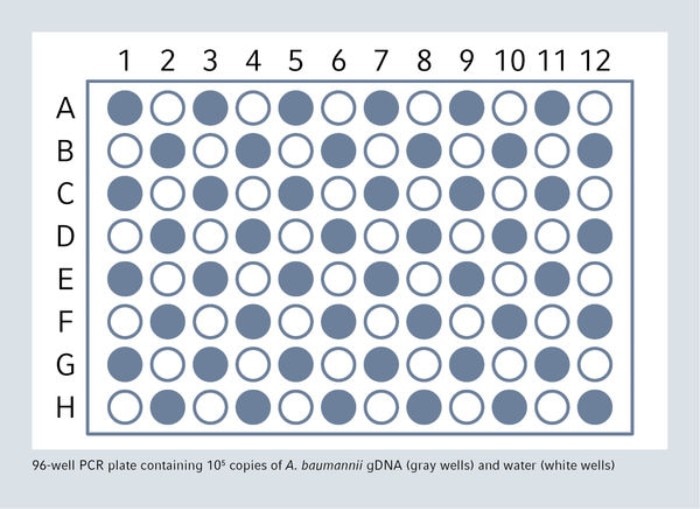
Demonstrating contamination-free automated qPCR setup
Lire la suite
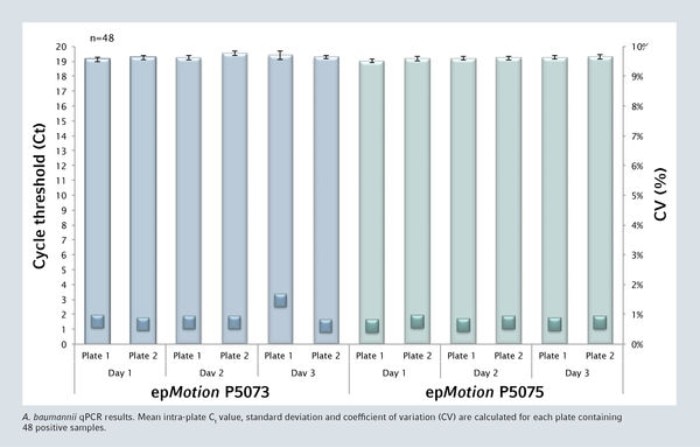
All negative samples were negative and the complete process is highly reproducible. The mean intra-plate Ct value for the 48 positive samples is very consistent with a coefficient of variation never exceeding 1.5%.
Lire la suite
Looking for more information on qPCR automation?
Lire la suite
Automation isn’t just for qPCR!
For NGS workflows, automation can reduce hands-on time, improve consistency between runs, and support the production of high-quality sequencing libraries. By automating repetitive liquid handling steps, labs can scale throughput while maintaining reliable and reproducible results.
If you’re unsure which workflows and kits are suitable for Eppendorf automation systems, the epMotion Method Overview lists protocols that have been pre-tested for epMotion automated liquid handling workstations.
Lire la suite