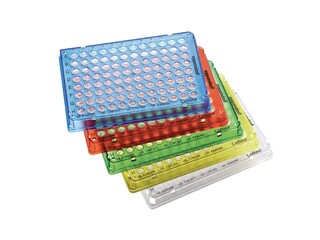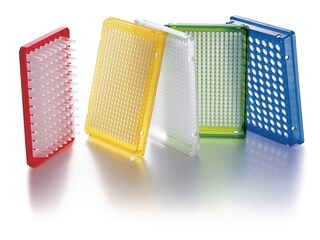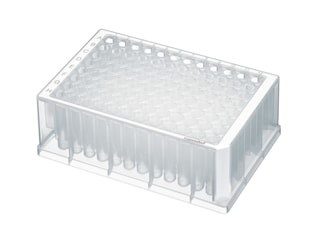
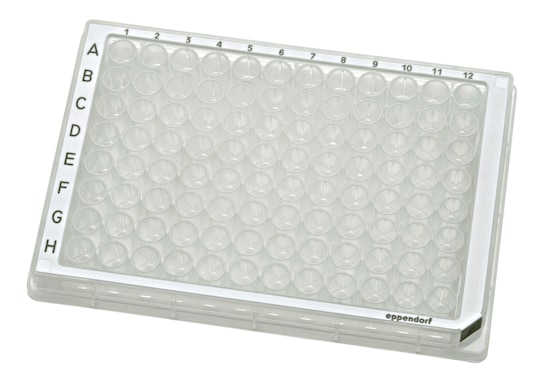
Pipetting, controlling, and recovering your samples is simple with our Microplates. The easy-to-read alphanumeric OptiTrack® matrix label helps you quickly identify individual wells, streamlining your workflow and reducing the risk of pipetting errors. Made from high-transparency polypropylene, our Microplates make it easy to locate your samples at a glance. For maximum sample recovery, choose our LoBind® microplates, available in DNA and Protein LoBind options.
Our range of Assay/Reader plates is designed for reliable measurements—whether you’re working with absorbance in the visible range, fluorescence, or chemiluminescence, all optimized for top-reading plate readers. You’ll experience clear signals, even with low-concentration samples.
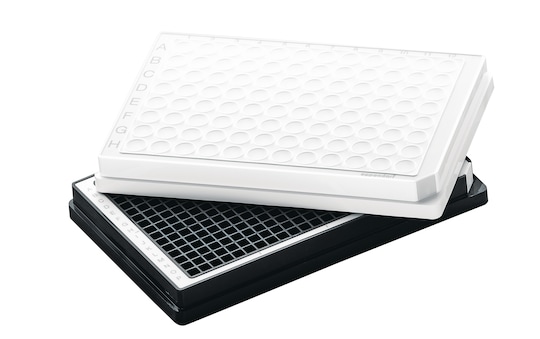
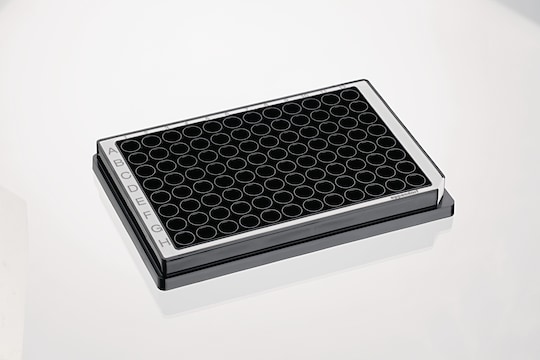
Select black microplates for fluorescence detection, where a strong signal-to-noise ratio supports low detection limits. For luminescence or weak fluorescence, our white microplates maximize reflection, giving you high-sensitivity results.

AU | AUD
Eppendorf Microplates and Assay/Reader Plates
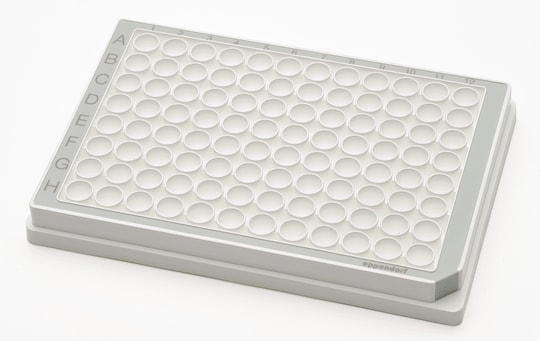
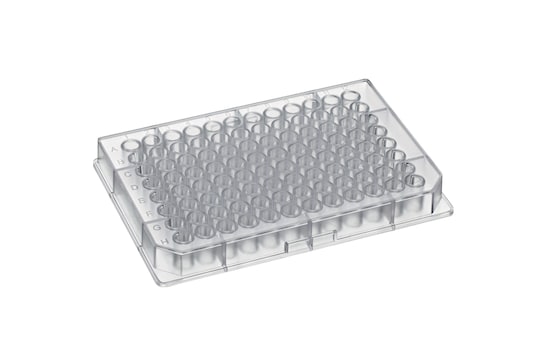
Eppendorf Microplate with OptiTrack® matrix
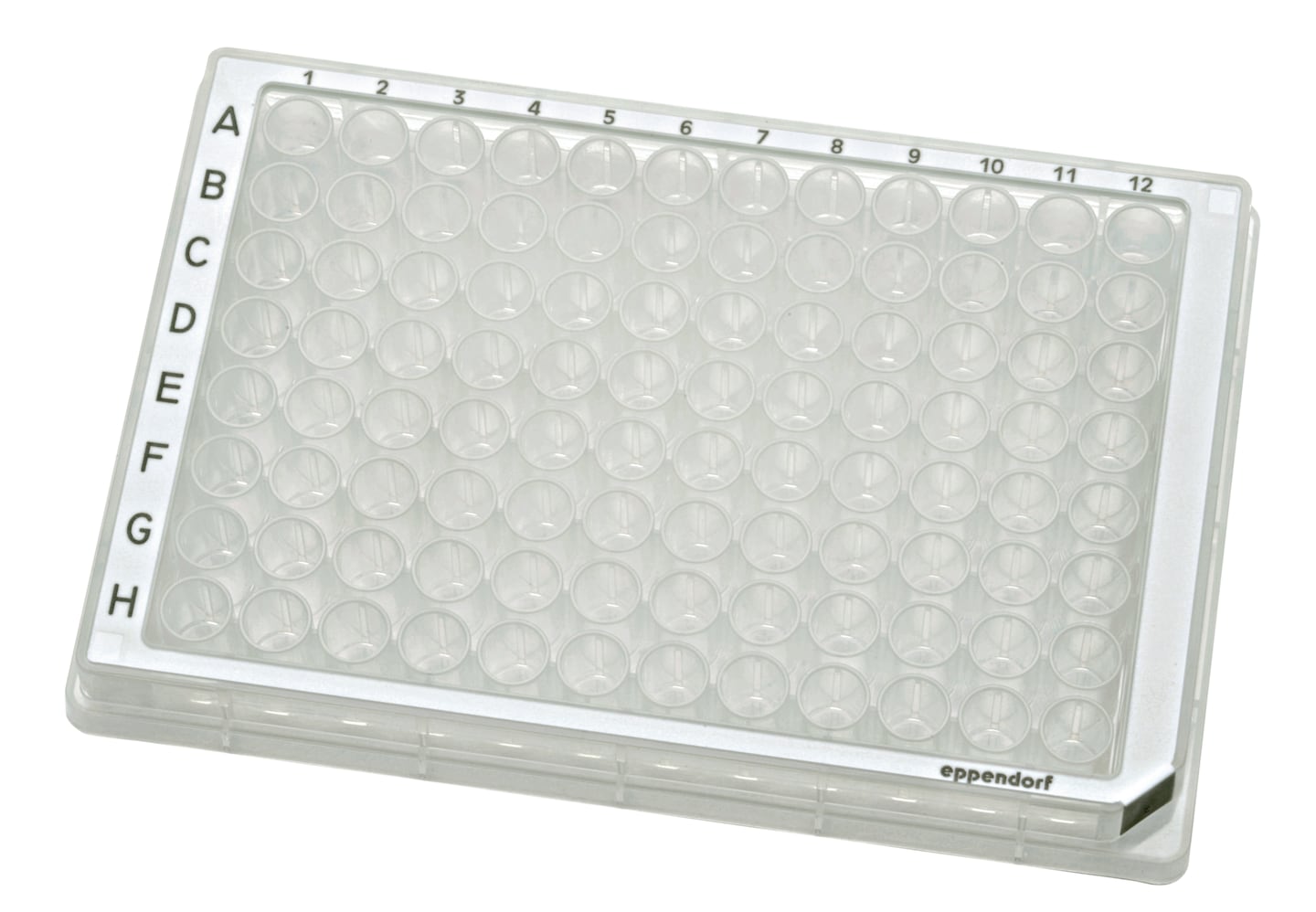
Superior transparency and OptiTrack® matrix with Eppendorf Microplates
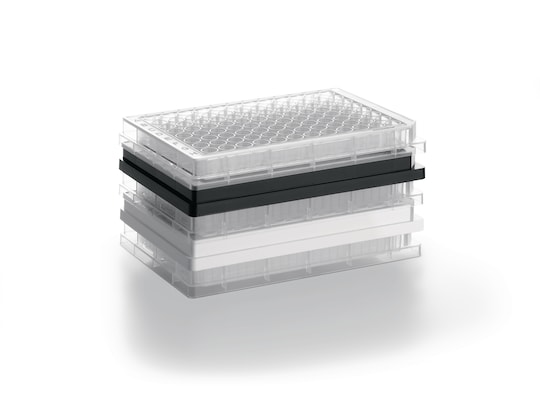
Selection of microplates stacked on top of each other
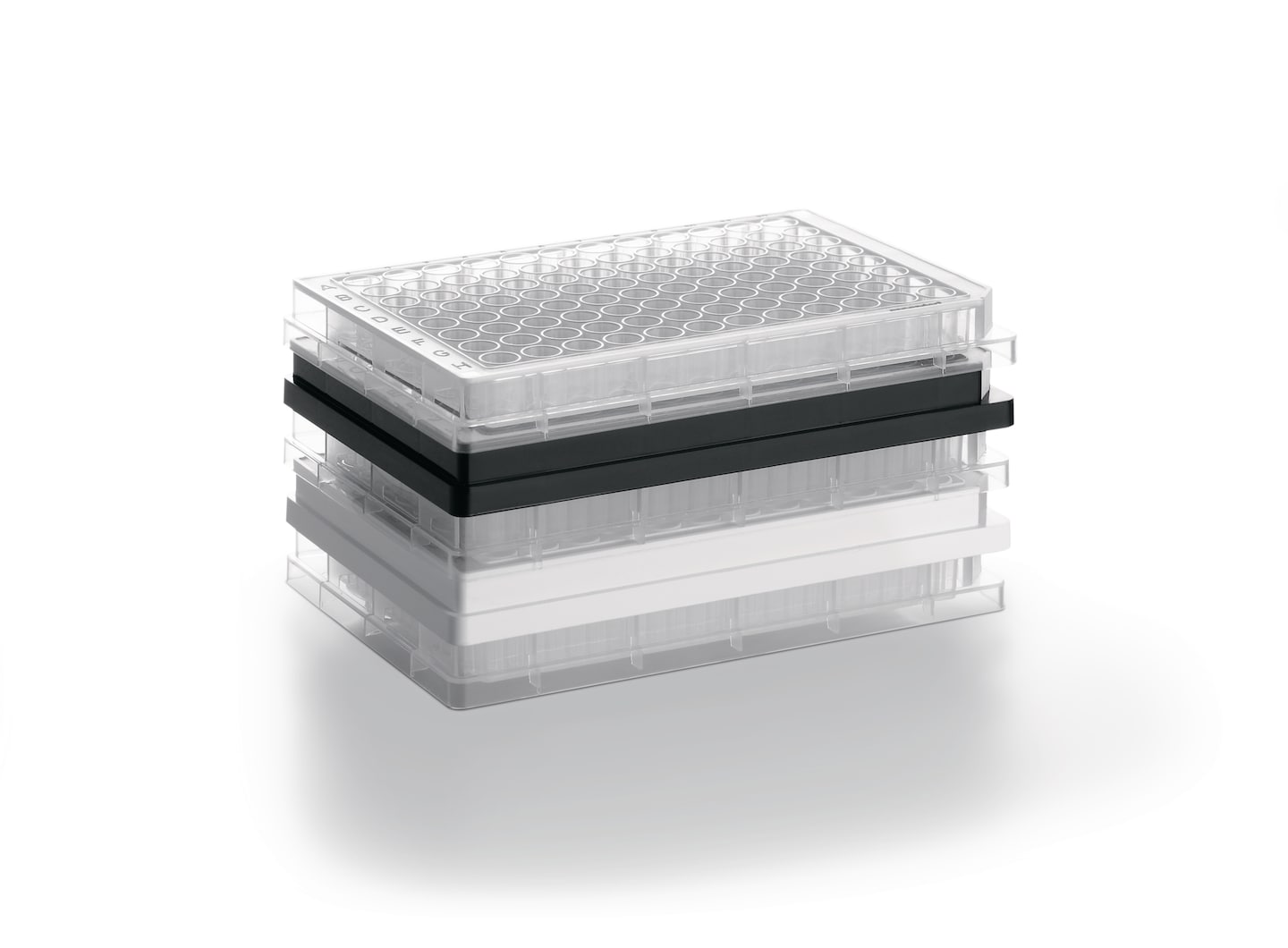
Easy storage and space-saving stackable microplates
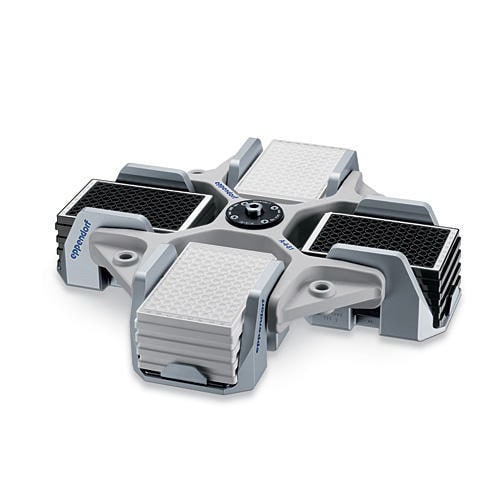
Microplates stacked in a A-2 MTP

Eppendorf Microplates are compatible with the A-2 MTP
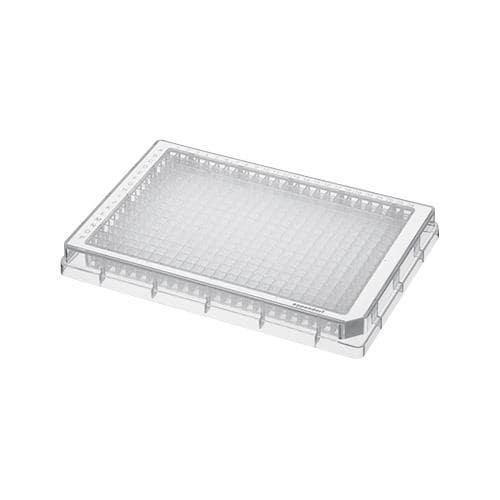
384-well Eppendorf Microplate
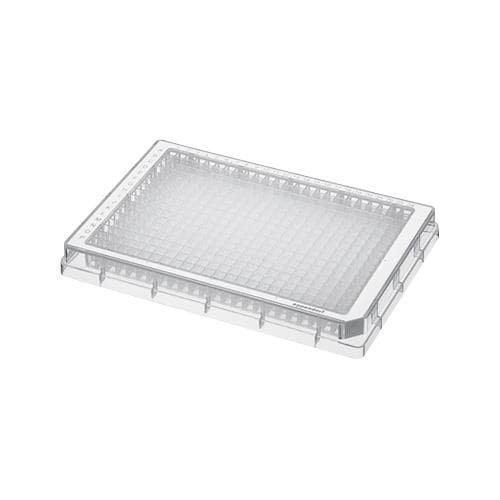
Eppendorf Microplates are available in 384-well format for high-throughput assays
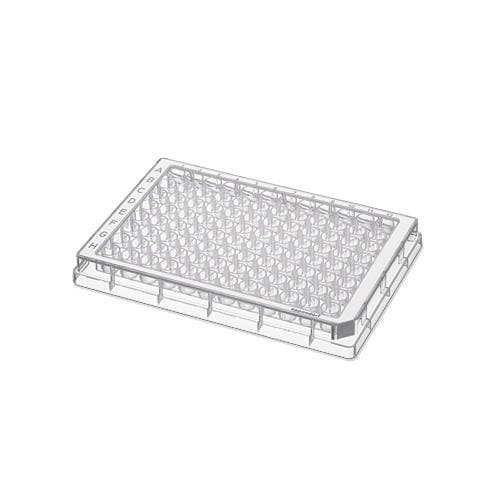
96-well Eppendorf Microplate
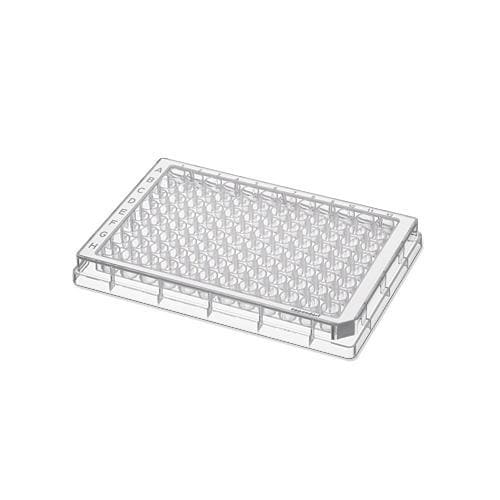
Eppendorf Microplates are available in 96-well format
96-well microplates, stacked
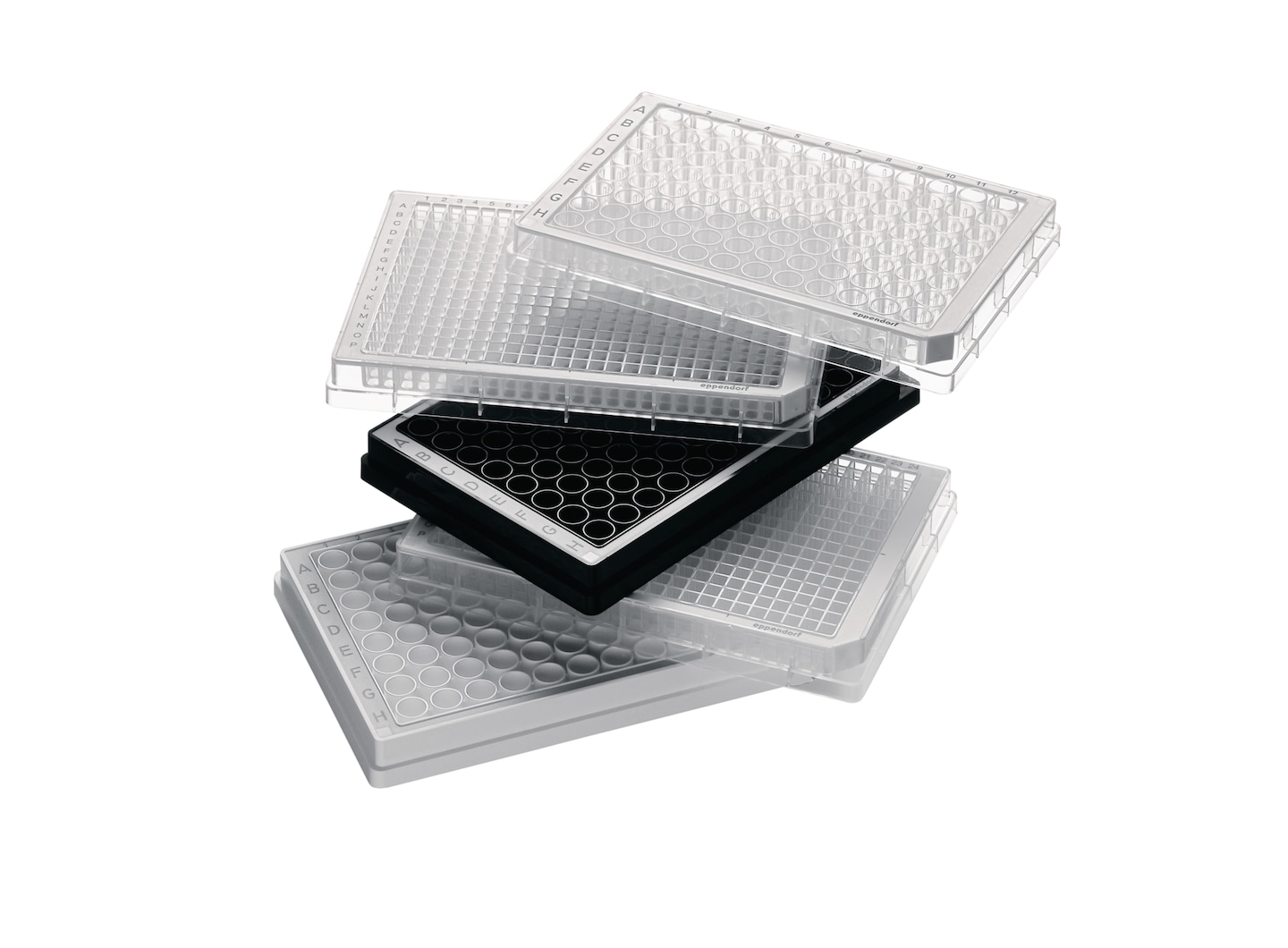
Unrivalled quality for superior assay performace
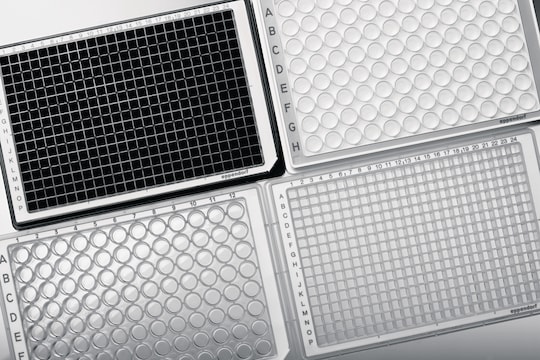
Four microplates, 384-well black and transparent plate, 96-well white and transparent plate
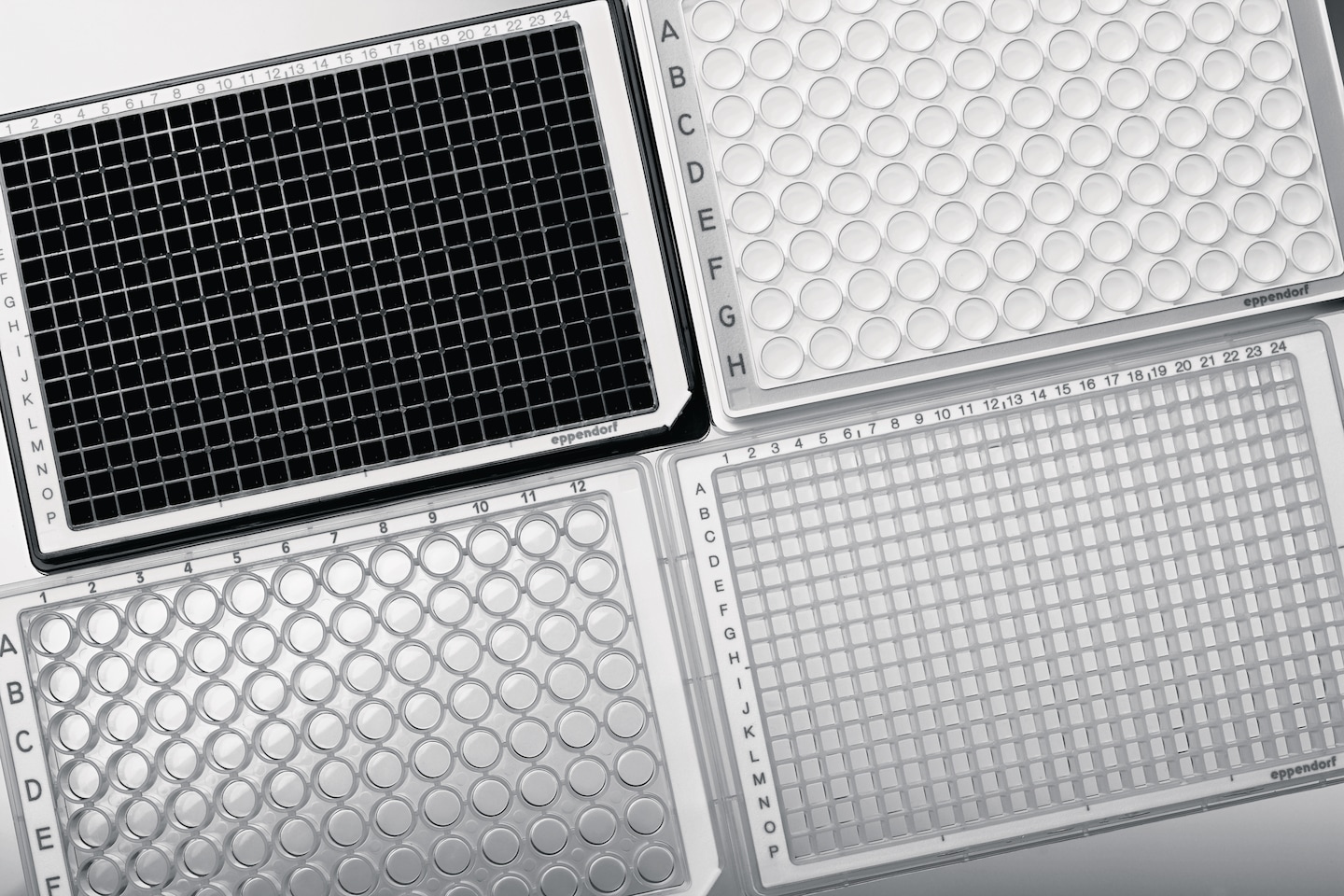
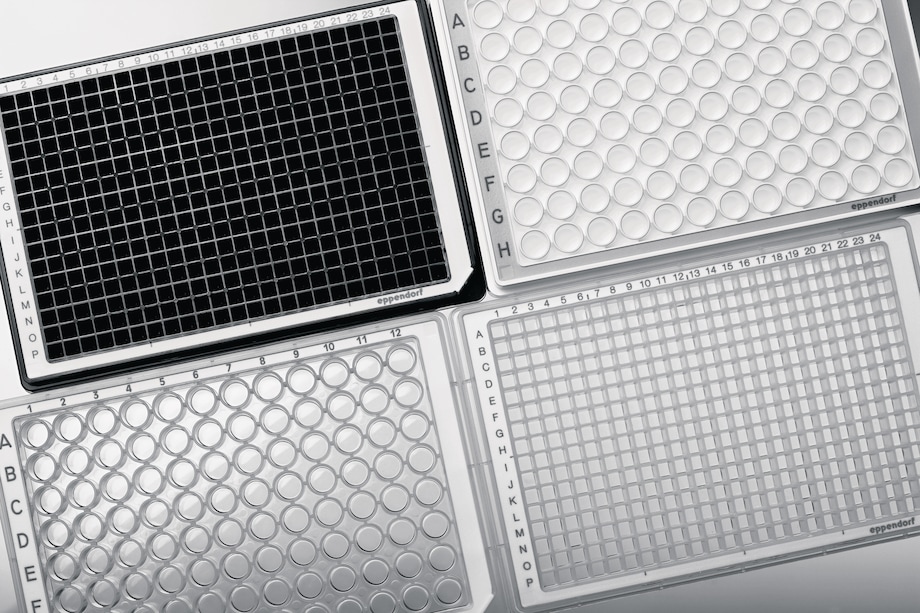
From white and black to 96 and 384 well format - there's an Eppendorf Microplate for every application
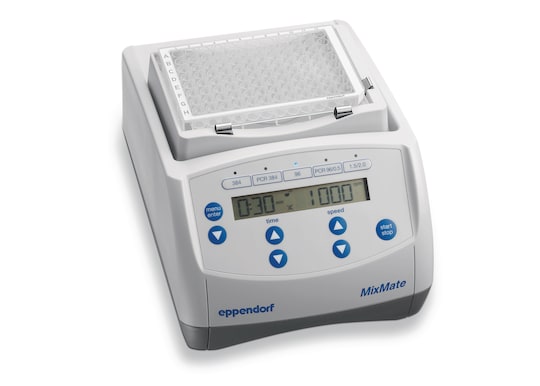
Microplate in Eppendorf MixMate®
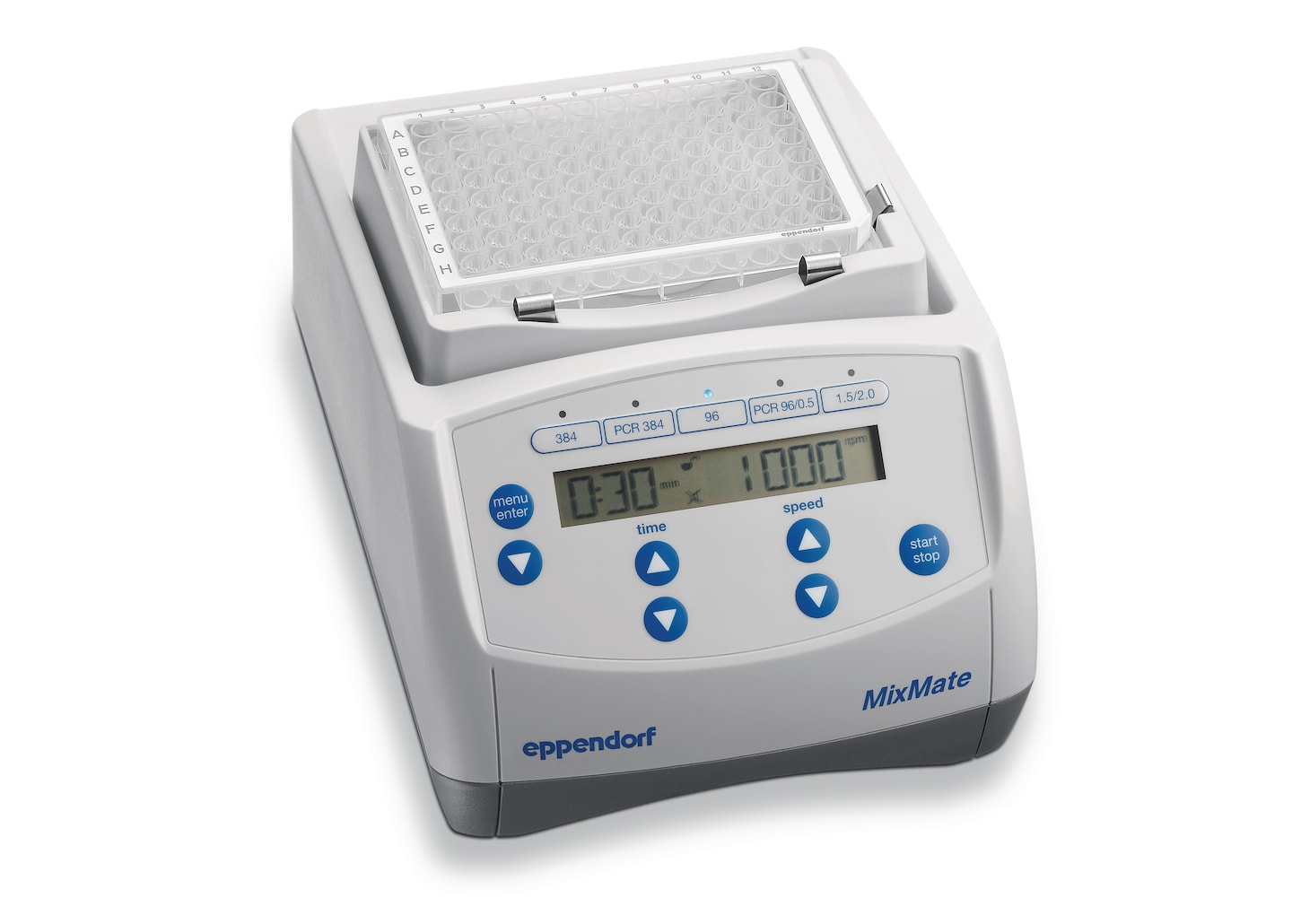
Eppendorf microplates are compatible with the Eppendorf MixMate®
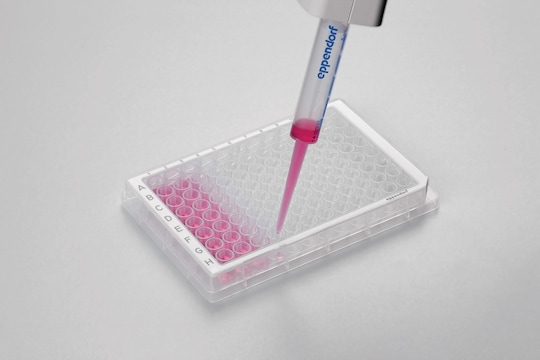
Sample being pipetted into a microplate with Combitip® pipette tips

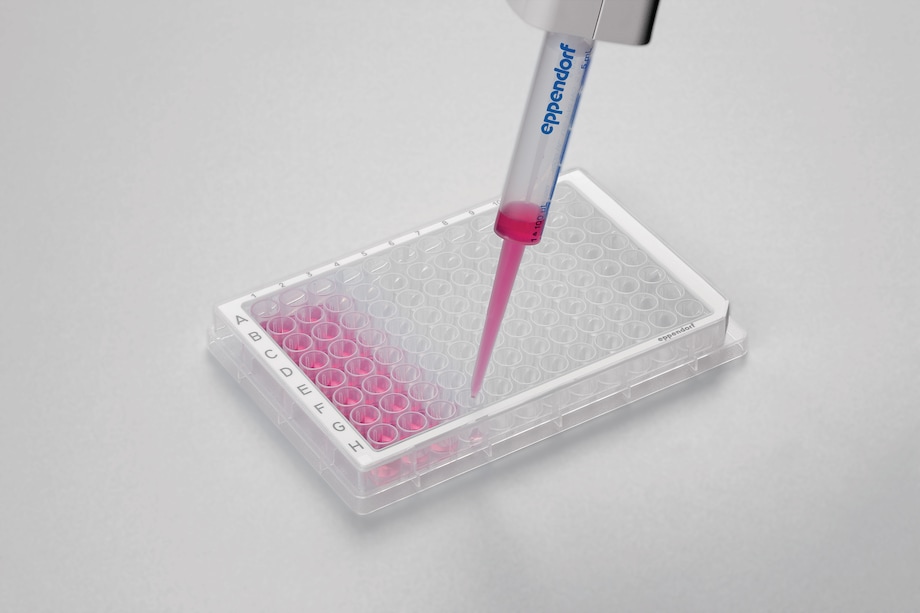
Easy pipetting and recovery of samples with the Eppendorf Microplate
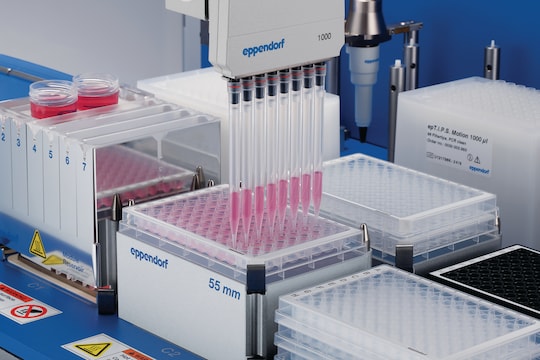
Eppendorf Microplate in an automated liquid handling instrument

Perfect for automated applications
Compliance to SBS specifications, high dimensional accuracy and rigidity ensure compatibility with all standard pipetting
robots and automated sample processing systems. Barcode options available.
Compliance to SBS specifications, high dimensional accuracy and rigidity ensure compatibility with all standard pipetting
robots and automated sample processing systems. Barcode options available.
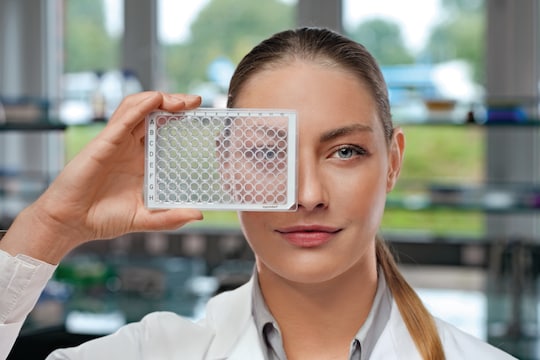
Woman in lab coat looking through microplate

The ultimate transparent microplate
White 96-well microplate for luminescent assays

Unrivalled quality for your luminescent assay needs
Stacked black and white Eppendorf assay reader plates

Available in black or white for all applications
Black 96 well microplate for fluorescent applications

Unrivalled quality for your fluorescent cell imaging needs
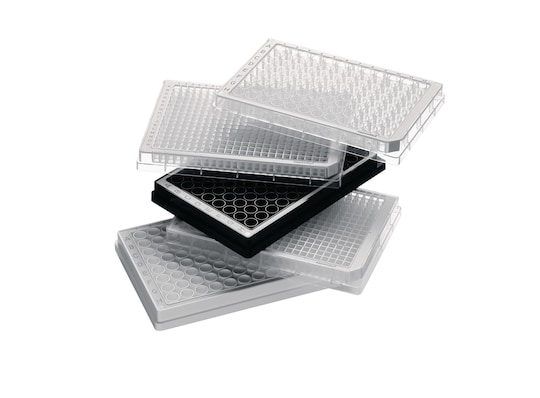
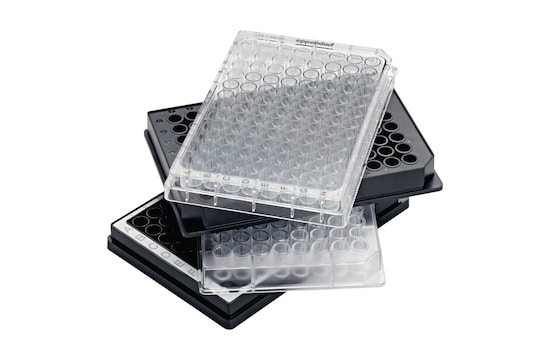
Stacked assay reader plates - clear, white and black
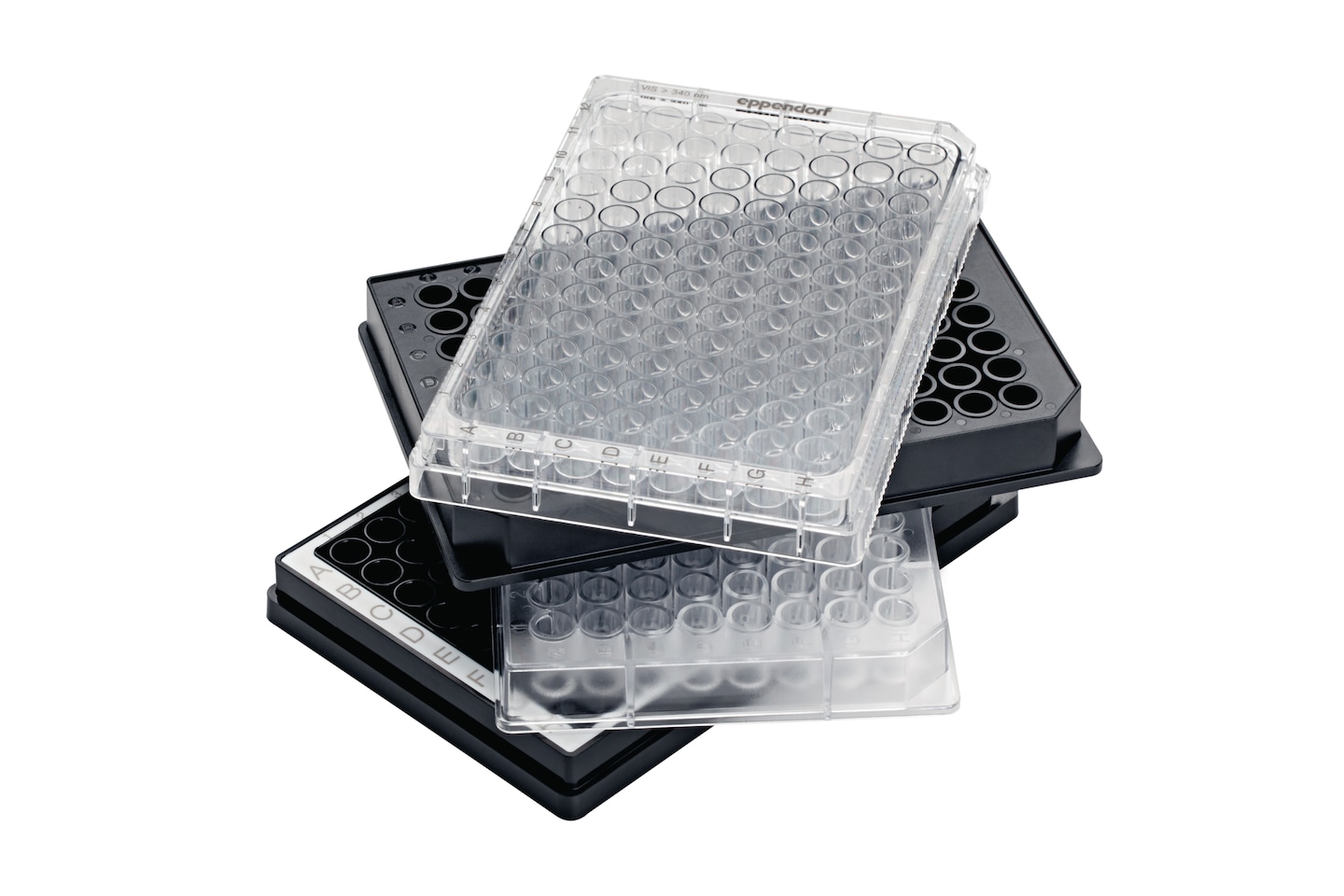
A format to suit every application - clear, white or black
UV_VIS_plate_96_clear

Product Information
Achieve outstanding transparency, sensitivity, and reproducibility in your microplate assays with our Microplates, which can also be referred to as Assay/Reader Plates. Available in both 96-well microplate and 384-well microplate formats, these plates are crafted from high-quality polypropylene. Designed for optimal well performance, our assay plates make it easy to control your workflow and recover samples efficiently. Benefit from a strong signal-to-noise ratio and low detection limits—so you can trust your results, every time. Whether you’re working with fluorescence, chemiluminescence, or visible detection, you’ll find the right plate to support your assay.
Customized barcoding is available for select versions of this product. Please visit the detail page for eligible products to access the Barcode Wizard and start designing your label. Pre-coded plates are directly available as SafeCode version.
-
Request lot-specific certificates (not applicable for "Eppendorf Quality")
-
Learn more about purity grades available from Eppendorf
You will find additional download material at the bottom of this page
Products (18)
|
Microplate 96/F
|
|
Microplate 96/U
|
|
Microplate 96/V
|
|
Microplate 96/F
|
|
Microplate 96/U
|
|
Microplate 96/V
|
|
Microplate 96/F
|
|
Microplate 96/U
|
|
Microplate 96/V
|
|
Microplate 96/F
|
Added to Your Cart
Product Information
Applications
Features
Product Information
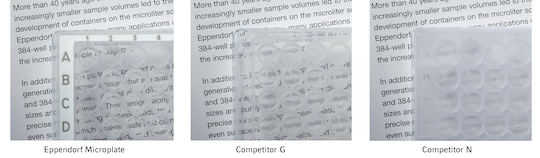
Superior transparency and OptiTrack® matrix
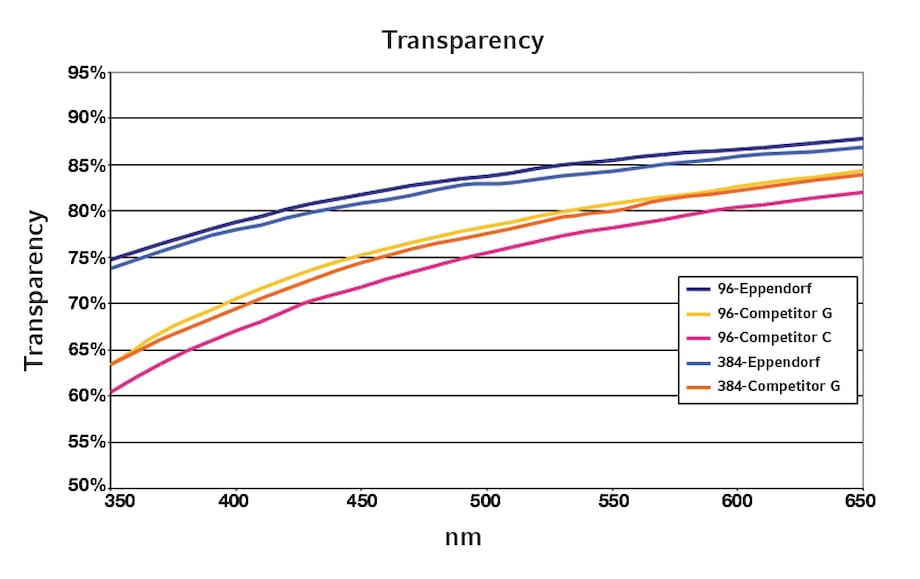
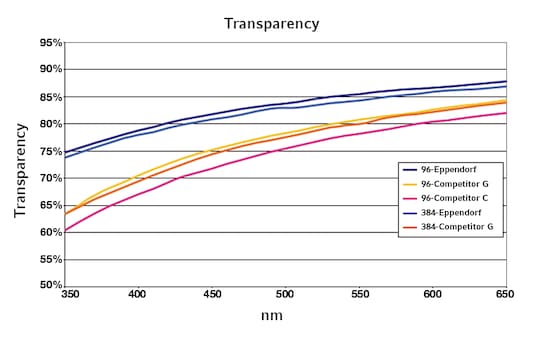
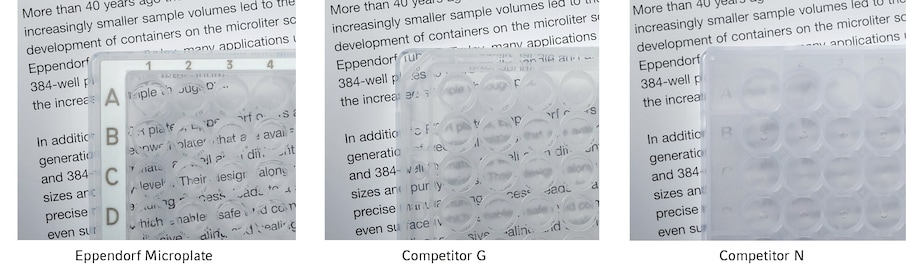
Rest assured that our Eppendorf Microplates are manufactured from the highest quality polypropylene to ensure maximum transparency and improve reproducibility. Let the contrast-rich OptiTrack matrix guide you to lab efficiency – identify wells in record time and reduce the risk of error and contamination.
Learn more about how Eppendorf Microplates can help rapidly identify samples by reading Application Note 202: Eppendorf Polypropylene Microplates – Fast and secure identification of samples.
Maximum recovery in minimal time with RecoverMax® well design
Get maximal sample recovery and superior mixing properties with Eppendorf microplate’s RecoverMax® optimized well geometry. A round and smooth design of well corners helps to prevent sample loss and minimize residual volume while the smooth contours of square-well plates virtually eradicate the risk of cross contamination.
Eppendorf Microplates offer the ultimate transparency and quality in a variety of formats
We offer a wide range of assay microplates to support diverse lab applications. Available in 96-well microtiter plates and 384-well formats, these consumables provide dependable performance for your fluorescence, chemiluminescence, and absorbance workflows.
Our portfolio includes transparent, white, and black options, letting you choose the appropriate assay microplate for your detection method. With high-quality materials, excellent well geometry, and high reproducibility, Eppendorf microplates are a great choice for your assays.
Here is an overview of the assay plate formats available:
• 96 and 384-well formats
• F–bottom (flat), U–bottom (round), and V–bottom (conical).
• Eppendorf PCR clean and Sterile purity grades.
• Also available as DNA and Protein LoBind.
• g–Safe®: exceptional centrifugation stability up to 6,000 x g for faster protocols and improved sample quality.
• Raised well rims and smooth surface for reliable closing, even with heat sealing
• High–quality polypropylene guarantees resistance to chemicals, mechanical stress and temperature extremes.
• Autoclavable (121 °C, 20 min).
• Manufactured without demoulding aids, softeners or biocides
For more information see Application Note 56: The Best Material for Original Eppendorf Tubes®, Tips, and Plates: Properties and Chemical Resistance of Polypropylene and Application Note 239: Eppendorf Deepwell Plates and Microplates - Investigations of sealing methods.
Should I choose 96-well microplates, or 384-well formats instead?
Our 96 microwell plates are a popular choice, being ideal for a wide range of sample preparation and analytical workflows. However, if you’re seeking greater throughput, our 384-well microplates enhance efficiency while maintaining the same high quality and performance.
Are Eppendorf microplates suitable for fluorescence readers, spectrophotometers, and other microplate readers?
Yes, our microplates are suitable for fluorescence readers, spectrophotometers, and other microplate readers. Whether you’re conducting 96-well plate fluorescence reader assays, 96-well plate spectrophotometer assays, or 384-well plate reader assays, our products provide excellent optical characteristics and low background interference.
However, it’s important that you choose the right plate colour for your intended application. Black microplates for fluorescence help to minimize well-to-well crosstalk and minimize signal-to-noise ratios, making them an excellent choice for sensitive fluorescence applications. White assay plates enhance signal reflection for chemiluminescence assays, while transparent assay plates are well suited for absorbance measurements and routine microplate assays.
Downloads: Eppendorf Microplates and Assay/Reader Plates
Content
Filter
Reset all
Language (1)
-
English