MENU
CA | CAD
-
-
-
- Service pour Mastercycler
- Service pour systèmes d’automatisation
- Service pour congélateurs
- Service pour incubateurs
- Service pour agitateurs
- Service de contrôle de la température et de l’agitation
- Service pour pipette
- Services pour bioprocédés
- Service pour centrifugeuses et rotors
- Étalonnage pour pipette neuve
-

-
-
-
- Service pour Mastercycler
- Service pour systèmes d’automatisation
- Service pour congélateurs
- Service pour incubateurs
- Service pour agitateurs
- Service de contrôle de la température et de l’agitation
- Service pour pipette
- Services pour bioprocédés
- Service pour centrifugeuses et rotors
- Étalonnage pour pipette neuve
-
CA | CAD
-
- Pipettes, distributeurs et dispositifs de manipulation de liquides automatisée
- Toutes les micropipettes
- Pipettes mécaniques
- Pipettes électroniques
- Pipettes multicanaux
- Pipettes et distributeurs à déplacement positif
- Distributeurs sur flacon
- Auxiliaires de pipetage
- Accessoires pour pipettes et distributeurs
- Pipetage automatisé
- Consommables d’automatisation
- Accessoires d’automatisation
- Services pour pipettes et distributeurs
Sorry, we couldn't find anything on our website containing your search term.
Sorry, we couldn't find anything on our website containing your search term.
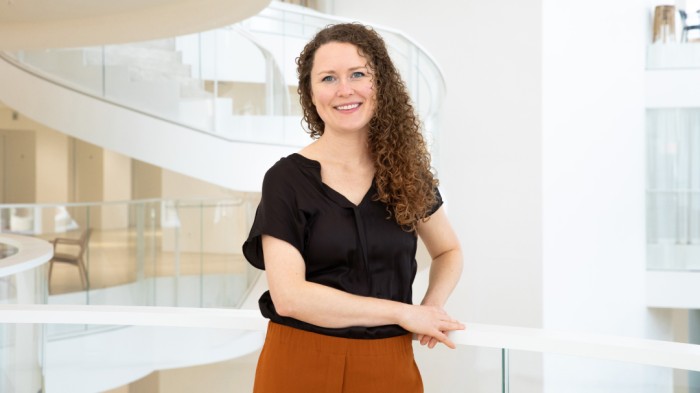
- 2023 Award Finalist Dr. Alicia Michael
2023 Award Finalist Dr. Alicia Michael
As a Ph.D. student with Dr. Carrie Partch, I showed how the circadian transcription factor (TF), CLOCK-BMAL1, is repressed in healthy and diseased tissues. Although it was long-known that TFs function in chromatin, the only available structures were of TFs bound to isolated DNA duplexes. To understand how TFs recognize their DNA motif within chromatin, during my postdoctoral work in the lab of Dr. Nicolas Thomä, I developed an assay to examine the engagement of a TF with its motif at all positions within a nucleosome, enabling cryo-EM structures of OCT4-SOX2 bound to nucleosomal DNA. In a continued pursuit to unravel the molecular clockwork, I determined the cryo-EM structure of CLOCK-BMAL1 bound to a native nucleosome showing how TF-histone interactions are critical for circadian cycling.
Synopsis of research:
The DNA in our cells is wrapped around histone proteins to form nucleosomes, then further condensed into chromatin, which helps package the DNA in the nucleus and plays a role in the regulation of gene expression. While it has long been known in the field of epigenetics that transcription factors must be able to find and bind to their DNA binding motifs even when ‘hidden’ in chromatin, it was unknown how this was happening or what this looked like. Together with the lab of Dr. Dirk Schübeler, I developed a method to test the binding of TFs throughout the nucleosome, enabling structure determination of OCT4-SOX2 bound to its chromatinized motif. The structures reveal how, by recognizing just part of its DNA-binding motif, only a subset of OCT4’s DNA-binding domains appears to hold the DNA, while SOX2 lifts the DNA away from the surface of the nucleosome. The structures also proved that a partial DNA-binding motif engagement is sufficient for these factors to engage chromatin in vivo. This may indicate how the transcription factors open chromatin and allow the recruitment of additional factors for DNA transcription and subsequent gene expression.
Synopsis of research:
The DNA in our cells is wrapped around histone proteins to form nucleosomes, then further condensed into chromatin, which helps package the DNA in the nucleus and plays a role in the regulation of gene expression. While it has long been known in the field of epigenetics that transcription factors must be able to find and bind to their DNA binding motifs even when ‘hidden’ in chromatin, it was unknown how this was happening or what this looked like. Together with the lab of Dr. Dirk Schübeler, I developed a method to test the binding of TFs throughout the nucleosome, enabling structure determination of OCT4-SOX2 bound to its chromatinized motif. The structures reveal how, by recognizing just part of its DNA-binding motif, only a subset of OCT4’s DNA-binding domains appears to hold the DNA, while SOX2 lifts the DNA away from the surface of the nucleosome. The structures also proved that a partial DNA-binding motif engagement is sufficient for these factors to engage chromatin in vivo. This may indicate how the transcription factors open chromatin and allow the recruitment of additional factors for DNA transcription and subsequent gene expression.
Lire la suite
Downloads

PDF 0,72 MB
PDF 0,54 MB