-
-
-
- Pichia 2026
- Future Labs Live 2026
- BioProScale Sympposium 2026
- ASGCT 2026
- Eppendorf Automation Forum 2026
- ECB 2026
- WoTS 2026
- ELRIG Drug Discovery 2026
- 75th JAMT Congress & IFBLS2026
- JASIS2026
- ILMAC 2026
- GSCN 2026
- BPI EAST 2026
- Bioprocess Days 2026
- Bioprocess Day 2026, Texas, USA
- Bioprocess Day 2026, Philadelphia, USA
-

-
-
-
- Pichia 2026
- Future Labs Live 2026
- BioProScale Sympposium 2026
- ASGCT 2026
- Eppendorf Automation Forum 2026
- ECB 2026
- WoTS 2026
- ELRIG Drug Discovery 2026
- 75th JAMT Congress & IFBLS2026
- JASIS2026
- ILMAC 2026
- GSCN 2026
- BPI EAST 2026
- Bioprocess Days 2026
- Bioprocess Day 2026, Texas, USA
- Bioprocess Day 2026, Philadelphia, USA
-
-
- All Pipettes, Dispensers & Automated Liquid Handlers
- All Micropipettes
- Mechanical Pipettes
- Electronic Pipettes
- Multi-Channel Pipettes
- Positive Displacement Pipettes & Dispensers
- Bottle-Top Dispensers
- Pipette Controllers
- Dispenser & Pipette Accessories
- Automated Pipetting
- Automation Consumables
- Automation Accessories
- Liquid Handler & Pipette Services
- Home
- Lab Academy
- Pipetting Knowledge Hub
- Choose your solution
If you have any questions or would like to contact us, please visit the Support Center.
Pipetting knowledge hub
Read more
Select the right liquid handling system
Selecting the right lab pipette or dispenser can be the key to success in your work. It can boost your efficiency and throughput and ensure reliable results for different pipetting use cases. Here is a quick introduction to the basics, to ensure you select the right micropipette type for your needs.
Which liquid handling system should you use?
Read more
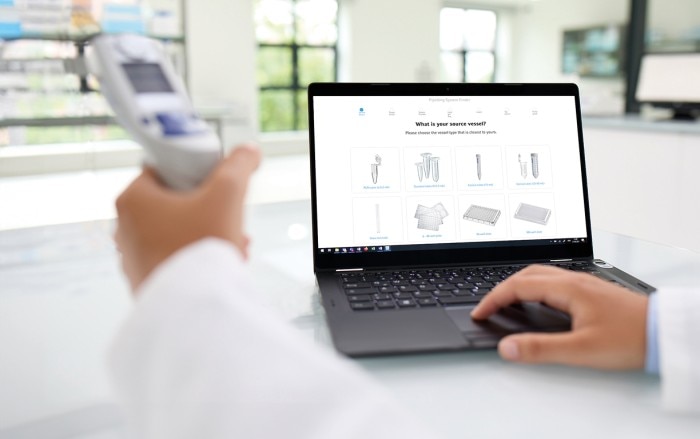
Should you use an air-cushion pipette or a positive displacement system?
Read more
Your everyday pipette is most likely an air-cushion pipette. These are the standard choice for most routine, water-like samples. They use a pocket of air between the piston and the liquid to aspirate and dispense.
Positive displacement systems, on the other hand, feature a piston inside the tip that is in direct contact with the liquid. This makes them the better choice for challenging samples, such as highly viscous, volatile, or dense liquids. They also reduce cross-contamination and protect users and instruments from hazardous samples.
Should you choose a single-channel or multi-channel pipette?
Read more
When should you use an electronic instrument?
The most important general benefits of using an electronic instrument are: better ergonomics by requiring almost no operating forces, a higher precision and reproducibility and an additional efficiency gain due to various operating modes (e.g. pipetting and dispensing with only one tool).

When should you think about an automated solution?
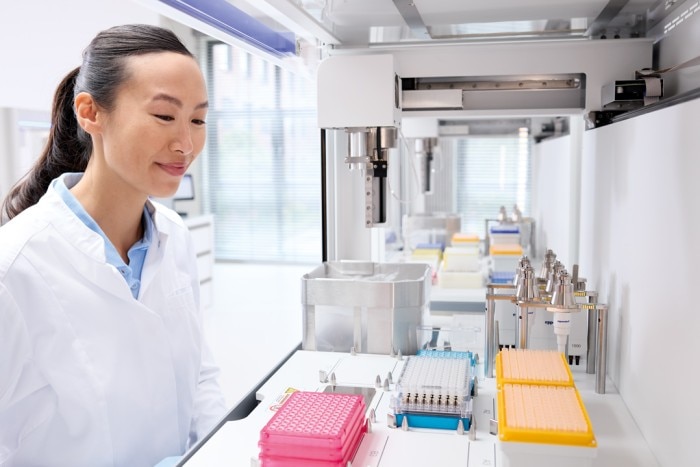
When thinking about which types of pipetting are most suitable for your lab, automation should definitely be considered. Automated liquid handling systems such as the epMotion® family are ideal to take over routine and repetitive pipetting tasks that are commonly found in many molecular biological applications. They are ideally suited whenever complex processes need to be standardized, help to reduce the risk of manual pipetting errors, increase reproducibility and free up your valuable time for other tasks.
What about liquids in the mL-range?
Looking for larger pipette volumes? In addition to Eppendorf micropipettes, we also offer:
- Multi-dispensers (Multipette) for (serial) dispensing of up to 50 mL.
- Mechanical and electronic pipette controllers (Pipet Helper®, Easypet® 3) for precise dispensing with serological pipettes (Eppendorf Serological Pipets) .
- Bottle-top dispensers (Varispenser® 2(x)) and burets (Top Buret) with a variety of adapters and accessories complete the portfolio in the mL range.