MENU
DE | EUR
-
-
-
- Pichia 2026
- Future Labs Live 2026
- BioProScale Sympposium 2026
- ASGCT 2026
- Eppendorf Automation Forum 2026
- ECB 2026
- WoTS 2026
- ELRIG Drug Discovery 2026
- 75th JAMT Congress & IFBLS2026
- JASIS2026
- GSCN 2026
- BPI EAST 2026
- Bioprocess Days 2026
- Bioprocess Day 2026, Texas, USA
- Bioprocess Day 2026, Philadelphia, USA
- Cell 2026
- FPP x CMS Amsterdam
-

-
-
-
- Pichia 2026
- Future Labs Live 2026
- BioProScale Sympposium 2026
- ASGCT 2026
- Eppendorf Automation Forum 2026
- ECB 2026
- WoTS 2026
- ELRIG Drug Discovery 2026
- 75th JAMT Congress & IFBLS2026
- JASIS2026
- GSCN 2026
- BPI EAST 2026
- Bioprocess Days 2026
- Bioprocess Day 2026, Texas, USA
- Bioprocess Day 2026, Philadelphia, USA
- Cell 2026
- FPP x CMS Amsterdam
-
DE | EUR
-
- All Pipettes, Dispensers & Automated Liquid Handlers
- All Micropipettes
- Mechanical Pipettes
- Electronic Pipettes
- Multi-Channel Pipettes
- Positive Displacement Pipettes & Dispensers
- Bottle-Top Dispensers
- Pipette Controllers
- Dispenser & Pipette Accessories
- Automated Pipetting
- Automation Consumables
- Automation Accessories
- Liquid Handler & Pipette Services
Sorry, we couldn't find anything on our website containing your search term.
Sorry, we couldn't find anything on our website containing your search term.
- Home
- Lab Academy
- Applied Industries
- Bioprocessing
- Interview: Fresenius Kabi
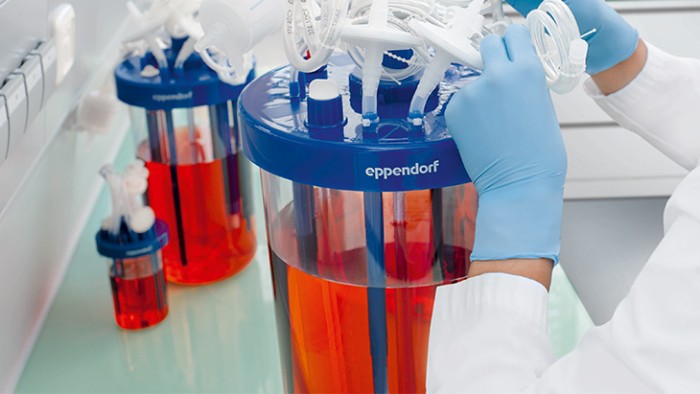
Managing the complexity of biological systems: The key to consistent bioprocess performance and product quality
Lab Academy
- Bioprocessing
- Bioprocess
- Bioprocess
- Interview
Fresenius Kabi is a global healthcare company whose biopharma unit focuses on developing and manufacturing biosimilars. In this interview, Simon Fradin, Senior Manager of Upstream Process Development, discusses the importance of efficiently building process understanding and minimizing equipment-related variability to mitigate scale-up risks early.
Read on to learn more about their bioprocessing challenges , how Eppendorf products help address them and which process parameters are particularly important for successful tech transfer.
Read more
Q: Tell us a bit about Fresenius Kabi
A: Fresenius Kabi is a global healthcare company focused on developing and delivering high-quality medicines for critically and chronically ill patients. Its portfolio includes biopharmaceuticals, clinical nutrition, medical technologies, and intravenous generic drugs, supporting a wide range of therapeutic needs.
Within its Biopharma unit, Fresenius Kabi is focused on the development and production of biosimilars, with the objective of making advanced biologic medicines more accessible to patients worldwide. The company leverages its global expertise across the full value chain — from development and manufacturing to commercialization — to ensure high-quality and reliable supply of these medicines.
In this context, upstream process development plays a central role in establishing robust, scalable, and well-controlled manufacturing processes capable of consistently delivering the target product quality profile.
Within its Biopharma unit, Fresenius Kabi is focused on the development and production of biosimilars, with the objective of making advanced biologic medicines more accessible to patients worldwide. The company leverages its global expertise across the full value chain — from development and manufacturing to commercialization — to ensure high-quality and reliable supply of these medicines.
In this context, upstream process development plays a central role in establishing robust, scalable, and well-controlled manufacturing processes capable of consistently delivering the target product quality profile.
Read more
“The main challenge in bioprocess development is managing the inherent complexity of biological systems.”
Q: Which products do you produce using which cell lines?
A: We develop our biopharmaceutical products using established mammalian cell culture platforms, with a strong focus on process consistency and robustness across projects. These products are designed to provide patients with access to high-quality biologic therapies while maintaining strict standards of similarity in terms of quality, efficacy, and safety. While specific details on cell lines are not disclosed, our development activities are aligned with standard industry approaches for recombinant protein production using mammalian expression systems.
Read more
Q: What challenges do you face in your various bioprocess development projects and how do they affect your project timelines?
A: The main challenge in bioprocess development, and specifically in upstream, is managing the inherent complexity of biological systems while meeting multiple, sometimes competing, objectives such as product quality, process robustness, and process performance. From a performance perspective, this includes achieving efficient cell growth and maintaining high productivity, typically reflected by parameters such as culture longevity, process modalities (e.g. process intensification strategies) and product titer. At the same time, the process must ensure that critical product quality attributes are consistently met.
For upstream processes, these quality attributes typically include aspects such as glycosylation profiles, charge variants, which are all sensitive to process conditions and cell culture environment. The complexity can also be increased by specific molecule attributes which then require tailored process development strategies. A key challenge is therefore to understand and control the impact of process parameters on both performance and product quality, while ensuring that small-scale findings remain representative for future scale-up. If not properly structured, this complexity can lead to extended development timelines.
To address this, we rely on extended upstream process development experience within our team. This extensive expertise is complemented by platform knowledge, risk-based prioritization of parameters, and design of experiments approaches to efficiently build process understanding and mitigate risks early.
For upstream processes, these quality attributes typically include aspects such as glycosylation profiles, charge variants, which are all sensitive to process conditions and cell culture environment. The complexity can also be increased by specific molecule attributes which then require tailored process development strategies. A key challenge is therefore to understand and control the impact of process parameters on both performance and product quality, while ensuring that small-scale findings remain representative for future scale-up. If not properly structured, this complexity can lead to extended development timelines.
To address this, we rely on extended upstream process development experience within our team. This extensive expertise is complemented by platform knowledge, risk-based prioritization of parameters, and design of experiments approaches to efficiently build process understanding and mitigate risks early.
Read more
“Having a unified hardware and software platform across different scales allows us to implement aligned control strategies and facilitates direct comparison of process data across scales.”
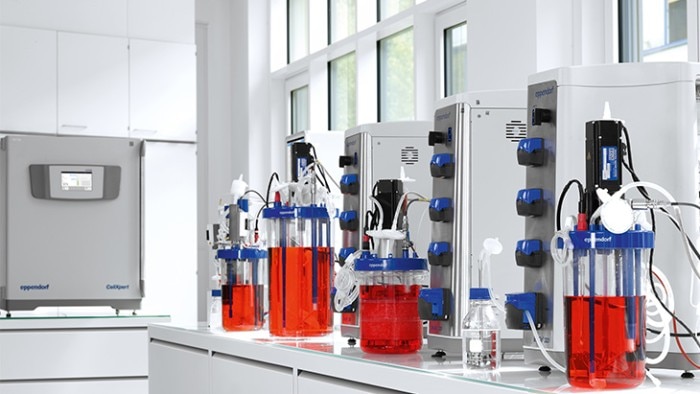
Q: Why did you choose Eppendorf? Which features of the BioFlo® 320 controller and BioBLU® Single-Use Bioreactor portfolio were most critical for your selection?
A: We selected Eppendorf systems as part of our upstream development platform due to their ability to support controlled and reproducible cultivation of mammalian cell cultures at lab scale. The BioFlo and BioBLU systems provide reliable monitoring and control of key process parameters such as pH, dissolved oxygen, temperature, and feeding strategies, which are essential for process understanding and optimization. Key features influencing our selection include flexibility in configuration, ease of use, robustness of control systems, enabling efficient experimental execution.
Read more
Q: Does having a unified hardware and software platform across different scales help you maintain a consistent process characterization from the bench to the 50 L scale and if so, how?
A: Yes, having a unified hardware and software platform across scales supports consistency in our process development. It allows us to implement aligned control strategies and facilitates direct comparison of process data across scales, reducing variability linked to equipment differences.
In our case, this is particularly beneficial to ensure a smooth and straightforward scale-up from bench scale to larger working volumes, for example up to ~40 L, using the same BioFlo 320 controller environment. This continuity supports efficient early-stage material generation while maintaining consistency in process conditions and data quality.
More broadly, this approach can contribute to a better understanding of scale-dependent effects.
In our case, this is particularly beneficial to ensure a smooth and straightforward scale-up from bench scale to larger working volumes, for example up to ~40 L, using the same BioFlo 320 controller environment. This continuity supports efficient early-stage material generation while maintaining consistency in process conditions and data quality.
More broadly, this approach can contribute to a better understanding of scale-dependent effects.
Read more
"It is important to design development activities with scalability and robustness in mind from the beginning."
Q: Process optimization and tech transfer depend on bioprocess data. Which process parameters do you typically analyze? Which factors are particularly important to ensure a smooth tech transfer?
A: In upstream process development, we focus on parameters that directly impact process performance and product quality. This typically includes environmental conditions such as pH, dissolved oxygen, and temperature, as well as indicators of cell growth and metabolic activity. For successful technology transfer, several elements are critical:
Ensuring that both sites have a solid understanding of their respective equipment and process environments is essential to correctly interpret data and reproduce process conditions.
In addition, establishing efficient and dynamic communication channels between the sending and receiving sites is key. Regular technical exchanges enable rapid clarification of open points, alignment on process behavior, and effective troubleshooting during transfer execution. When these elements are well established, they not only improve robustness of the transfer but also enable more efficient and accelerated scale-up and technology transfer, by reducing uncertainties and minimizing the need for iterative adjustments.
Overall, a structured, data-driven approach combined with strong cross-site collaboration is essential to ensure that the process can be reliably and efficiently reproduced in a manufacturing environment.
- A well-defined and documented process
- Clear understanding of parameter impact on performance and product quality
- Demonstrated robustness at small scale
- Strong understanding of the bioreactors platforms at both the sending and receiving sites
- Alignment between development and manufacturing teams
Ensuring that both sites have a solid understanding of their respective equipment and process environments is essential to correctly interpret data and reproduce process conditions.
In addition, establishing efficient and dynamic communication channels between the sending and receiving sites is key. Regular technical exchanges enable rapid clarification of open points, alignment on process behavior, and effective troubleshooting during transfer execution. When these elements are well established, they not only improve robustness of the transfer but also enable more efficient and accelerated scale-up and technology transfer, by reducing uncertainties and minimizing the need for iterative adjustments.
Overall, a structured, data-driven approach combined with strong cross-site collaboration is essential to ensure that the process can be reliably and efficiently reproduced in a manufacturing environment.
Read more
Q: Is there any advice you would give to others who are just starting to develop a new bioprocess?
A: A structured and risk-based approach is essential when starting a new bioprocess. Leveraging existing platform knowledge can significantly accelerate early development, while design of experiments approaches enable efficient exploration of the process space. It is also important to establish early understanding of how process parameters impact product quality, and to design development activities with scalability and robustness in mind from the beginning.
Beyond this, maintaining a mindset of continuous improvement is key. Actively challenging the status quo and reassessing assumptions allows integration of new technologies, updated scientific understanding, and more efficient development strategies over time. This continuous evolution of approaches helps ensure that process development remains aligned with current best practices and enables sustained improvement of process performance and robustness in the long-term.
Finally, maintaining clear documentation and strong cross-functional collaboration is essential to ensure efficient progression towards manufacturing.
Beyond this, maintaining a mindset of continuous improvement is key. Actively challenging the status quo and reassessing assumptions allows integration of new technologies, updated scientific understanding, and more efficient development strategies over time. This continuous evolution of approaches helps ensure that process development remains aligned with current best practices and enables sustained improvement of process performance and robustness in the long-term.
Finally, maintaining clear documentation and strong cross-functional collaboration is essential to ensure efficient progression towards manufacturing.
Read more
Simon Fradin was interviewed by Eppendorf in 2026.
Read more