MENU
CA | CAD
-
-
-
- Service pour Mastercycler
- Service pour systèmes d’automatisation
- Service pour congélateurs
- Service pour incubateurs
- Service pour agitateurs
- Service de contrôle de la température et de l’agitation
- Service pour pipette
- Services pour bioprocédés
- Service pour centrifugeuses et rotors
- Étalonnage pour pipette neuve
-

-
-
-
- Service pour Mastercycler
- Service pour systèmes d’automatisation
- Service pour congélateurs
- Service pour incubateurs
- Service pour agitateurs
- Service de contrôle de la température et de l’agitation
- Service pour pipette
- Services pour bioprocédés
- Service pour centrifugeuses et rotors
- Étalonnage pour pipette neuve
-
CA | CAD
-
- Pipettes, distributeurs et dispositifs de manipulation de liquides automatisée
- Toutes les micropipettes
- Pipettes mécaniques
- Pipettes électroniques
- Pipettes multicanaux
- Pipettes et distributeurs à déplacement positif
- Distributeurs sur flacon
- Auxiliaires de pipetage
- Accessoires pour pipettes et distributeurs
- Pipetage automatisé
- Consommables d’automatisation
- Accessoires d’automatisation
- Services pour pipettes et distributeurs
Sorry, we couldn't find anything on our website containing your search term.
Sorry, we couldn't find anything on our website containing your search term.
- Page d'accueil
- Beyond Science
- Off the Bench
- Inspiring Science
- Why Are Our Brains so Big
Why Are Our Brains so Big?
Découvrir les sciences de la vie
- Off the Bench
- Inspirer la science
We apparently have two uniquely human genes to thank for our cognitive abilities.
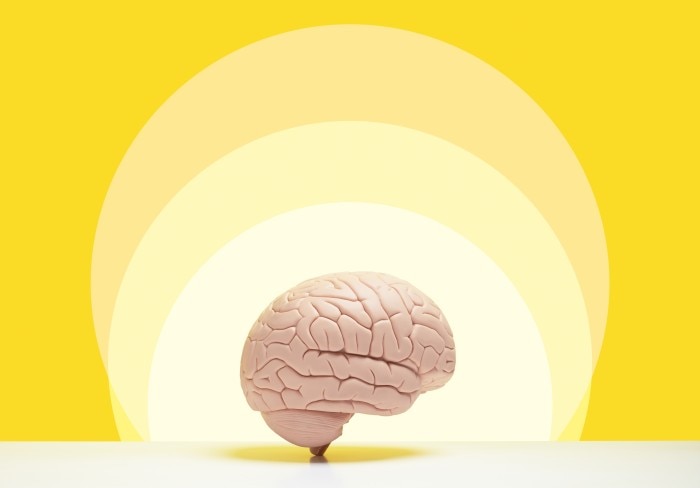
Humans possess, with respect to our body size, unusually large and extremely cognitively skilled brains. The neocortex in particular, a part of the cerebrum, is proportionally three times larger than that of our closest relation, the chimpanzee. Researchers from the German Primate Center — the Leibniz Institute for Primate Research and the Max Planck Institute of Molecular Cell Biology and Genetics — explain why the human brain is so unique in its size and complexity. Their experiments with mice showed that human-specific sections of a certain gene family work together during embryonic development in such a way as to stimulate brain growth.
Specifically, the NOTCH2NLB gene ensures that the progenitor cells of brain cells multiply more heavily, while the NBPF14 gene develops new neurons out of those precursor cells. The number of brain cells is not the only thing that increases, however, as the cerebral cortex gains folds to a greater extent as well. This folding (called gyrification) is vital, because the enlarged neocortex would otherwise simply not fit inside the tight space of the cranium.
Specifically, the NOTCH2NLB gene ensures that the progenitor cells of brain cells multiply more heavily, while the NBPF14 gene develops new neurons out of those precursor cells. The number of brain cells is not the only thing that increases, however, as the cerebral cortex gains folds to a greater extent as well. This folding (called gyrification) is vital, because the enlarged neocortex would otherwise simply not fit inside the tight space of the cranium.
Lire la suite
More articles from
"Off the Bench"
Lire la suite
Subscribe newsletter
Lire la suite