-
-
-
- Service pour Mastercycler
- Service pour systèmes d’automatisation
- Service pour congélateurs
- Service pour incubateurs
- Service pour agitateurs
- Service de contrôle de la température et de l’agitation
- Service pour pipette
- Services pour bioprocédés
- Service pour centrifugeuses et rotors
- Étalonnage pour pipette neuve
-

-
-
-
- Service pour Mastercycler
- Service pour systèmes d’automatisation
- Service pour congélateurs
- Service pour incubateurs
- Service pour agitateurs
- Service de contrôle de la température et de l’agitation
- Service pour pipette
- Services pour bioprocédés
- Service pour centrifugeuses et rotors
- Étalonnage pour pipette neuve
-
-
- Pipettes, distributeurs et dispositifs de manipulation de liquides automatisée
- Toutes les micropipettes
- Pipettes mécaniques
- Pipettes électroniques
- Pipettes multicanaux
- Pipettes et distributeurs à déplacement positif
- Distributeurs sur flacon
- Auxiliaires de pipetage
- Accessoires pour pipettes et distributeurs
- Pipetage automatisé
- Consommables d’automatisation
- Accessoires d’automatisation
- Services pour pipettes et distributeurs
- Page d'accueil
- Lab Academy
- Training & Education
- Webinars
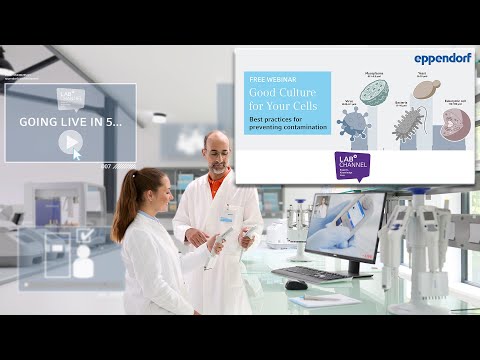
- Good culture for your cells - Best practices for preventing contamination

Good culture for your cells - Best practices for preventing contamination
- Cell Handling
Contamination is an everyday challenge in cell culture labs. Undetected or ignored contamination endanger the reliability and reproducibility of experimental data.
In this educational webinar you will learn how to recognize and identify different types of contaminants in cultivated cells. We will discuss how to apply aseptic techniques and preventive hygiene and give practical tips for preventing contamination by incorporating standard procedures into your daily culture practice.
Covered areas in the session:
- Types and sources of contamination
- Aseptic techniques and preventive hygiene
- Best practices to keep your lab contamination-free
Watch the recorded webinar here:
Lire la suite
Videos not loading, because cookies have been rejected. Change your
Speaker
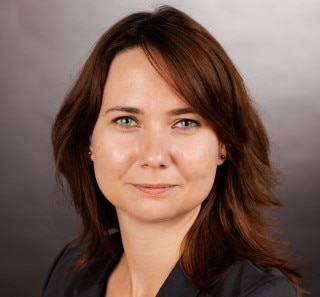
Dr. Jessica Wagener (Application Specialist Cell Handling)
Entering a cell culture laboratory as a graduate student for the first time in 2006, Jessica came to Eppendorf with 5+ years of experience in cell culture. After studying Biology at the Universities of Marburg and Düsseldorf, she investigated apoptosis mechanisms in different cell lines for her diploma thesis. Following one year as Research Associate working with primary cells she started to work towards her PhD with a focus on reproductive biology at the Medical School Essen. She joined Eppendorf in April 2012 shortly after completing her PhD in Biology.