MENU
CH | CHF
-
-
-
- WHX Labs Dubai 2026
- analytica 2026
- Forum Labo 2026
- SLAS Europe 2026
- Forum Labo 2026 Bioprocess
- Bioprocessing Summit Europe 2026
- BioProcess International 2026
- Swiss Biotech Day 2025
- ISCT 2026
- Pichia 2026
- Future Labs Live 2026
- BioProScale Sympposium 2026
- ASGCT 2026
- Eppendorf Automation Forum 2026
- ESACT 2026
- ELRIG Drug Discovery 2026
-

-
-
-
- WHX Labs Dubai 2026
- analytica 2026
- Forum Labo 2026
- SLAS Europe 2026
- Forum Labo 2026 Bioprocess
- Bioprocessing Summit Europe 2026
- BioProcess International 2026
- Swiss Biotech Day 2025
- ISCT 2026
- Pichia 2026
- Future Labs Live 2026
- BioProScale Sympposium 2026
- ASGCT 2026
- Eppendorf Automation Forum 2026
- ESACT 2026
- ELRIG Drug Discovery 2026
-
CH | CHF
-
- Pipettes, distributeurs et dispositifs de manipulation de liquides automatisée
- Toutes les micropipettes
- Pipettes mécaniques
- Pipettes électroniques
- Pipettes multicanaux
- Pipettes et distributeurs à déplacement positif
- Distributeurs sur flacon
- Auxiliaires de pipetage
- Accessoires pour pipettes et distributeurs
- Pipetage automatisé
- Consommables d’automatisation
- Accessoires d’automatisation
- Services pour pipettes et distributeurs
Sorry, we couldn't find anything on our website containing your search term.
Sorry, we couldn't find anything on our website containing your search term.
- Page d'accueil
- Beyond Science
- Off the Bench
- Exploring Life
- When Everything Flows and Time Slows
When Everything Flows and Time Slows
Découvrir les sciences de la vie
- Efficacité
- Off the Bench
- Explorer la vie
What do a dancer, a watchmaker and a mountaineer have in common? They all experience flow – times when everything just feels right.
Every morning, Julia F. Christensen sits in a small café and gets to work. Her fingers fly over her laptop’s keyboard; she only stops to look out of the window or sip on her coffee occasionally. “To most people, it does look like I’m working,” says the Danish psychologist. “But it feels different to me – I’m in my flow.”
The term “flow” describes a state of complete absorption in a thought or task during which the outside world fades into the background, your sense of time disappears, and self-doubts evaporate. Hungarian-American psychologist Mihály Csíkszentmihályi observed the phenomenon in the 1970s, particularly among artists, actors, mountaineers and surgeons, and coined the term “flow” to describe what he was seeing. His central discovery was that flow occurs when challenge and skill find themselves in balance – when a task is neither too easy nor too difficult.
The term “flow” describes a state of complete absorption in a thought or task during which the outside world fades into the background, your sense of time disappears, and self-doubts evaporate. Hungarian-American psychologist Mihály Csíkszentmihályi observed the phenomenon in the 1970s, particularly among artists, actors, mountaineers and surgeons, and coined the term “flow” to describe what he was seeing. His central discovery was that flow occurs when challenge and skill find themselves in balance – when a task is neither too easy nor too difficult.
Lire la suite
Everyone can experience flow
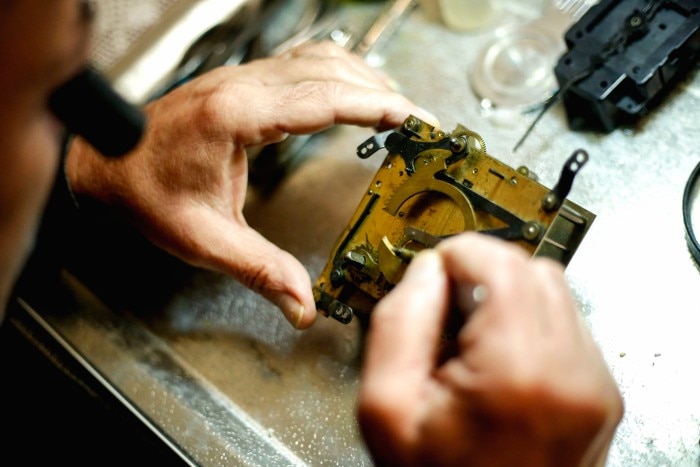
Julia F. Christensen’s own experiences were the trigger to explore the subject scientifically. “While I was writing my thesis, I’d forget to eat, I’d even forget the time. That feeling fascinated me.” She currently conducts research at the Max Planck Institute for Empirical Aesthetics in Frankfurt and has written a book, The Pathway to Flow. She believes that flow is not something reserved for high achievers, but that everyone can experience it. What is more, they should, because flow is good for us.Watchmaker Jörg Lüdeking also regularly experiences flow when he dons his loupe and enters his world of cogs and springs. “I feel completely engrossed and relaxed, like in meditation,” he says. “It’s only when I close the casing and take off my loupe that I notice how strenuous the work actually was.” His example shows how the rush of accomplishment can sharpen focus and steer consciousness to the here and now.
Lire la suite
Joy without judgment
According to studies, it is no surprise that people who experience flow are more emotionally stable; they feel healthier and find their everyday lives more fulfilling. The brain also reacts measurably to flow, as endorphins, endocannabinoids and endogenous opioids are released in addition to dopamine – all neurotransmitters that encourage motivation, relaxation and well-being. The brain’s ability to forge new neural connections – neuroplasticity – is strengthened, while at the same time, levels of the stress hormone cortisol decline.But what differentiates relaxed writing in a café from hectic scribbling on a deadline? Christensen explains, “Flow often occurs when we pursue a task – like writing, dancing or drawing – without outside pressure or immediately sharing the result with others.” When we feel observed or judged, the so-called “danger of disclosure” can kick in, which shuts down creative thinking and increases stress. In contrast, flow needs moments in which we feel safe and can be fully ourselves.
But it can be hard to find these moments in a fast-moving world full of notifications and meetings, to say nothing of ever-present social media, which sucks us likewise into a sort of media flow state. Julia F. Christensen says, “This flow doesn’t trigger any real satisfaction, though, but rather the instant gratification system in the brain: pleasure, attraction, distraction. The outcome is often inner unrest.”
Lire la suite

Movement helps while diving in
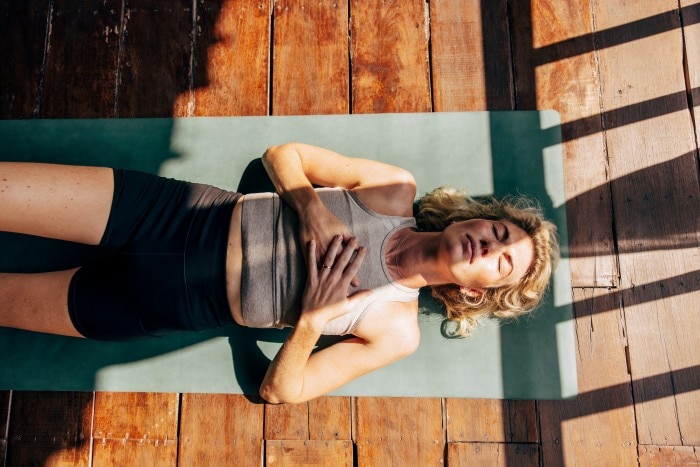
For many people, flow is mostly unplanned – say, while drawing, playing music or gardening. But it can also be specifically triggered, something in which movement plays a key role. Julia F. Christensen was a professional ballet dancer before an injury ended her career and she switched to psychology. When she needs a break nowadays, she dances or goes on a walk. “Movement brings me back into my flow,” she says. “It’s like it opens the door to a deeper state of being.” That state is familiar to many endurance athletes.It’s normal for flow not to arise immediately. “It’s comparable to learning a language,” says Christensen. “Grammar, vocabulary and sentence structure: in the beginning, it’s all a lot of work. But with time it becomes more fluid, free and intuitive.” In her book, she calls it “The Phoenix cycle”: you start as a baby chick, grow, develop, burn up – and start over again. “We’re allowed to be beginners, again and again. That’s exactly how our access to flow renews itself.”
Lire la suite
Flow is self-care
Accepting fresh starts and creative blocks is part of what makes flow possible long-term. “Trusting yourself to practice, fail and try again lays the foundation for the brain to not only be familiar with flow, but to seek it out,” Julia F. Christensen says. “I, at least, do miss my morning writing if I have to leave it for a day.” Flow is no coincidental miracle; it is a gift that we can give ourselves, through attention, curiosity and the readiness to go all in. Because when we experience flow, we are not only clear in the mind, but completely at home in ourselves. Lire la suite
Book suggestion
Dr. Julia F. Christensen: The Pathway to Flow: The New Science of Harnessing Creativity to Heal and Unwind the Body & MindSquare Peg, 2024.
Lire la suite