-
- Alle Pipetten, Dispenser und automatischen Liquid-Handling-Systeme
- Alle Mikropipetten
- Mechanische Pipetten
- Elektronische Pipetten
- Mehrkanalpipetten
- Direktverdrängerpipetten und Dispenser
- Flaschendispenser
- Pipettierhilfen
- Zubehör für Dispenser und Pipetten
- Automatisches Pipettieren
- Verbrauchsartikel für die Automation
- Zubehör für die Automation
- Services für Liquid-Handling-Geräte und Pipetten
- Home
- Unternehmen & Karriere
- Scientific Awards
- Eppendorf & Science Prize for Neurobiology
Eppendorf & Science Prize for Neurobiology
Eppendorf and Science/AAAS established this international prize in 2002. It acknowledges the increasing importance of Neurobiology in advancing our understanding of how the brain and nervous system function. It is awarded annually to one young scientist for the most outstanding neurobiological research based on experimental methods of molecular, cellular, systems, or organismic biology conducted by him/her during the past three years.
About this prize
Prize money: 25,000 USD
Additional benefits:
- The prize winner‘s essay is published in Science and on Science Online
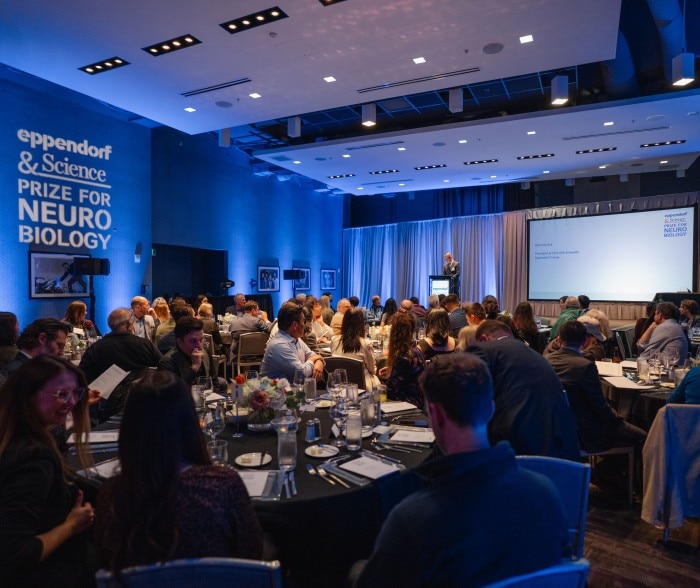
- The prize is announced and presented at a ceremony in conjunction with the Annual
- Meeting of the Society for Neuroscience. Eppendorf provides full support to attend this event
- Besides the grand prize winner the jury may appoint up to three finalists each year
Mehr erfahren
Eppendorf & Science Prize Winner 2026
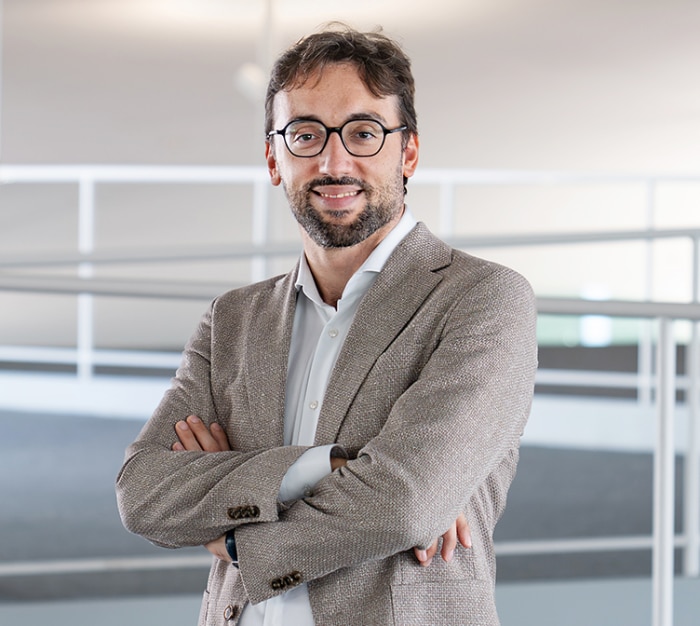
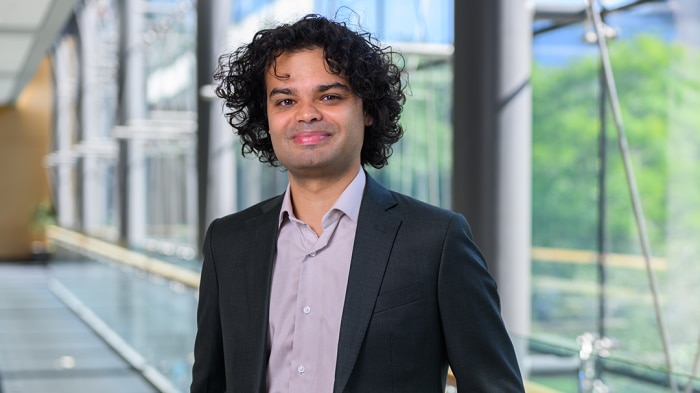
Congratulations to Gioele La Manno, Ph.D., Assistant Professor at the Brain Mind Institute of the École polytechnique fédérale de Lausanne (EPFL), Switzerland, on winning the 2026 Eppendorf & Science Prize for Neurobiology for his pioneering work of whole-brain 3D lipid mapping, providing an atlas of a hidden layer of neural diversity.
A pioneering 3D map of lipids across the adult mouse brain has earned Gioele La Manno, Ph.D., of EPFL, the 2026 Eppendorf & Science Prize for Neurobiology. His work reveals a previously overlooked layer of neural diversity. One in which distinct lipid patterns help define brain regions, cellular identities, and physiological states.
He built the first high-resolution 3D atlas of brain lipids, which reveals a mind-blowing complexity. The brain organizes into five hundred dynamic territories, each with a different lipid mix. This discovery opens a new way to study how lipids shape brain function and disease.