MENÜ
DE | EUR

DE | EUR
-
- Alle Pipetten, Dispenser und automatischen Liquid-Handling-Systeme
- Alle Mikropipetten
- Mechanische Pipetten
- Elektronische Pipetten
- Mehrkanalpipetten
- Direktverdrängerpipetten und Dispenser
- Flaschendispenser
- Pipettierhilfen
- Zubehör für Dispenser und Pipetten
- Automatisches Pipettieren
- Verbrauchsartikel für die Automation
- Zubehör für die Automation
- Services für Liquid-Handling-Geräte und Pipetten
Sorry, we couldn't find anything on our website containing your search term.
Sorry, we couldn't find anything on our website containing your search term.
Cell Culture FAQ: How to handle various cell lines?
Lab Academy
- Cell Biology
- Cell Therapy
- Cell Culture Consumables
- CO2 Incubators
- Essay
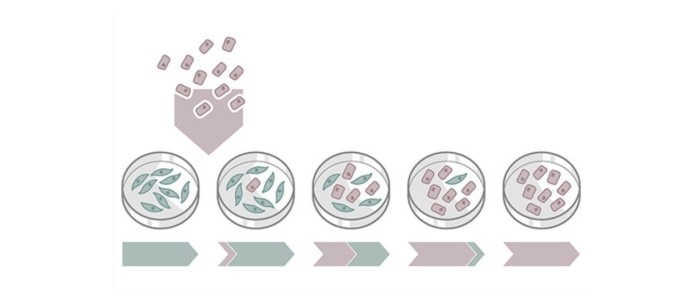
Cell culture work often implies the cultivation of various cell lines for different ongoing experiments. The simultaneous nourishment of different cell lines in a biosafety cabinet might save some time during a busy day in the laboratory but dramatically increases the risk of cross-contamination and can thus seriously impair the entire experiment. Therefore, some aspects should be considered when working with different cell lines:
- Work with only one cell line at a time in the biosafety cabinet.
- Use labeled aliquots of media and reagents for each individual cell line.
- Disinfect the interior of the biosafety cabinet after a work session with one cell line.
- Run the laminar flow for a few minutes between work sessions with different cell lines.
Mehr erfahren
Related documents

White paper
PDF