-
-
-
- WHX Labs Dubai 2026
- analytica 2026
- Forum Labo 2026
- SLAS Europe 2026
- Forum Labo 2026 Bioprocess
- Bioprocessing Summit Europe 2026
- BioProcess International 2026
- Swiss Biotech Day 2025
- ISCT 2026
- Pichia 2026
- Future Labs Live 2026
- BioProScale Sympposium 2026
- ASGCT 2026
- Eppendorf Automation Forum 2026
- ESACT 2026
- ECB 2026
- WoTS 2026
- SIMB Annual Meeting 2026
- ELRIG Drug Discovery 2026
-
-
- Service pour Mastercycler
- Service pour systèmes d’automatisation
- Service pour congélateurs
- Service pour incubateurs
- Service pour agitateurs
- Service de contrôle de la température et de l’agitation
- Service pour pipette
- Services pour bioprocédés
- Service pour centrifugeuses et rotors
- Étalonnage pour pipette neuve

-
-
-
- WHX Labs Dubai 2026
- analytica 2026
- Forum Labo 2026
- SLAS Europe 2026
- Forum Labo 2026 Bioprocess
- Bioprocessing Summit Europe 2026
- BioProcess International 2026
- Swiss Biotech Day 2025
- ISCT 2026
- Pichia 2026
- Future Labs Live 2026
- BioProScale Sympposium 2026
- ASGCT 2026
- Eppendorf Automation Forum 2026
- ESACT 2026
- ECB 2026
- WoTS 2026
- SIMB Annual Meeting 2026
- ELRIG Drug Discovery 2026
-
-
- Service pour Mastercycler
- Service pour systèmes d’automatisation
- Service pour congélateurs
- Service pour incubateurs
- Service pour agitateurs
- Service de contrôle de la température et de l’agitation
- Service pour pipette
- Services pour bioprocédés
- Service pour centrifugeuses et rotors
- Étalonnage pour pipette neuve
-
- Pipettes, distributeurs et dispositifs de manipulation de liquides automatisée
- Toutes les micropipettes
- Pipettes mécaniques
- Pipettes électroniques
- Pipettes multicanaux
- Pipettes et distributeurs à déplacement positif
- Distributeurs sur flacon
- Auxiliaires de pipetage
- Accessoires pour pipettes et distributeurs
- Pipetage automatisé
- Consommables d’automatisation
- Accessoires d’automatisation
- Services pour pipettes et distributeurs

From Rockers to Orbital Shakers – What Type to Use for Shaking Cultures?
Ines Hartmann Lab Academy
- Mélangeurs et agitateurs
- Test
Rocking, linear or orbital shaking – three different agitation modes all with the same purpose to mix samples. Still, there are differences in the technology behind as well as in the related instruments in the lab. Learn more about the shaking processes and its applications in the lab.
Shakers have been used to cultivate cells since the beginning of the last century. No matter if it is a microbial, algae or mammalian shake culture, the purpose of shaking is to increase the availability for nutrients and to improve the oxygen transfer to gain a higher biomass compared to static incubation. Beside that results should be reproducible to make parallel experiments comparable. What mode of agitation is best suited for cell expansion and what mode is more appropriate for applications in molecular biology?
Lire la suite

The Soft – Gentle mixing with rockers
Lire la suite
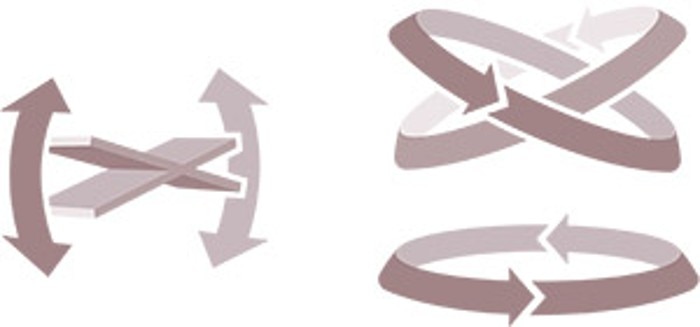
The Turbulent - Breaking the waves with reciprocating shakers
Lire la suite
Reciprocating or linear motion shakers move the liquid back-and-forth in a horizontal plane. During reciprocating shaking, fluids movement starts with a surge and usually develops into a return curl before ending up in a swirl. This return curl pattern is strongly affected by liquid viscosity. It may get quite turbulent and easily inconsistent depending on fill level and speed.

Lire la suite
The Consistent – Continuous swirl with orbital shakers
Lire la suite
Nowadays most of the shakers for cell expansion of microbial, algae, and mammalian cultures are orbital shakers. Orbital shakers rotate the platform in a circular motion, which results in a consistent “swirl” pattern. In comparison to reciprocating shakers, the swirl pattern formation is much less affected by variables like media viscosity, instrument ramp-up or fill volumes [2].

Lire la suite
References:
[1] Büchs, J. (2001) Introduction to advantages and problems of shaken cultures. Biochem. Eng. J. 7, 91–98[2] D. Freedman (1970), the shaker in Bioengineering. Advanced instrumentation
S. Suresh, V.C. Srivastava, and I.M. Mishra. Critical analysis of engineering aspects of shaken flask bioreactors. Informa healthcare. 2009; 29(4): 255–278
Lire la suite