MENU
FR | EUR
-
-
- Service pour Mastercycler
- Service pour systèmes d’automatisation
- Service pour congélateurs
- Service pour incubateurs
- Service pour agitateurs
- Service de contrôle de la température et de l’agitation
- Service pour pipette
- Services pour bioprocédés
- Service pour centrifugeuses et rotors
- Étalonnage pour pipette neuve
-
-
- WHX Labs Dubai 2026
- analytica 2026
- Forum Labo 2026
- SLAS Europe 2026
- Forum Labo 2026 Bioprocess
- Bioprocessing Summit Europe 2026
- BioProcess International 2026
- Swiss Biotech Day 2025
- ISCT 2026
- Pichia 2026
- Future Labs Live 2026
- BioProScale Sympposium 2026
- ASGCT 2026
- Eppendorf Automation Forum 2026
- ESACT 2026
- ECB 2026
- WoTS 2026
- SIMB Annual Meeting 2026
- ELRIG Drug Discovery 2026
-

-
-
- Service pour Mastercycler
- Service pour systèmes d’automatisation
- Service pour congélateurs
- Service pour incubateurs
- Service pour agitateurs
- Service de contrôle de la température et de l’agitation
- Service pour pipette
- Services pour bioprocédés
- Service pour centrifugeuses et rotors
- Étalonnage pour pipette neuve
-
-
- WHX Labs Dubai 2026
- analytica 2026
- Forum Labo 2026
- SLAS Europe 2026
- Forum Labo 2026 Bioprocess
- Bioprocessing Summit Europe 2026
- BioProcess International 2026
- Swiss Biotech Day 2025
- ISCT 2026
- Pichia 2026
- Future Labs Live 2026
- BioProScale Sympposium 2026
- ASGCT 2026
- Eppendorf Automation Forum 2026
- ESACT 2026
- ECB 2026
- WoTS 2026
- SIMB Annual Meeting 2026
- ELRIG Drug Discovery 2026
-
FR | EUR
-
- Pipettes, distributeurs et dispositifs de manipulation de liquides automatisée
- All Micropipettes
- Pipettes mécaniques
- Pipettes électroniques
- Pipettes multicanaux
- Pipettes et distributeurs à déplacement positif
- Distributeurs sur flacon
- Auxiliaires de pipetage
- Accessoires pour pipettes et distributeurs
- Pipetage automatisé
- Consommables d’automatisation
- Accessoires d’automatisation
- Services pour pipettes et distributeurs
Sorry, we couldn't find anything on our website containing your search term.
Sorry, we couldn't find anything on our website containing your search term.
- Page d'accueil
- Lab Academy
- Pipetting Knowledge Hub
- Learn pipetting
- Ergonomics
- Making pipetting personal
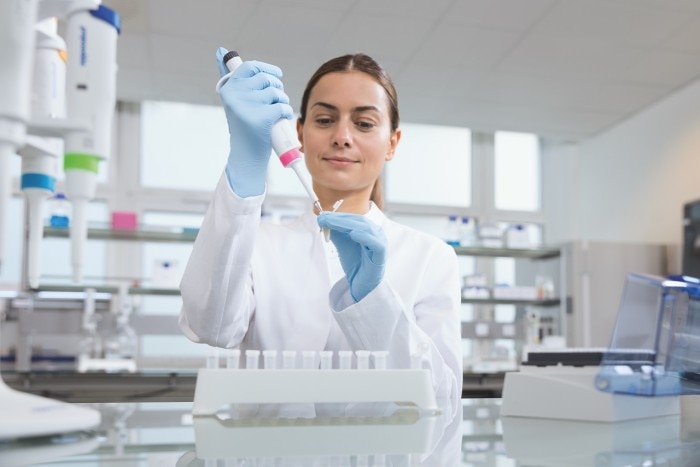
Making pipetting personal
Lab Academy
- Microbiologie
- Biologie cellulaire
- Biologie moléculaire
- Liquid Handling
- Ergonomie
- Pipettes
- Test
Is your pipette living up to your demands? With the increased pressures of modern lab life, your pipette needs to meet your unique needs and provide maximum precision, ease, and comfort. Find out how personalized pipetting can transform your lab life, and see how we’re helping scientists achieve this with our latest mechanical pipette – the Eppendorf Research® 3 neo! Learn why this innovative pipette could be the perfect fit for you, offering high ergonomics, precision, and customizable settings, along with accessories designed to work in harmony with your hands and experiments.
How well does your pipette work for you?
Mechanical pipettes are the workhorses of the lab, with scientists spending an average of two hours pipetting every single day [1]. Across each experiment, day in and day out, your pipette needs to deliver precise volumes of varying liquid types. We ask a lot of our pipettes and pipette tips, and many simply aren’t up to the job. Experiencing inconsistent or inaccurate pipetting is common, and can cause a whole range of problems in the lab. Lack of accuracy and precision – of even just a few microliters – can introduce error and reproducibility issues into your experiments. This could affect the reliability of your results, risking false conclusions and the need for repeated work, wasting precious time and samples.
Poor pipette ergonomics is another common issue. The repetitive action of aspirating and dispensing liquids, ejecting pipette tips, and switching between different volumes can inflict muscular fatigue during longer pipetting sessions. This can lead to repetitive stress injury (RSI) syndrome and other musculoskeletal disorders, which are common for those working long hours in the lab. In some studies, as many as 80% of lab technicians are reported to have musculoskeletal disorders, with pipetting being listed as a major risk factor [2].
Scientists shouldn’t have to deal with pipettes that harm their lab work or well-being. So, what is the best way to ensure precise, comfortable pipetting? This all comes down to the pipette and pipette tips you choose, and if the pipetting system can meet your specific needs.
Of course, there are several non-negotiable design elements for optimal pipetting performance. In terms of ergonomics, your pipette should be lightweight and well-balanced, with low tip attachment and ejection forces. Additional design elements, such as an ergonomic fingerhook and easy reachability of the top of the pipette button can further take the strain out of your pipetting. However, no two people’s hands are the same, so you need to make sure your pipette’s design is just right for you.
And it’s not just ergonomics to consider. Your pipetting requirements can vary hugely depending on the task at hand. For instance, some experiments require large, frequent volume changes. For this, faster volume adjustment settings can improve efficiency. On the other hand, some experiments require smaller volume changes, where easy one-handed volume adjustments are ideal to avoid muscular strain and help you work with less interruptions.
Your pipetting needs can also largely differ depending on the type of liquid used. When pipetting dense liquids, it can be extremely difficult to maintain accuracy, even when using the correct technique. This inaccuracy can be largely due to the pipette’s adjustment settings, as pipettes are calibrated for water by default. Pipetting liquids with higher density can therefore result in the aspiration of less liquid than expected, if the factory settings aren’t adjustable.
Accessories – including pipette labels – are also important in giving your pipette the personal touch. Most scientists will be familiar with writable label stickers that are stuck onto the side of the pipette. However, using these labels can come with downsides when it comes to cleaning the pipettes. These also mean that important details, like your name, lab, application and/or calibration date aren’t easy to modify, and so they often aren’t updated. The lack of personalization can make your pipette prone to being accidentally swapped with other users. Importantly, it may also mean that pipettes go long periods of time without calibration or servicing, leading to a loss of accuracy and precision.
Poor pipette ergonomics is another common issue. The repetitive action of aspirating and dispensing liquids, ejecting pipette tips, and switching between different volumes can inflict muscular fatigue during longer pipetting sessions. This can lead to repetitive stress injury (RSI) syndrome and other musculoskeletal disorders, which are common for those working long hours in the lab. In some studies, as many as 80% of lab technicians are reported to have musculoskeletal disorders, with pipetting being listed as a major risk factor [2].
Scientists shouldn’t have to deal with pipettes that harm their lab work or well-being. So, what is the best way to ensure precise, comfortable pipetting? This all comes down to the pipette and pipette tips you choose, and if the pipetting system can meet your specific needs.
How your pipetting can benefit from the
personal touch
Of course, there are several non-negotiable design elements for optimal pipetting performance. In terms of ergonomics, your pipette should be lightweight and well-balanced, with low tip attachment and ejection forces. Additional design elements, such as an ergonomic fingerhook and easy reachability of the top of the pipette button can further take the strain out of your pipetting. However, no two people’s hands are the same, so you need to make sure your pipette’s design is just right for you.
And it’s not just ergonomics to consider. Your pipetting requirements can vary hugely depending on the task at hand. For instance, some experiments require large, frequent volume changes. For this, faster volume adjustment settings can improve efficiency. On the other hand, some experiments require smaller volume changes, where easy one-handed volume adjustments are ideal to avoid muscular strain and help you work with less interruptions.
Your pipetting needs can also largely differ depending on the type of liquid used. When pipetting dense liquids, it can be extremely difficult to maintain accuracy, even when using the correct technique. This inaccuracy can be largely due to the pipette’s adjustment settings, as pipettes are calibrated for water by default. Pipetting liquids with higher density can therefore result in the aspiration of less liquid than expected, if the factory settings aren’t adjustable.
Accessories – including pipette labels – are also important in giving your pipette the personal touch. Most scientists will be familiar with writable label stickers that are stuck onto the side of the pipette. However, using these labels can come with downsides when it comes to cleaning the pipettes. These also mean that important details, like your name, lab, application and/or calibration date aren’t easy to modify, and so they often aren’t updated. The lack of personalization can make your pipette prone to being accidentally swapped with other users. Importantly, it may also mean that pipettes go long periods of time without calibration or servicing, leading to a loss of accuracy and precision.
Lire la suite
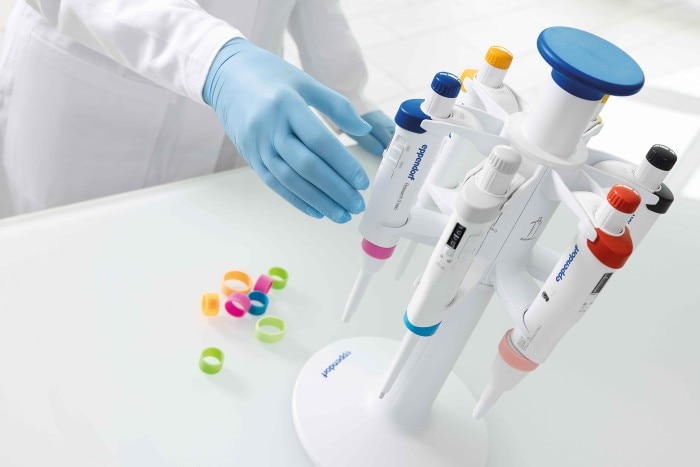
Get ready to find your best fit
More personalized pipetting is the key to achieving optimum comfort, precision, and efficiency in your experiments. However, for far too long, scientists have had to deal with a one-sizefits-all approach to pipettes, with a lack of adjustable settings or accessories.
Get ready to experience the power of personalization with our latest generation of mechanical pipettes, the Eppendorf Research® 3 neo . Our mission has been to develop a pipette that is an optimal fit for you. With carefully designed ergonomics, even smaller hands can now experience easy, fatigue-free pipetting. The Research 3 neo® can also meet your everchanging pipetting needs, maintaining accuracy and precision even for non-aqueous liquids, and adapting to the volume setting speed that suits you best.
Get ready to experience the power of personalization with our latest generation of mechanical pipettes, the Eppendorf Research® 3 neo . Our mission has been to develop a pipette that is an optimal fit for you. With carefully designed ergonomics, even smaller hands can now experience easy, fatigue-free pipetting. The Research 3 neo® can also meet your everchanging pipetting needs, maintaining accuracy and precision even for non-aqueous liquids, and adapting to the volume setting speed that suits you best.
Lire la suite
The power of choice
If you’re tired of pipette settings that can’t adapt to your specific requirements, the Research 3 neo® is your best match. With the volume gear shift, switch between two different volume speed settings for improved efficiency across each pipetting task. Shift to the ‘fast’ setting to accelerate large volume changes, and shift to the ‘easy’ speed to precisely fine-tune your volume, and allow for one-handed adjustments.
You can also be confident in your pipetting accuracy for varying liquids, with the temporary calibration adjustment. Adjust your Research 3 neo® to non-aqueous liquids, differing tip geometries (e.g., when using elongated epT.I.P.S.® L tips for narrow vessels), your pipetting technique (forward or reverse pipetting), or the altitude of your lab without needing to change the calibration settings, ensuring precise and effortless pipetting that can adapt to your experiments. And with our new ColorTag pipette marking rings , you can make the Research 3 neo® uniquely yours. Available in 12 colors and 6 sizes, use the marking rings to label your pipette’s most important details, and update these quickly and easily when needed.
Lire la suite
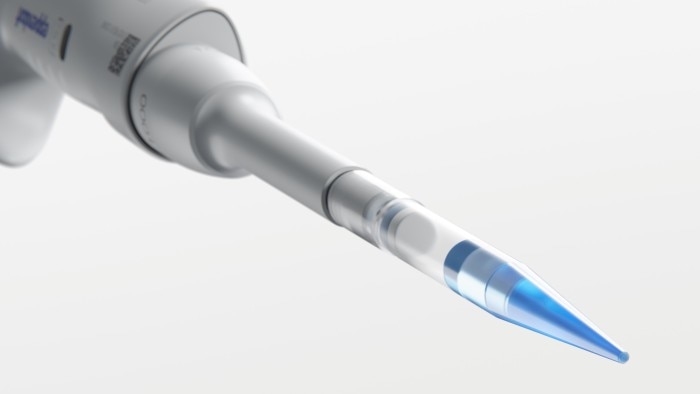
Eppendorf pipettes and epT.I.P.S.® pipette tips form a coordinated system with optimal compatibility.
Achieving accuracy and precision in every drop
When choosing a pipette, you need to be sure that yours can go the distance, with unwavering performance that stands the test of time. Our pipettes are renowned for their high accuracy, reliability, and durability, crafted with single-cast housings and premium materials, and undergoing extensive testing: Accuracy and precision tests. Climatic tests. Drop tests. Autoclaving, UV, and chemical resistance tests. Daily use over multiple years simulated with robots. Tests in real lab environments. In short: we test them. Thoroughly.Plus, when used in combination with the epT.I.P.S.® pipette tip family , the Research 3 neo® offers a coordinated air-cushion pipetting system. This provides optimal tip compatibility, complete sealing, and minimal tip attachment and ejection forces. You can also rest assured that the precision of the Research 3 neo® won’t falter with its volume lock. This new feature secures your set volume and ensures it doesn’t stray while pipetting over any length of time.
Lire la suite
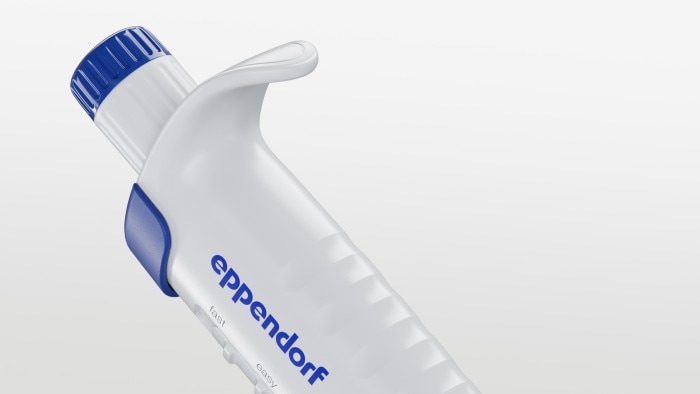
Optimized positions of fingerhook, pipetting button, and tip ejection button improve ease and comfort.
Waving goodbye to muscular strain
When in the lab, your hands are constantly at work. You should pay careful attention to your pipette’s ergonomics to avoid strain and injury, and elevate efficiency. With the Eppendorf PhysioCare Concept® , our mission is to improve lab life for everyone, with our carefully designed pipettes ensuring a safe and comfortable pipetting experience.
The position of the fingerhook, tip ejection button, and pipetting button have been optimized to ensure a highly comfortable fit for your hands. The Research 3 neo® also features a shorter distance from the fingerhook to the top of the pipetting button to help further reduce muscular fatigue, especially for smaller hands. This innovative pipette has our most ergonomic design yet, being lightweight and well-balanced, with low operational and tip ejection forces. Experience a pipette that is made for your hands, helping you take the strain out of pipetting and breeze through long lab sessions.
The position of the fingerhook, tip ejection button, and pipetting button have been optimized to ensure a highly comfortable fit for your hands. The Research 3 neo® also features a shorter distance from the fingerhook to the top of the pipetting button to help further reduce muscular fatigue, especially for smaller hands. This innovative pipette has our most ergonomic design yet, being lightweight and well-balanced, with low operational and tip ejection forces. Experience a pipette that is made for your hands, helping you take the strain out of pipetting and breeze through long lab sessions.
Lire la suite
_3174000008_700.jpg)
What about sustainability?
Sustainability is something every lab is continuously striving towards. Pipetting most likely plays a large part in the environmental footprint of your lab, so your pipetting system and its full product lifecycle should be designed with sustainability in mind; from research and development, through to production practices, logistics, usage, and disposal.
You can count on the Research 3 neo® for an eco-conscious choice, leading by example with ISO 14001 certification of our German manufactory. We take pride in powering our pipette production with 100% renewable energy and implementing responsible chemical management practices. Eppendorf pipettes are built to last, crafted from high-quality materials to ensure a long product lifecycle.
You can count on the Research 3 neo® for an eco-conscious choice, leading by example with ISO 14001 certification of our German manufactory. We take pride in powering our pipette production with 100% renewable energy and implementing responsible chemical management practices. Eppendorf pipettes are built to last, crafted from high-quality materials to ensure a long product lifecycle.
Lire la suite
Like many other Eppendorf products, our new Research 3 neo® single-channel pipettes are ACT® labeled. This environmental impact factor label is published by the independent My Green Lab® non-profit organization. ACT Ecolabels promote accountability, consistency, and transparency throughout the complete product lifecycle, highlighting our commitment to ecofriendly production and products.
However, it’s not just the pipette to consider – a significant challenge for those in the lab is reducing the use of plastic consumables derived from fossil fuels. To help solve this issue, Eppendorf offers an eco-friendlier alternative to fossil-based plastics, with the innovative epT.I.P.S.® BioBased pipette tips . These are made from 100% bio-based polypropylene according to the mass balance approach, helping you reduce the carbon footprint of your pipette tips, without compromising on purity, quality, or pipetting performance.
However, it’s not just the pipette to consider – a significant challenge for those in the lab is reducing the use of plastic consumables derived from fossil fuels. To help solve this issue, Eppendorf offers an eco-friendlier alternative to fossil-based plastics, with the innovative epT.I.P.S.® BioBased pipette tips . These are made from 100% bio-based polypropylene according to the mass balance approach, helping you reduce the carbon footprint of your pipette tips, without compromising on purity, quality, or pipetting performance.
Lire la suite
Be part of the pipetting revolution
Pipetting is a highly individual experience, with no two pairs of hands or experiments being the same. Recognizing this, our Research 3 neo® has been expertly crafted to provide you with a pipette that can fit your hands and meet your research needs perfectly. Find your best fit with optimal ergonomics, and adaptability to varying volume changes and liquid types with comfort, ease, precision, and sustainability. As lab workflows advance and the demands on our pipettes grow, the era of more personalized pipetting has never been more important. Make pipetting your own and see what the Research 3 neo® can do for you!
References
[1] https://www.the-scientist.com/pipette-usage-and-trends-37099
[2] AlNekhilan, A. F., AlTamimi, A. M., AlAqeel, B. Y., AlHawery, A. A., AlFadhel, S. F., & Masuadi, E. M. (2020). Work-related musculoskeletal disorders among clinical laboratory workers. Avicenna Journal of Medicine, 10(01), pp. 29-34.
Lire la suite
Related documents

Brochure
PDF
White Paper
PDF
Eppendorf solutions
Lire la suite