-
- Todas as pipetas, dispensadores e equipamentos para manuseio de líquidos automatizados
- Pipetas mecânicas
- Pipetas eletrônicas
- Pipetas multicanal
- Pipetas de deslocamento positivo e dispensadores
- Dispensadores de frascos
- Controladores de pipeta
- Acessórios para dispensadores e pipetas
- Pipetagem Automatizada
- Consumíveis de automação
- Acessórios de automação
- Serviços para pipetas e equipamentos para manuseio de líquidos
- Home
- Empresa e Carreiras
- Humanity & Science
- Adels Story
Read more
Read less
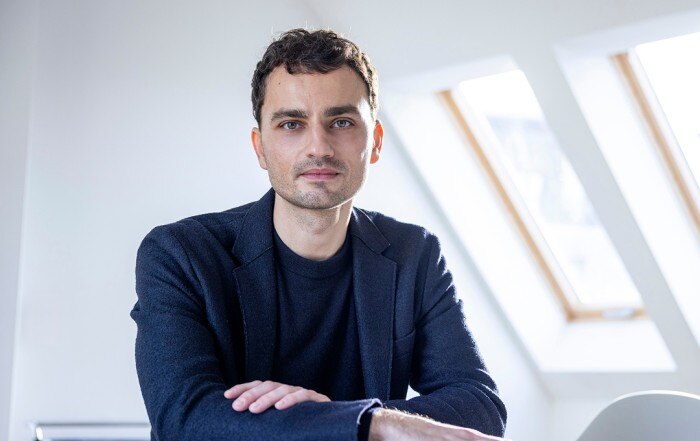
Adel Al Jord’s (Mechanobiologist, Barcelona, Spain) research began with a question about female fertility. Mammalian oocytes – the cells that become eggs – develop over many hours, accumulating genetic material and preparing for a highly precise division. Adel wanted to understand how this long period of preparation is coordinated inside a single cell.
His focus turned to the nucleus, where RNA is processed before it is used to make proteins. This processing takes place in small, droplet-like structures called biomolecular condensates. These structures have no membranes, but they organize key steps of gene expression.
Using live-cell microscopy and quantitative analysis, Adel and his team observed that the oocyte cytoplasm is actively reorganized by the cytoskeleton. Key cytoskeletal proteins generate movement throughout the cell, positioning the nucleus at its center during growth and producing force fluctuations that extend across the nuclear envelope. These forces influence how nuclear condensates move, merge, and reorganize over time.
When the team compared normal oocytes with cells in which cytoskeletal activity was reduced, clear differences emerged. In healthy cells, nuclear condensates progressively merged and grew in size as the oocyte matured. In cells with reduced force generation, this reorganization did not occur. Further experiments showed that condensates exposed to these forces supported higher RNA-processing activity, which was required for proper cell division and fertility.
This work showed that physical forces inside a single cell contribute directly to gene regulation during reproduction.
In this way, Adel’s work connected intracellular force generation, nuclear positioning, and gene regulation within the same biological process. The central placement of the nucleus reflected an alignment of mechanical activity across the cell with the molecular machinery required for development.

Read more
Read less
applying quantitative imaging, physical analysis, cell and computational biology to examine how forces generated inside the cell contribute to nuclear organization and RNA regulation. This approach opened a new direction of research, linking intracellular mechanics directly to fundamental biological function.
The same types of nuclear condensates studied in oocytes are found in many other cell types and across organisms. They play central roles in RNA processing, ribosome production, and genome regulation. This insight prompted Adel to broaden his research beyond fertility.
His group now investigates how intracellular forces shape cell function across multiple spatial scales. By combining microscopy, targeted perturbation of cytoskeletal systems, and computational modeling, they study how force influences organization at the level of whole organelles and at the level of molecular interactions within nuclear compartments. Together, these effects shape how genetic information is processed during growth, division, and differentiation.
Ler mais
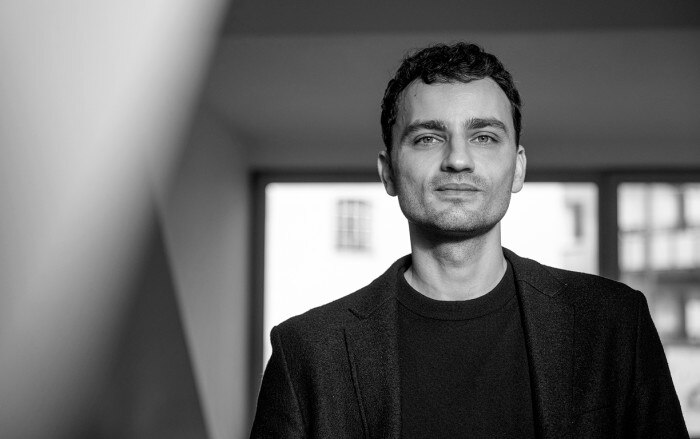
The curing of mechanopathologies
In such cases, changes in force transmission can reshape nuclear condensates, modify RNA processing, and influence gene expression. Studies in disease models already show links between altered condensate organization and pathological cellular states. Adel’s work provides a mechanistic foundation for understanding how these changes arise and how they affect cell function.
Ler mais
Developing a young field
Mechanobiology at the molecular scale remains an emerging area of research. Progress in this field depends on integrating physics, cell biology, bioinformatics, and quantitative modeling into unified experimental approaches. Adel’s career reflects a sustained commitment to this integration, from his early discoveries in reproductive biology to his current efforts to define how forces regulate organelles and gene expression across cell types.
By establishing intracellular forces as regulators of nuclear organization and RNA processing, Adel Al Jord has helped shape the foundations of a field that connects physical processes to the core functions of living cells.
Scientists are entrepreneurs
Like innovative entrepreneurs, they invest in a vision that challenges established thinking and opens new possibilities. Their work continues to expand how cell biology is understood, offering a new way of seeing how life operates at the smallest of scales.
Ler mais
Videos not loading, because cookies have been rejected. Change your