MENU
BR | BRL

BR | BRL
-
- Todas as pipetas, dispensadores e equipamentos para manuseio de líquidos automatizados
- Todas as micropipetas
- Pipetas mecânicas
- Pipetas eletrônicas
- Pipetas multicanal
- Pipetas de deslocamento positivo e dispensadores
- Dispensadores de frascos
- Controladores de pipeta
- Acessórios para dispensadores e pipetas
- Pipetagem Automatizada
- Consumíveis de automação
- Acessórios de automação
- Serviços para pipetas e equipamentos para manuseio de líquidos
Sorry, we couldn't find anything on our website containing your search term.
Sorry, we couldn't find anything on our website containing your search term.
Cell Culture FAQ: What to do with a new cell line in your lab?
Lab Academy
- Cell Biology
- Cell Therapy
- Cell Culture Consumables
- CO2 Incubators
- FAQ
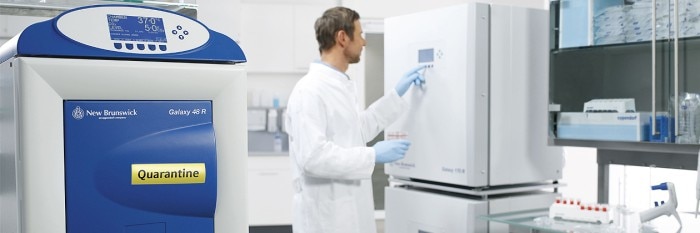
It is common practice to share cell lines with external laboratories and collaborators. But these cell lines might come with an incalculable contamination or misidentification risk. Therefore, it is highly recommended to verify quality and origin to obtain further reliable data with these cell lines. Consider the following procedure when adding a foreign cell line to your cell culture:
Quarantine the new cell line (separate incubators, biosafety cabinets or even cell culture laboratories depending on the individual laboratory equipment).
Quality tests for any microbial contaminants like bacteria, fungi, yeast, and mycoplasma.
Compare with the list of known misidentified cell lines using the ICLAC database.
Identity tests for cross-contamination or misidentification to verify the authenticity of the cell line.
Using your own tests to verify cell lines can save you valuable time, efforts and costs.
Quarantine the new cell line (separate incubators, biosafety cabinets or even cell culture laboratories depending on the individual laboratory equipment).
Quality tests for any microbial contaminants like bacteria, fungi, yeast, and mycoplasma.
Compare with the list of known misidentified cell lines using the ICLAC database.
Identity tests for cross-contamination or misidentification to verify the authenticity of the cell line.
Using your own tests to verify cell lines can save you valuable time, efforts and costs.
Ler mais
Related documents

White papedr
PDF