MENU
PL | PLN
-
-
-
- WHX Labs Dubai 2026
- analytica 2026
- Forum Labo 2026
- SLAS Europe 2026
- Forum Labo 2026 Bioprocess
- Bioprocessing Summit Europe 2026
- BioProcess International 2026
- Swiss Biotech Day 2025
- ISCT 2026
- Pichia 2026
- Future Labs Live 2026
- BioProScale Sympposium 2026
- ASGCT 2026
- Eppendorf Automation Forum 2026
- ESACT 2026
- ECB 2026
- WoTS 2026
- SIMB Annual Meeting 2026
- ELRIG Drug Discovery 2026
-

-
-
-
- WHX Labs Dubai 2026
- analytica 2026
- Forum Labo 2026
- SLAS Europe 2026
- Forum Labo 2026 Bioprocess
- Bioprocessing Summit Europe 2026
- BioProcess International 2026
- Swiss Biotech Day 2025
- ISCT 2026
- Pichia 2026
- Future Labs Live 2026
- BioProScale Sympposium 2026
- ASGCT 2026
- Eppendorf Automation Forum 2026
- ESACT 2026
- ECB 2026
- WoTS 2026
- SIMB Annual Meeting 2026
- ELRIG Drug Discovery 2026
-
PL | PLN
-
- Wszystkie pipety, dozowniki oraz automatyczne urządzenia do pracy z cieczami
- Wszystkie mikropipety
- Pipety mechaniczne
- Pipety elektroniczne
- Pipety wielokanałowe
- Pipety z wyporem bezpośrednim i dozowniki
- Dozowniki butelkowe
- Pipetory
- Dozowniki i akcesoria do pipet
- Pipetowanie automatyczne
- Materiały eksploatacyjne do urządzeń automatycznych
- Akcesoria do urządzeń automatycznych
- Systemy do pracy z cieczami i serwisowanie pipet
Sorry, we couldn't find anything on our website containing your search term.
Sorry, we couldn't find anything on our website containing your search term.
Smart Extension of Incubation Capacity
Many protocols need multiple incubation temperatures. In crowded labs where temperature devices must be shared this can be a challenge. Either one reserves the devices some days in advance and have them run of different temperatures, or one must wait until one device heats up or cools down in between the steps. But this can be challenging when the protocols are even time sensitive regarding incubation duration. So very creative ways come up to have samples incubated at different temperatures.
During my PhD difficulties already started in a standard heat-shock transformation. I used an ice bucket for the 4 °C steps, even though knowing that the ice bucket not necessarily has or keeps the 4 °C depending on the surrounding temperature. Then I used a thermal mixer for the shock at 42 °C and afterwards I went into the incubation room, sticking my tubes to a sticky pad with additional adhesive film having them mixed at 37 °C for the recovering phase. A very annoying process I had to go through multiple times a week.
Warto przeczytać
Table 1: Recommended devices during heat-shock transformation protocol steps
| Protocol step | Temperature | Mixing | Device |
|---|---|---|---|
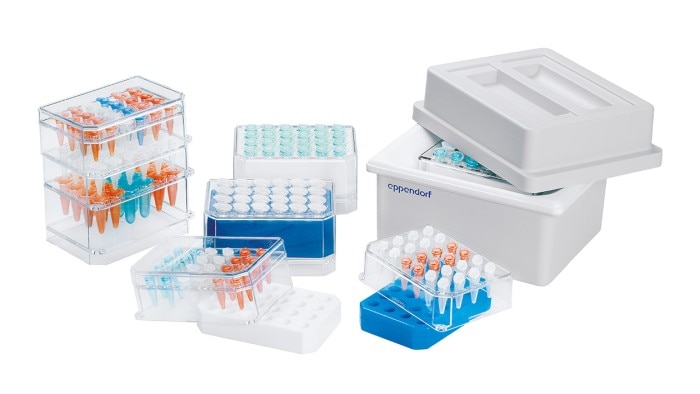
| Incubation of vector with competent cells | 4 °C | no | IsoTherm System® |
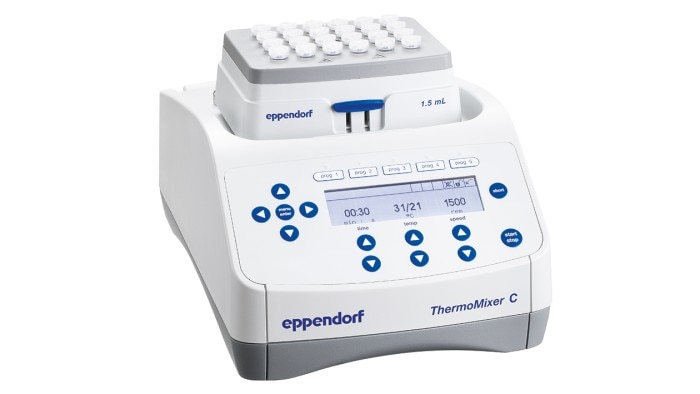
| Heat-shock | 42 °C | no | SmartExtender on ThermoMixer® C |
| Recovering of cells | 37 °C | yes | ThermoMixer® C |
Warto przeczytać
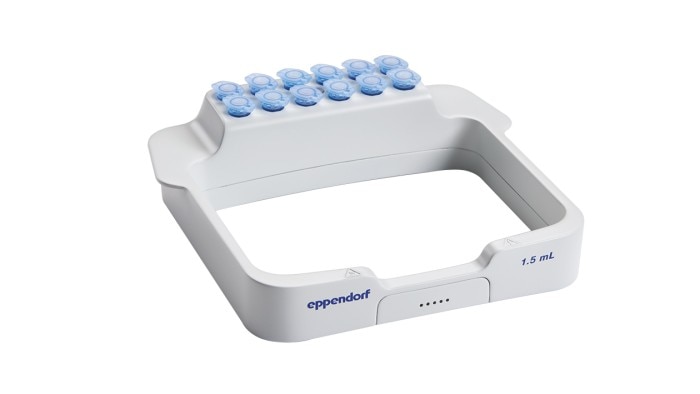
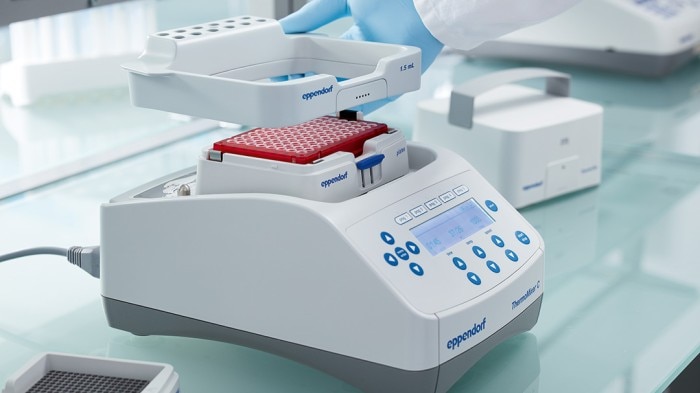
A smarter option is to have a SmartExtender that fits your thermal mixer and takes e.g., 12 additional 1.5 mL tubes. Ideally you can program a second temperature. Like this you can incubate samples in the SmartExtender, let’s say at 42 °C and mix/incubate samples at 37 °C at the same time. So, heat-shock of multiple samples can be done by just putting tubes from heat zone (42°C) to recover zone (37°C) on the ThermoMixer ® C without walking around and loosing time.
Or you can incubate samples at two different temperatures, 15 °C in the block and 28 °C in the SmartExtender. Either for one, or two different protocols, or persons working in the lab. Or you choose to use a plate and tubes…whatever you need, you can incubate two different samples at two different temperatures. Basically, you can have an incubation device and a thermal mixer in one.
Only open question: How to reliably keep 4 °C? Well, here we recommend an ice-free IsoTherm System ® of which the block for holding samples is cooled in the fridge and then placed in a polystyrene bucket. This system keeps the temperature more reliable, contamination reduced and drop-free compared to ice.
Or you can incubate samples at two different temperatures, 15 °C in the block and 28 °C in the SmartExtender. Either for one, or two different protocols, or persons working in the lab. Or you choose to use a plate and tubes…whatever you need, you can incubate two different samples at two different temperatures. Basically, you can have an incubation device and a thermal mixer in one.
Only open question: How to reliably keep 4 °C? Well, here we recommend an ice-free IsoTherm System ® of which the block for holding samples is cooled in the fridge and then placed in a polystyrene bucket. This system keeps the temperature more reliable, contamination reduced and drop-free compared to ice.
Warto przeczytać
Related Document:

White Paper No. 52
PDF 0,1 MB