-
-
-
- WHX Labs Dubai 2026
- analytica 2026
- Forum Labo 2026
- SLAS Europe 2026
- Forum Labo 2026 Bioprocess
- Bioprocessing Summit Europe 2026
- BioProcess International 2026
- Swiss Biotech Day 2025
- ISCT 2026
- Pichia 2026
- Future Labs Live 2026
- BioProScale Sympposium 2026
- ASGCT 2026
- Eppendorf Automation Forum 2026
- ESACT 2026
- ECB 2026
- WoTS 2026
- SIMB Annual Meeting 2026
- ELRIG Drug Discovery 2026
-

-
-
-
- WHX Labs Dubai 2026
- analytica 2026
- Forum Labo 2026
- SLAS Europe 2026
- Forum Labo 2026 Bioprocess
- Bioprocessing Summit Europe 2026
- BioProcess International 2026
- Swiss Biotech Day 2025
- ISCT 2026
- Pichia 2026
- Future Labs Live 2026
- BioProScale Sympposium 2026
- ASGCT 2026
- Eppendorf Automation Forum 2026
- ESACT 2026
- ECB 2026
- WoTS 2026
- SIMB Annual Meeting 2026
- ELRIG Drug Discovery 2026
-
-
- Wszystkie pipety, dozowniki oraz automatyczne urządzenia do pracy z cieczami
- Wszystkie mikropipety
- Pipety mechaniczne
- Pipety elektroniczne
- Pipety wielokanałowe
- Pipety z wyporem bezpośrednim i dozowniki
- Dozowniki butelkowe
- Pipetory
- Dozowniki i akcesoria do pipet
- Pipetowanie automatyczne
- Materiały eksploatacyjne do urządzeń automatycznych
- Akcesoria do urządzeń automatycznych
- Systemy do pracy z cieczami i serwisowanie pipet
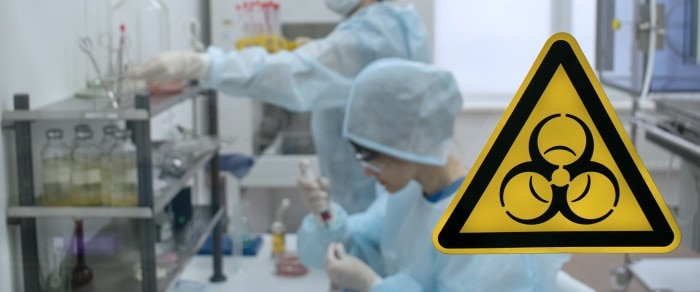
Biosafety Levels and Their Meaning
Akademia laboratoryjna
- Bioprocesy
- Biologia komórki
- Wirowanie
- Wirówki i rotory
- Eksperyment
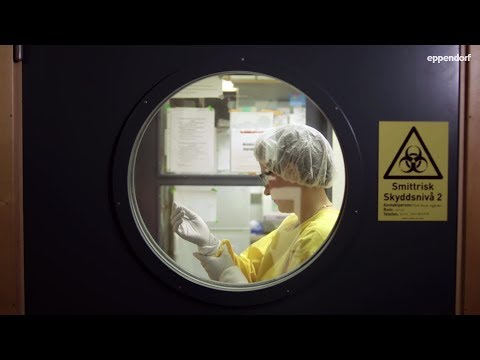
Working with biological material can sometimes pose a danger to laboratory staff and the environment. For this reason, staff must correctly handle material according established standards. These standards comprise four biosafety levels (BSLs) that typically apply to biological materials. Depending on the level, laboratory staff will have to possess a certain set of skills for handling potentially dangerous material. Aerosols forming during standard lab procedures like pipetting, mixing, and centrifuging poses the greatest potential risk for infection. To minimize the risk of infection from bioaerosols, primary and secondary barriers are used. A primary barrier could, for instance, be a biosafety cabinet (BSC). A secondary barrier might be an autoclave (BSL-2) or, in a higher-level situation, an installation inside a facility like a dedicated anteroom or ventilation system might serve as the barrier. Infectious material might include bacteria, viruses, cell cultures, parasites, or particular types of fungi. Depending on the security standard in place, special training may be required to handle these infectious materials. The laboratory supervisor is responsible for correctly educating laboratory staff.
Videos not loading, because cookies have been rejected. Change your
Biosafety level 1 (BSL-1)
Warto przeczytać

Examples of typical BSL-1 biological material
- Bacteria: Agrobacterium tumefaciens, Escherichia coli K-12, Pseudomonas fluorescens, Bacillus subtilis
- Viruses: canine adenovirus types 1 and 2, Bovine enterovirus
- Fungi: Saccharomyces cerevisiae
- Certain cell cultures> Endoparasites of animals and humans (e.g., some nematodes)
Warto przeczytać
Biosafety level 2 (BSL-2)
Warto przeczytać

Examples of typical BSL-2 biological material
- Bacteria: Chlamydia pneumoniae, Enterobacter spp., Mycoplasma pneumonia, Yersinia pseudotuberculosis
- Viruses: Herpes simplex virus, HIV (when performing routine diagnostic procedures or working with clinical specimens)
Warto przeczytać
Biosafety level 3 (BSL-3)
Warto przeczytać

Examples of typical BSL-3 biological material
- Bacteria: Yersinia pestis, Brucella abortus, Chlamydia psittaci, Pseudomonas mallei
- Viruses: West Nile fever, herpes B, hepatitis A
Warto przeczytać
Biosafety level 4 (BSL-4)
Warto przeczytać

Examples of typical BSL-4 biological material
- Ebola-Virus, Lassa-Virus, Marburg-Virus
Warto przeczytać
Requirements for standard laboratory equipment in BSL labs
Centrifugation
- Centrifuge vessels (aerosol-tight vessels required): decontamination after use required; as an alternative, sterile, single-use vessels may be used
- Aerosol-tight rotors
- Aerosol-tight caps that can be removed from the centrifuge for secure transport
- Use of vessels with high thermal, centrifugation, and chemical stability
- Imbalance sensors and emergency stop feature
- Detailed information in the operating manual about correct loading of the rotor
- Appropriate cleaning and disinfection protocols for rotors and rotor chambers provided by the manufacturer
- Clear manufacturer instructions for opening the centrifuge lid should power fail
Mixing
- Appropriate mixing technology used by the mixer to avoid splashes
- Use of robust, tight-closing, single-use vessels that can be autoclaved
- Use of vessels with high thermal and chemical stability
Incubation
- Regular filter checks
- No fan inside to avoid contamination
- Easy-to-clean chamber
- Copper chamber to avoid contamination
Pipetting
- Cleaning and disinfection procedures provided by the manufacturer
- Nonreactive pipettes that can be autoclaved
- Handling information provided by the manufacturer to avoid contaminations (air-cushion pipettes)
- Use of filter tips to avoid contamination of pipette interior
- Use of positive displacement tips to avoid contamination
Warto przeczytać