MENU
IT | EUR
-
-
-
- Assistenza per Mastercycler
- Assistenza per l'automazione
- Assistenza per ultracongelatori
- Assistenza per incubatori
- Assistenza per agitatori
- Assistenza per regolazione termica e miscelazione
- Assistenza per pipette
- Assistenza per bioprocessi
- Assistenza per centrifughe e rotori
- Calibrazione per pipette nuove
-
-
- WHX Labs Dubai 2026
- analytica 2026
- Forum Labo 2026
- SLAS Europe 2026
- Forum Labo 2026 Bioprocess
- Bioprocessing Summit Europe 2026
- BioProcess International 2026
- Swiss Biotech Day 2025
- ISCT 2026
- Pichia 2026
- Future Labs Live 2026
- BioProScale Sympposium 2026
- ASGCT 2026
- Eppendorf Automation Forum 2026
- ESACT 2026
- ECB 2026
- WoTS 2026
- SIMB Annual Meeting 2026
- ELRIG Drug Discovery 2026

-
-
-
- Assistenza per Mastercycler
- Assistenza per l'automazione
- Assistenza per ultracongelatori
- Assistenza per incubatori
- Assistenza per agitatori
- Assistenza per regolazione termica e miscelazione
- Assistenza per pipette
- Assistenza per bioprocessi
- Assistenza per centrifughe e rotori
- Calibrazione per pipette nuove
-
-
- WHX Labs Dubai 2026
- analytica 2026
- Forum Labo 2026
- SLAS Europe 2026
- Forum Labo 2026 Bioprocess
- Bioprocessing Summit Europe 2026
- BioProcess International 2026
- Swiss Biotech Day 2025
- ISCT 2026
- Pichia 2026
- Future Labs Live 2026
- BioProScale Sympposium 2026
- ASGCT 2026
- Eppendorf Automation Forum 2026
- ESACT 2026
- ECB 2026
- WoTS 2026
- SIMB Annual Meeting 2026
- ELRIG Drug Discovery 2026
IT | EUR
-
- Tutte le pipette, i dispenser e i sistemi automatizzati per la manipolazione dei liquidi
- Tutte le micropipette
- Pipette meccaniche
- Pipette elettroniche
- Pipette multicanale
- Pipette a spostamento positivo e dispenser
- Dispenser per flaconi
- Ausili di pipettaggio
- Accessori per dispenser e pipette
- Pipettaggio automatizzato
- Consumabili per l'automazione
- Accessori per l'automazione
- Servizi per sistemi di manipolazione dei liquidi e pipette
Sorry, we couldn't find anything on our website containing your search term.
Sorry, we couldn't find anything on our website containing your search term.
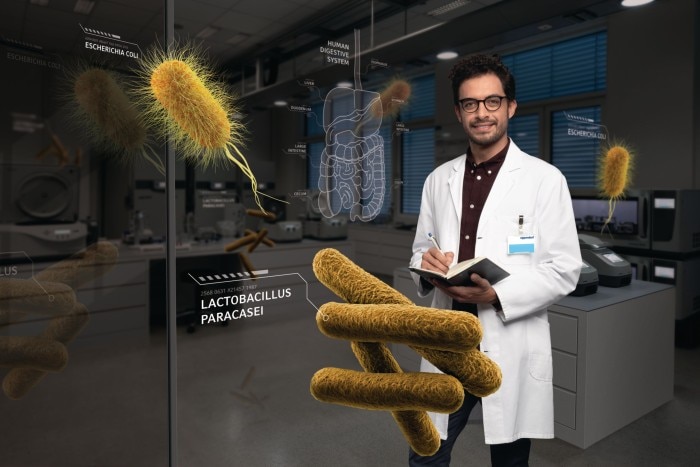
How can we age more healthily in the future?
Esplora la scienza biologica
- Storie
- Salute e medicina
- Storia
Thanks in part to advances in molecular biology, the human population is living longer. This is obviously great news for us as individuals, but it does create problems and concerns for society. As lifespans increase, more people will develop diseases associated with ageing, such as dementia and cancer.
Approfondisci
How can we not only live longer, but live healthily for longer?
Approfondisci
Over the past 75 years that Eppendorf has been supporting biologists, our understanding of the way humans age has come a long way. We are now able to study how genetic changes within individual cells contribute to ageing and associated diseases. This is leading to more effective treatments, for when things go wrong.
Approfondisci
This increased understanding has revealed the important role that the microbiome plays in ageing. The microbiome is composed of all microorganisms – bacteria, fungi, protozoa, and viruses – living in or on the human body. Studies have shown how the microbiome of our intestines changes dramatically during ageing, and that these changes are linked to human health and lifespan.
Approfondisci
For example, the gut microbiome is thought to trigger changes in immunity and cognitive function, two key determinants in healthy ageing. Any decline in immune function increases the chance of infections and is thought to increase the chance of cancer. A decline in cognitive function is directly linked to dementia.
Approfondisci
Ideally, to live a healthy life for longer we want to be free of disease. New treatments have helped us live longer with diseases such as cancer, however some of the treatments can have debilitating side-effects, reducing quality of life.
Approfondisci
So, what are the challenges in finding cures for cancer and dementia in the next 75 years? In cancer, many successful therapies exist and thanks to researchers worldwide the breadth of therapies in continually expanding, for example with new immunotherapies such as CAR-T.
Approfondisci
For dementia, the number of approvals for new treatments has been much lower. Alzheimer’s disease, the most common form of dementia, is still not fully understood, but with the advent of new molecular biology techniques, such as single-cell sequencing, our understanding of dementia and cancer should intensify.
Approfondisci
As with the last 75 years, we will continue innovating to ensure molecular biologists have access to the most ground-breaking, reliable, and consistent products to give them the best chance of success in their research. And we look forward to continuing to reward this success through the Eppendorf Award for Young European Investigators .
Approfondisci
For a quarter of a century, we’ve been supporting research into ageing and other areas of molecular biology through the Eppendorf Award for Young European Investigators in partnership with the journal Nature®. In 2018, Professor Andrea Ablasser was awarded the prize for her work showing how a mechanism involved in the immune response is also activated in ageing cells.
Approfondisci

Related files
PDF 4,55 MB