MENU
PL | PLN
-
-
-
- WHX Labs Dubai 2026
- analytica 2026
- Forum Labo 2026
- SLAS Europe 2026
- Forum Labo 2026 Bioprocess
- Bioprocessing Summit Europe 2026
- BioProcess International 2026
- Swiss Biotech Day 2025
- ISCT 2026
- Pichia 2026
- Future Labs Live 2026
- BioProScale Sympposium 2026
- ASGCT 2026
- Eppendorf Automation Forum 2026
- ESACT 2026
- ECB 2026
- WoTS 2026
- SIMB Annual Meeting 2026
- ELRIG Drug Discovery 2026
-

-
-
-
- WHX Labs Dubai 2026
- analytica 2026
- Forum Labo 2026
- SLAS Europe 2026
- Forum Labo 2026 Bioprocess
- Bioprocessing Summit Europe 2026
- BioProcess International 2026
- Swiss Biotech Day 2025
- ISCT 2026
- Pichia 2026
- Future Labs Live 2026
- BioProScale Sympposium 2026
- ASGCT 2026
- Eppendorf Automation Forum 2026
- ESACT 2026
- ECB 2026
- WoTS 2026
- SIMB Annual Meeting 2026
- ELRIG Drug Discovery 2026
-
PL | PLN
-
- Wszystkie pipety, dozowniki oraz automatyczne urządzenia do pracy z cieczami
- Wszystkie mikropipety
- Pipety mechaniczne
- Pipety elektroniczne
- Pipety wielokanałowe
- Pipety z wyporem bezpośrednim i dozowniki
- Dozowniki butelkowe
- Pipetory
- Dozowniki i akcesoria do pipet
- Pipetowanie automatyczne
- Materiały eksploatacyjne do urządzeń automatycznych
- Akcesoria do urządzeń automatycznych
- Systemy do pracy z cieczami i serwisowanie pipet
Sorry, we couldn't find anything on our website containing your search term.
Sorry, we couldn't find anything on our website containing your search term.
- Strona domowa
- Firma i kariera
- Nagrody
- Eppendorf & Science Prize for Neurobiology
- All Prize Winners & Finalists
- 2023 Prize Finalist Dr. Mattia Aime
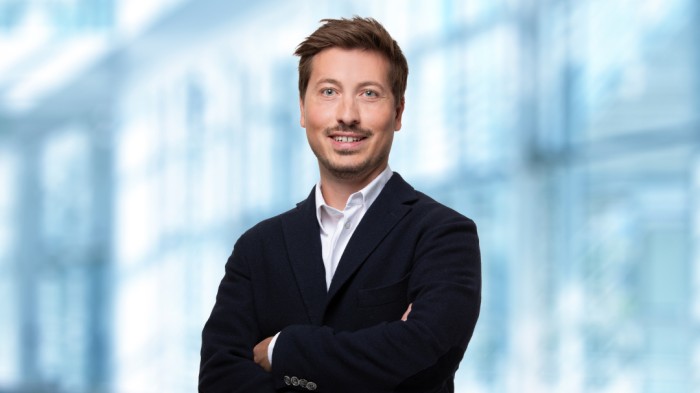
2023 Prize Finalist Dr. Mattia Aime
University of Bern, Switzerland
Mattia Aime received his undergraduate degree in Neurobiology from the University of Pavia, Italy. He then pursued his doctoral studies at the Interdisciplinary Institute of Neuroscience in Bordeaux, France, where, under the supervision of Dr. Frédéric Gambino, he identified a neuronal mechanism involved in the processing of emotionally related information in the mouse brain. He is currently completing his postdoctoral fellowship at the University of Bern, Switzerland, in the group headed by Prof. Adamantidis.
Essay: “Feel” Better: Sleep On It!
Emotions are a potent driving force in our lives, influencing our perceptions, behaviors, and overall well-being. As we navigate the complexities of daily existence, we encounter a myriad of events evoking strong positive and negative emotional responses. Yet, how do we effectively manage this influx of emotional information without becoming overwhelmed? Interestingly, the answer to this question might lie in a seemingly unrelated phenomenon: sleep. Sleep is a pivotal component of our daily routine, and among the multitude of functions attributed to this state, emotional processing stands out as a crucial aspect. However, the science underpinning the interplay between sleep and emotions remains only partially understood. Mattia Aime and colleagues identified a neuronal mechanism that triages positive from negative emotions during REM sleep by finely tuning the excitation/inhibition balance within the neuronal circuits of the prefrontal cortex. Beyond its implications for understanding brain excitability and plasticity, this discovery reveals the cellular dynamics underlying the brain electroencephalogram. Moreover, it opens new avenues for the therapeutic treatment of maladaptive processing of traumatic memories, such as Post-Traumatic Stress Disorders (PTSD) or anxiety disorders.
Essay: “Feel” Better: Sleep On It!
Emotions are a potent driving force in our lives, influencing our perceptions, behaviors, and overall well-being. As we navigate the complexities of daily existence, we encounter a myriad of events evoking strong positive and negative emotional responses. Yet, how do we effectively manage this influx of emotional information without becoming overwhelmed? Interestingly, the answer to this question might lie in a seemingly unrelated phenomenon: sleep. Sleep is a pivotal component of our daily routine, and among the multitude of functions attributed to this state, emotional processing stands out as a crucial aspect. However, the science underpinning the interplay between sleep and emotions remains only partially understood. Mattia Aime and colleagues identified a neuronal mechanism that triages positive from negative emotions during REM sleep by finely tuning the excitation/inhibition balance within the neuronal circuits of the prefrontal cortex. Beyond its implications for understanding brain excitability and plasticity, this discovery reveals the cellular dynamics underlying the brain electroencephalogram. Moreover, it opens new avenues for the therapeutic treatment of maladaptive processing of traumatic memories, such as Post-Traumatic Stress Disorders (PTSD) or anxiety disorders.
Warto przeczytać
Downloads

PDF 1,72 MB