-
-
-
-
- WHX Labs Dubai 2026
- analytica 2026
- Forum Labo 2026
- SLAS Europe 2026
- Forum Labo 2026 Bioprocess
- Bioprocessing Summit Europe 2026
- BioProcess International 2026
- Swiss Biotech Day 2025
- ISCT 2026
- Pichia 2026
- Future Labs Live 2026
- BioProScale Sympposium 2026
- ASGCT 2026
- Eppendorf Automation Forum 2026
- ESACT 2026
- ECB 2026
- WoTS 2026
- SIMB Annual Meeting 2026
- ELRIG Drug Discovery 2026

-
-
-
-
- WHX Labs Dubai 2026
- analytica 2026
- Forum Labo 2026
- SLAS Europe 2026
- Forum Labo 2026 Bioprocess
- Bioprocessing Summit Europe 2026
- BioProcess International 2026
- Swiss Biotech Day 2025
- ISCT 2026
- Pichia 2026
- Future Labs Live 2026
- BioProScale Sympposium 2026
- ASGCT 2026
- Eppendorf Automation Forum 2026
- ESACT 2026
- ECB 2026
- WoTS 2026
- SIMB Annual Meeting 2026
- ELRIG Drug Discovery 2026
-
- Wszystkie pipety, dozowniki oraz automatyczne urządzenia do pracy z cieczami
- Wszystkie mikropipety
- Pipety mechaniczne
- Pipety elektroniczne
- Pipety wielokanałowe
- Pipety z wyporem bezpośrednim i dozowniki
- Dozowniki butelkowe
- Pipetory
- Dozowniki i akcesoria do pipet
- Pipetowanie automatyczne
- Materiały eksploatacyjne do urządzeń automatycznych
- Akcesoria do urządzeń automatycznych
- Systemy do pracy z cieczami i serwisowanie pipet
- Strona domowa
- Lab Academy
- Training & Education
- Webinars
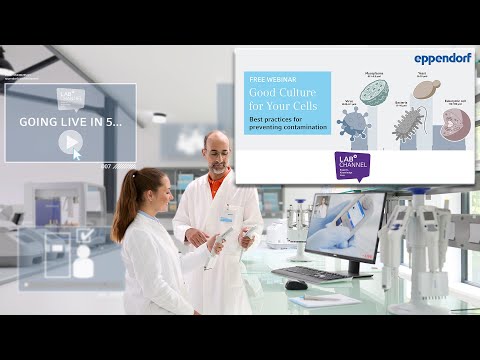
- Good culture for your cells - Best practices for preventing contamination

Good culture for your cells - Best practices for preventing contamination
- Cell Handling
Contamination is an everyday challenge in cell culture labs. Undetected or ignored contamination endanger the reliability and reproducibility of experimental data.
In this educational webinar you will learn how to recognize and identify different types of contaminants in cultivated cells. We will discuss how to apply aseptic techniques and preventive hygiene and give practical tips for preventing contamination by incorporating standard procedures into your daily culture practice.
Covered areas in the session:
- Types and sources of contamination
- Aseptic techniques and preventive hygiene
- Best practices to keep your lab contamination-free
Watch the recorded webinar here:
Warto przeczytać
Videos not loading, because cookies have been rejected. Change your
Speaker
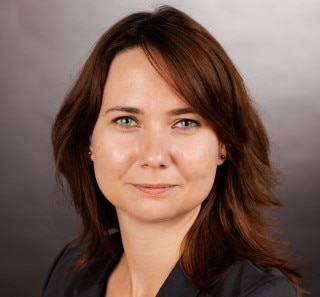
Dr. Jessica Wagener (Application Specialist Cell Handling)
Entering a cell culture laboratory as a graduate student for the first time in 2006, Jessica came to Eppendorf with 5+ years of experience in cell culture. After studying Biology at the Universities of Marburg and Düsseldorf, she investigated apoptosis mechanisms in different cell lines for her diploma thesis. Following one year as Research Associate working with primary cells she started to work towards her PhD with a focus on reproductive biology at the Medical School Essen. She joined Eppendorf in April 2012 shortly after completing her PhD in Biology.