MENU
PL | PLN
-
-
-
- WHX Labs Dubai 2026
- analytica 2026
- Forum Labo 2026
- SLAS Europe 2026
- Forum Labo 2026 Bioprocess
- Bioprocessing Summit Europe 2026
- BioProcess International 2026
- Swiss Biotech Day 2025
- ISCT 2026
- Pichia 2026
- Future Labs Live 2026
- BioProScale Sympposium 2026
- ASGCT 2026
- Eppendorf Automation Forum 2026
- ESACT 2026
- ECB 2026
- WoTS 2026
- SIMB Annual Meeting 2026
- ELRIG Drug Discovery 2026
-

-
-
-
- WHX Labs Dubai 2026
- analytica 2026
- Forum Labo 2026
- SLAS Europe 2026
- Forum Labo 2026 Bioprocess
- Bioprocessing Summit Europe 2026
- BioProcess International 2026
- Swiss Biotech Day 2025
- ISCT 2026
- Pichia 2026
- Future Labs Live 2026
- BioProScale Sympposium 2026
- ASGCT 2026
- Eppendorf Automation Forum 2026
- ESACT 2026
- ECB 2026
- WoTS 2026
- SIMB Annual Meeting 2026
- ELRIG Drug Discovery 2026
-
PL | PLN
-
- Wszystkie pipety, dozowniki oraz automatyczne urządzenia do pracy z cieczami
- Wszystkie mikropipety
- Pipety mechaniczne
- Pipety elektroniczne
- Pipety wielokanałowe
- Pipety z wyporem bezpośrednim i dozowniki
- Dozowniki butelkowe
- Pipetory
- Dozowniki i akcesoria do pipet
- Pipetowanie automatyczne
- Materiały eksploatacyjne do urządzeń automatycznych
- Akcesoria do urządzeń automatycznych
- Systemy do pracy z cieczami i serwisowanie pipet
Sorry, we couldn't find anything on our website containing your search term.
Sorry, we couldn't find anything on our website containing your search term.
- Strona domowa
- Lab Academy
- Training & Education
- Webinars
- Optimize Your Plasmid Yields
Webinar
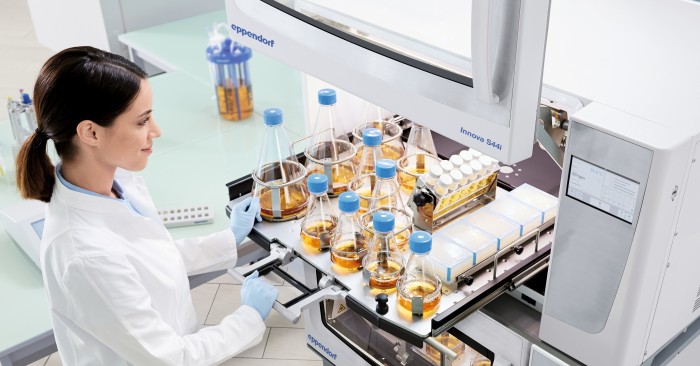
Optimize Your Plasmid Yields - Key Success Factors in Production from Shaker Flask to Fermenter
- Cell Therapy
Recombinant plasmid DNA (pDNA) is produced in bacterial cultures, mostly in Escherichia coli (E. coli) in different scales from tube culture to fermenter. Successful pDNA production with consistent high yields and quality relies on multiple factors, including the vector type, the host strain, the insert, and the methodology chosen for cultivation and downstream purification.
In this webinar, we review the distinct steps in the plasmid production workflow and give tips on optimization: from vector and strain selection, to cultivation from shake flask to fermenter up to downstream processing like harvesting and purification. The focus will be on the optimization of the cultivation in shake flasks and fermenters.
Target groups:
Scientists and technical personnel in academic and industrial setting, as well as students who start or currently work on plasmid production and want to improve their plasmid yields in tube, shake or fermenter cultures.
Key learning objectives:
Fill out the form below to watch the webinar.
Target groups:
Scientists and technical personnel in academic and industrial setting, as well as students who start or currently work on plasmid production and want to improve their plasmid yields in tube, shake or fermenter cultures.
Key learning objectives:
- Learn about the different application fields of plasmid production
- Get an overview on the basic steps involved in plasmid production
- Learn what to consider in plasmid vector and host strain selection
- Learn how to optimize your plasmid culture in tube and shake flask culture
- Learn about stirred-tank fermenter culture set-up and scale-up considerations
- Get advice on harvesting and purification
Fill out the form below to watch the webinar.
Warto przeczytać
Speakers

Ines Hartmann; Application Specialist Cell Handling, Eppendorf