MENÚ
ES | EUR
-
-
-
-
- WHX Labs Dubai 2026
- analytica 2026
- Forum Labo 2026
- SLAS Europe 2026
- Forum Labo 2026 Bioprocess
- Bioprocessing Summit Europe 2026
- BioProcess International 2026
- Swiss Biotech Day 2025
- ISCT 2026
- Pichia 2026
- Future Labs Live 2026
- BioProScale Sympposium 2026
- ASGCT 2026
- Eppendorf Automation Forum 2026
- ESACT 2026
- ELRIG Drug Discovery 2026

-
-
-
-
- WHX Labs Dubai 2026
- analytica 2026
- Forum Labo 2026
- SLAS Europe 2026
- Forum Labo 2026 Bioprocess
- Bioprocessing Summit Europe 2026
- BioProcess International 2026
- Swiss Biotech Day 2025
- ISCT 2026
- Pichia 2026
- Future Labs Live 2026
- BioProScale Sympposium 2026
- ASGCT 2026
- Eppendorf Automation Forum 2026
- ESACT 2026
- ELRIG Drug Discovery 2026
ES | EUR
-
- Todas las pipetas, dispensadores y manipuladores de líquidos automatizados
- Todas las micropipetas
- Pipetas mecánicas
- Pipetas electrónicas
- Pipetas multicanal
- Pipetas y dispensadores de desplazamiento positivo
- Dispensadores de botella
- Controladores de pipetas
- Accesorios para dispensadores y pipetas
- Pipeteo automatizado
- Consumibles para automatización
- Accesorios de automatización
- Servicios de manipulación de líquidos y pipetas
Sorry, we couldn't find anything on our website containing your search term.
Sorry, we couldn't find anything on our website containing your search term.
Cell Culture FAQ: What to do with a new cell line in your lab?
Academia de laboratorio
- Biología celular
- Cell Therapy
- Consumibles para cultivo celular
- Incubadores de CO2
- Preguntas más frecuentes
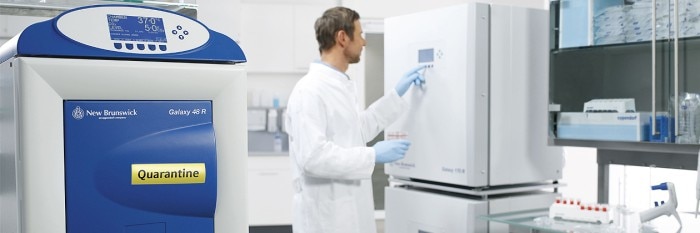
It is common practice to share cell lines with external laboratories and collaborators. But these cell lines might come with an incalculable contamination or misidentification risk. Therefore, it is highly recommended to verify quality and origin to obtain further reliable data with these cell lines. Consider the following procedure when adding a foreign cell line to your cell culture:
Quarantine the new cell line (separate incubators, biosafety cabinets or even cell culture laboratories depending on the individual laboratory equipment).
Quality tests for any microbial contaminants like bacteria, fungi, yeast, and mycoplasma.
Compare with the list of known misidentified cell lines using the ICLAC database.
Identity tests for cross-contamination or misidentification to verify the authenticity of the cell line.
Using your own tests to verify cell lines can save you valuable time, efforts and costs.
Quarantine the new cell line (separate incubators, biosafety cabinets or even cell culture laboratories depending on the individual laboratory equipment).
Quality tests for any microbial contaminants like bacteria, fungi, yeast, and mycoplasma.
Compare with the list of known misidentified cell lines using the ICLAC database.
Identity tests for cross-contamination or misidentification to verify the authenticity of the cell line.
Using your own tests to verify cell lines can save you valuable time, efforts and costs.
Leer más
Related documents

White papedr
PDF