MENU
IT | EUR
-
-
-
- WHX Labs Dubai 2026
- analytica 2026
- Forum Labo 2026
- SLAS Europe 2026
- Forum Labo 2026 Bioprocess
- Bioprocessing Summit Europe 2026
- BioProcess International 2026
- Swiss Biotech Day 2025
- ISCT 2026
- Pichia 2026
- Future Labs Live 2026
- BioProScale Sympposium 2026
- ASGCT 2026
- Eppendorf Automation Forum 2026
- ESACT 2026
- ECB 2026
- WoTS 2026
- SIMB Annual Meeting 2026
- ELRIG Drug Discovery 2026
-
-
- Assistenza per Mastercycler
- Assistenza per l'automazione
- Assistenza per ultracongelatori
- Assistenza per incubatori
- Assistenza per agitatori
- Assistenza per regolazione termica e miscelazione
- Assistenza per pipette
- Assistenza per bioprocessi
- Assistenza per centrifughe e rotori
- Calibrazione per pipette nuove

-
-
-
- WHX Labs Dubai 2026
- analytica 2026
- Forum Labo 2026
- SLAS Europe 2026
- Forum Labo 2026 Bioprocess
- Bioprocessing Summit Europe 2026
- BioProcess International 2026
- Swiss Biotech Day 2025
- ISCT 2026
- Pichia 2026
- Future Labs Live 2026
- BioProScale Sympposium 2026
- ASGCT 2026
- Eppendorf Automation Forum 2026
- ESACT 2026
- ECB 2026
- WoTS 2026
- SIMB Annual Meeting 2026
- ELRIG Drug Discovery 2026
-
-
- Assistenza per Mastercycler
- Assistenza per l'automazione
- Assistenza per ultracongelatori
- Assistenza per incubatori
- Assistenza per agitatori
- Assistenza per regolazione termica e miscelazione
- Assistenza per pipette
- Assistenza per bioprocessi
- Assistenza per centrifughe e rotori
- Calibrazione per pipette nuove
IT | EUR
-
- Tutte le pipette, i dispenser e i sistemi automatizzati per la manipolazione dei liquidi
- Tutte le micropipette
- Pipette meccaniche
- Pipette elettroniche
- Pipette multicanale
- Pipette a spostamento positivo e dispenser
- Dispenser per flaconi
- Ausili di pipettaggio
- Accessori per dispenser e pipette
- Pipettaggio automatizzato
- Consumabili per l'automazione
- Accessori per l'automazione
- Servizi per sistemi di manipolazione dei liquidi e pipette
Sorry, we couldn't find anything on our website containing your search term.
Sorry, we couldn't find anything on our website containing your search term.
- Home
- Azienda e opportunità di carriera
- Premi
- Eppendorf & Science Prize for Neurobiology
- All Prize Winners & Finalists
- 2023 Prize Finalist Dr. Michael A. Skinnider
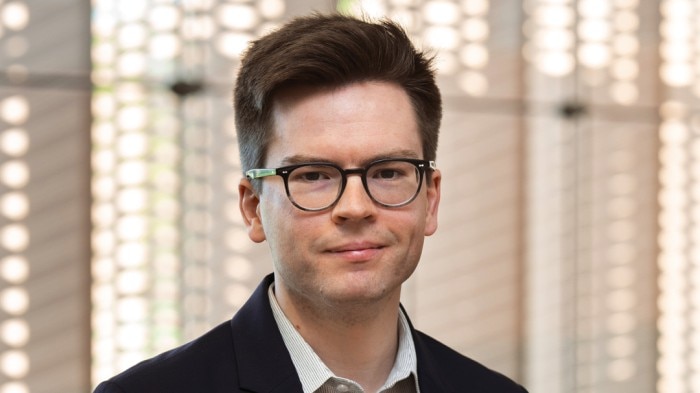
2023 Prize Finalist Dr. Michael A. Skinnider
Princeton University, USA
Michael Skinnider is an Assistant Professor in the Princeton Branch of the Ludwig Institute for Cancer Research and the Lewis-Sigler Institute for Integrative Genomics at Princeton University. He earned his M.D. and Ph.D. from the University of British Columbia, completing his doctoral work with Dr. Leonard Foster. He was also a visiting Ph.D. student and then Postdoctoral Fellow at the École Polytechnique Fédérale de Lausanne with Dr. Grégoire Courtine. Previously, he completed his undergraduate studies at McMaster University, where he worked in the laboratory of Dr. Nathan Magarvey.
Essay: From Single Cells to Neural Circuits
The human brain is composed of billions of neurons, wired together into neural circuits by trillions of synapses. Deciphering the organization of these neural circuits is a fundamental goal of neuroscience. Historically, however, studying neural circuits has been a time-consuming and labor-intensive endeavor. Michael Skinnider developed a pair of machine-learning tools, named Augur and Magellan, to accelerate the pace at which neural circuits can be mapped. These tools are designed to operate on data generated by the emerging techniques of single-cell and spatial transcriptomics, which can measure the expression of thousands of genes across tens of thousands of neurons in a single experiment. Applying Augur to single-cell and spatial transcriptomic data from the mouse spinal cord revealed a subpopulation of neurons that allowed paralyzed mice to recover the ability to walk again. Together, Augur and Magellan provide a framework that could accelerate our ability to identify the neurons underlying any given behavior.
Essay: From Single Cells to Neural Circuits
The human brain is composed of billions of neurons, wired together into neural circuits by trillions of synapses. Deciphering the organization of these neural circuits is a fundamental goal of neuroscience. Historically, however, studying neural circuits has been a time-consuming and labor-intensive endeavor. Michael Skinnider developed a pair of machine-learning tools, named Augur and Magellan, to accelerate the pace at which neural circuits can be mapped. These tools are designed to operate on data generated by the emerging techniques of single-cell and spatial transcriptomics, which can measure the expression of thousands of genes across tens of thousands of neurons in a single experiment. Applying Augur to single-cell and spatial transcriptomic data from the mouse spinal cord revealed a subpopulation of neurons that allowed paralyzed mice to recover the ability to walk again. Together, Augur and Magellan provide a framework that could accelerate our ability to identify the neurons underlying any given behavior.
Approfondisci
Downloads

PDF 1,93 MB