MENU
IT | EUR
-
-
-
- WHX Labs Dubai 2026
- analytica 2026
- Forum Labo 2026
- SLAS Europe 2026
- Forum Labo 2026 Bioprocess
- Bioprocessing Summit Europe 2026
- BioProcess International 2026
- Swiss Biotech Day 2025
- ISCT 2026
- Pichia 2026
- Future Labs Live 2026
- BioProScale Sympposium 2026
- ASGCT 2026
- Eppendorf Automation Forum 2026
- ESACT 2026
- ECB 2026
- WoTS 2026
- SIMB Annual Meeting 2026
- ELRIG Drug Discovery 2026
-
-
- Assistenza per Mastercycler
- Assistenza per l'automazione
- Assistenza per ultracongelatori
- Assistenza per incubatori
- Assistenza per agitatori
- Assistenza per regolazione termica e miscelazione
- Assistenza per pipette
- Assistenza per bioprocessi
- Assistenza per centrifughe e rotori
- Calibrazione per pipette nuove

-
-
-
- WHX Labs Dubai 2026
- analytica 2026
- Forum Labo 2026
- SLAS Europe 2026
- Forum Labo 2026 Bioprocess
- Bioprocessing Summit Europe 2026
- BioProcess International 2026
- Swiss Biotech Day 2025
- ISCT 2026
- Pichia 2026
- Future Labs Live 2026
- BioProScale Sympposium 2026
- ASGCT 2026
- Eppendorf Automation Forum 2026
- ESACT 2026
- ECB 2026
- WoTS 2026
- SIMB Annual Meeting 2026
- ELRIG Drug Discovery 2026
-
-
- Assistenza per Mastercycler
- Assistenza per l'automazione
- Assistenza per ultracongelatori
- Assistenza per incubatori
- Assistenza per agitatori
- Assistenza per regolazione termica e miscelazione
- Assistenza per pipette
- Assistenza per bioprocessi
- Assistenza per centrifughe e rotori
- Calibrazione per pipette nuove
IT | EUR
-
- Tutte le pipette, i dispenser e i sistemi automatizzati per la manipolazione dei liquidi
- Tutte le micropipette
- Pipette meccaniche
- Pipette elettroniche
- Pipette multicanale
- Pipette a spostamento positivo e dispenser
- Dispenser per flaconi
- Ausili di pipettaggio
- Accessori per dispenser e pipette
- Pipettaggio automatizzato
- Consumabili per l'automazione
- Accessori per l'automazione
- Servizi per sistemi di manipolazione dei liquidi e pipette
Sorry, we couldn't find anything on our website containing your search term.
Sorry, we couldn't find anything on our website containing your search term.
- Home
- Lab Academy
- Life Science
- Cell Biology
- Cell Culture FAQ: How often should I refill and replace the water in the humidity tray of the CO2 incubator?
Cell Culture FAQ: How often should I refill and replace the water in the humidity tray of the CO2 incubator?
Lab Academy
- Biologia cellulare
- Cell Therapy
- Routine di laboratorio
- Incubatori a CO2
- FAQ
This article was published first in "Inside Cell Culture" , the monthly newsletter for cell culture professionals. Find more interesting articles about CO2 incubators on our page "FAQs and material on CO2 incubators" .
Answer by Dr. Jessica Wagener, Application Specialist Cell Handling at Eppendorf
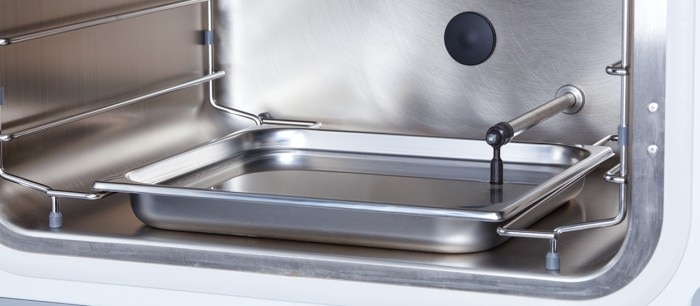
In most CO2 incubators a simple tray filled with sterile distilled water is placed in the incubator to generate a highly humid atmosphere inside. This atmosphere prevents the cultured cells from drying out over time. Unfortunately, a humid atmosphere is also favored by unwanted microbial contaminants. However, adding biocides to the water of the humidity tray should be considered carefully. One aspect is the corrosive potential of some antimicrobial reagents, which can damage the stainless-steel of the humidity tray. Another risk is posed by volatile compounds in these reagents that might influence cell growth after evaporating from the humidity tray.
Independently of the use of antimicrobial reagents, the water in the humidity tray should be monitored closely to avoid undetected contamination growth or accumulation of harmful substances. Instead of only refilling the water it is advisable to completely replace the water regularly and clean the humidity tray (e.g. with 70% Ethanol) before adding fresh water. Our general recommendation is to replace the water in the CO2 incubator once a week.
Answer by Dr. Jessica Wagener, Application Specialist Cell Handling at Eppendorf
In most CO2 incubators a simple tray filled with sterile distilled water is placed in the incubator to generate a highly humid atmosphere inside. This atmosphere prevents the cultured cells from drying out over time. Unfortunately, a humid atmosphere is also favored by unwanted microbial contaminants. However, adding biocides to the water of the humidity tray should be considered carefully. One aspect is the corrosive potential of some antimicrobial reagents, which can damage the stainless-steel of the humidity tray. Another risk is posed by volatile compounds in these reagents that might influence cell growth after evaporating from the humidity tray.
Independently of the use of antimicrobial reagents, the water in the humidity tray should be monitored closely to avoid undetected contamination growth or accumulation of harmful substances. Instead of only refilling the water it is advisable to completely replace the water regularly and clean the humidity tray (e.g. with 70% Ethanol) before adding fresh water. Our general recommendation is to replace the water in the CO2 incubator once a week.
Approfondisci
Related documents

White Paper
PDF