MENÚ
ES | EUR
-
-
-
- WHX Labs Dubai 2026
- analytica 2026
- Forum Labo 2026
- SLAS Europe 2026
- Forum Labo 2026 Bioprocess
- Bioprocessing Summit Europe 2026
- BioProcess International 2026
- Swiss Biotech Day 2025
- ISCT 2026
- Pichia 2026
- Future Labs Live 2026
- BioProScale Sympposium 2026
- ASGCT 2026
- Eppendorf Automation Forum 2026
- ESACT 2026
- ELRIG Drug Discovery 2026
-

-
-
-
- WHX Labs Dubai 2026
- analytica 2026
- Forum Labo 2026
- SLAS Europe 2026
- Forum Labo 2026 Bioprocess
- Bioprocessing Summit Europe 2026
- BioProcess International 2026
- Swiss Biotech Day 2025
- ISCT 2026
- Pichia 2026
- Future Labs Live 2026
- BioProScale Sympposium 2026
- ASGCT 2026
- Eppendorf Automation Forum 2026
- ESACT 2026
- ELRIG Drug Discovery 2026
-
ES | EUR
-
- Todas las pipetas, dispensadores y manipuladores de líquidos automatizados
- Todas las micropipetas
- Pipetas mecánicas
- Pipetas electrónicas
- Pipetas multicanal
- Pipetas y dispensadores de desplazamiento positivo
- Dispensadores de botella
- Controladores de pipetas
- Accesorios para dispensadores y pipetas
- Pipeteo automatizado
- Consumibles para automatización
- Accesorios de automatización
- Servicios de manipulación de líquidos y pipetas
Sorry, we couldn't find anything on our website containing your search term.
Sorry, we couldn't find anything on our website containing your search term.
- Inicio
- Lab Academy
- Pipetting Knowledge Hub
- Pipette tip technology
- Pipette tip material
Visit our support center
If you have any questions or would like to contact us, please visit the Support Center.
Pipetting knowledge hub
Leer más
Pipette tip material
Leer más
The right plastic for high‑class pipette tips
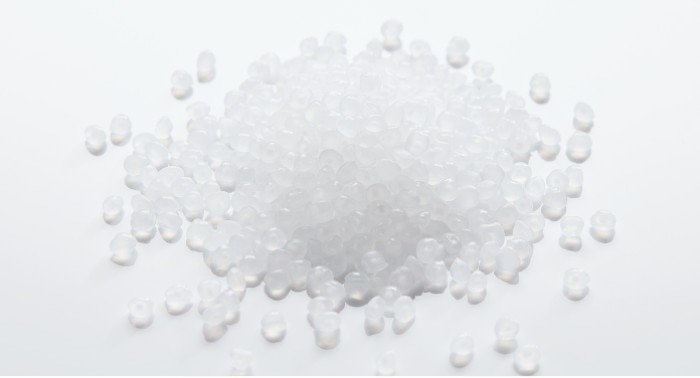
For high‑class laboratory pipette tips, polypropylene (PP) is the reference material. No matter if it is fossil-sourced, or biobased material gained from renewable sources, such as second generation feedstock, used cooking oil, etc. Polypropylene offers a combination of properties that directly support accuracy and sample integrity:
- Chemical resistance: PP is resistant to most aqueous buffers, salts, many acids and bases, and numerous lab reagents, which is essential for routine molecular biology and analytical workflows.
- Thermal stability and autoclaving: PP tips can generally withstand autoclaving at about 121 °C, enabling reliable sterilization without deformation when processed correctly.
- Mechanical robustness: Properly formulated PP resists cracking and deformation under the mechanical forces of pipetting and robotic handling, making it suitable for both manual and automated systems.