-
-
-
- Assistenza per Mastercycler
- Assistenza per l'automazione
- Assistenza per ultracongelatori
- Assistenza per incubatori
- Assistenza per agitatori
- Assistenza per regolazione termica e miscelazione
- Assistenza per pipette
- Assistenza per bioprocessi
- Assistenza per centrifughe e rotori
- Calibrazione per pipette nuove
-
-
- WHX Labs Dubai 2026
- analytica 2026
- Forum Labo 2026
- SLAS Europe 2026
- Forum Labo 2026 Bioprocess
- Bioprocessing Summit Europe 2026
- BioProcess International 2026
- Swiss Biotech Day 2025
- ISCT 2026
- Pichia 2026
- Future Labs Live 2026
- BioProScale Sympposium 2026
- ASGCT 2026
- Eppendorf Automation Forum 2026
- ESACT 2026
- ECB 2026
- WoTS 2026
- SIMB Annual Meeting 2026
- ELRIG Drug Discovery 2026

-
-
-
- Assistenza per Mastercycler
- Assistenza per l'automazione
- Assistenza per ultracongelatori
- Assistenza per incubatori
- Assistenza per agitatori
- Assistenza per regolazione termica e miscelazione
- Assistenza per pipette
- Assistenza per bioprocessi
- Assistenza per centrifughe e rotori
- Calibrazione per pipette nuove
-
-
- WHX Labs Dubai 2026
- analytica 2026
- Forum Labo 2026
- SLAS Europe 2026
- Forum Labo 2026 Bioprocess
- Bioprocessing Summit Europe 2026
- BioProcess International 2026
- Swiss Biotech Day 2025
- ISCT 2026
- Pichia 2026
- Future Labs Live 2026
- BioProScale Sympposium 2026
- ASGCT 2026
- Eppendorf Automation Forum 2026
- ESACT 2026
- ECB 2026
- WoTS 2026
- SIMB Annual Meeting 2026
- ELRIG Drug Discovery 2026
-
- Tutte le pipette, i dispenser e i sistemi automatizzati per la manipolazione dei liquidi
- Tutte le micropipette
- Pipette meccaniche
- Pipette elettroniche
- Pipette multicanale
- Pipette a spostamento positivo e dispenser
- Dispenser per flaconi
- Ausili di pipettaggio
- Accessori per dispenser e pipette
- Pipettaggio automatizzato
- Consumabili per l'automazione
- Accessori per l'automazione
- Servizi per sistemi di manipolazione dei liquidi e pipette
- Home
- Lab Academy
- Life Science
- Molecular Biology
- Efficient & Automated qPCR Setup Without Cross Contamination
How qPCR Automation Boosts Efficiency While Preventing Cross-Contamination
Lab Academy
- Biologia molecolare
- PCR
- Riproducibilità
- Automazione
- Postazioni di lavoro per la manipolazione dei liquidi
- Saggio
Standard PCR combined with fluorescent reporter monitoring, real-time quantitative PCR (qPCR), allows you to amplify, detect, and quantify the targeted molecule in a single step. However, manual qPCR set-up is time-consuming, tedious, and requires a lot of practice, because the most probable source of imprecision is the operator itself.
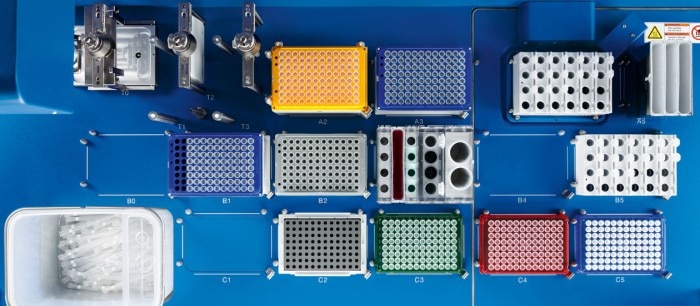
Automated qPCR setup is an effective way to overcome the issues associated with manual qPCR. In this article, we explore how qPCR automation can improve your workflow efficiency, reduce contamination risks, and deliver reliable, reproducible results for routine and high-throughput qPCR.
A real-world example of qPCR automation
Approfondisci
How to understand and prevent qPCR contamination
The three possible sources of contamination are:
- cross-contamination between samples
- contamination from laboratory equipment
- carryover contamination by amplified products from previous qPCRs.
Precautions can be taken to reduce the risk of contamination: uracil DNA glycosylase (UDG) can be used to prevent DNA carryover contamination between reactions, materials can be systematically decontaminated, and separate workstations for each step of the qPCR process can be designated to create an efficient workflow. However, those measures do not eliminate the major cause of false positive results: the accidental contamination with positive samples during Liquid Handling.
Consistent PCR liquid handling practices are essential, particularly when processing large sample numbers. Automated systems help reduce variability introduced by manual pipetting and minimize the risk of sample-to-sample contamination.
Approfondisci
qPCR contamination troubleshooting: finding the source
A common challenge in molecular biology workflows is distinguishing true target amplification from background contamination. For example, genomic DNA contamination qPCR signals can occur when nucleic acid samples are not sufficiently purified or when handling procedures introduce unwanted material into reactions. Establishing standardized workflows and contamination-control measures can help reduce these risks.
Laboratories should also periodically review workspace design, PCR clean-up procedures, and reagent handling practices. While preventing contamination during qPCR setup is the priority, reviewing downstream processes and, where appropriate, a PCR clean-up protocol can provide additional confidence when investigating the root cause of unexpected results. A documented PCR clean-up protocol may also support consistency across operators and experiments.
Approfondisci
The importance of consumables in preventing qPCR contamination
Approfondisci
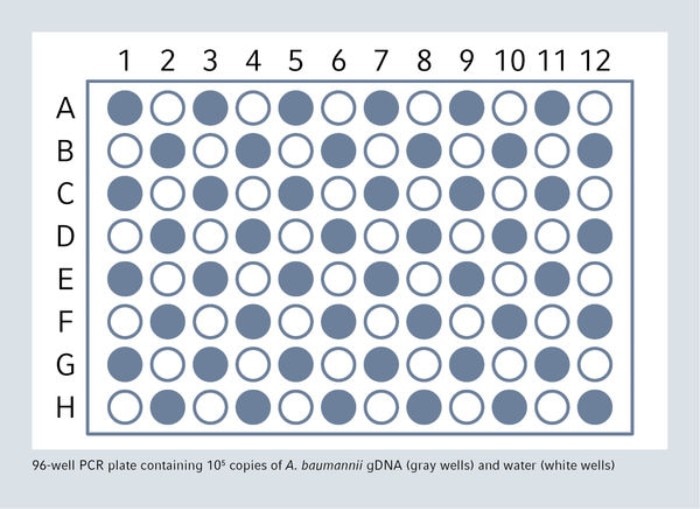
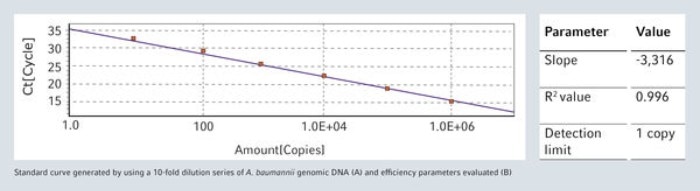
Demonstrating contamination-free automated qPCR setup
Approfondisci
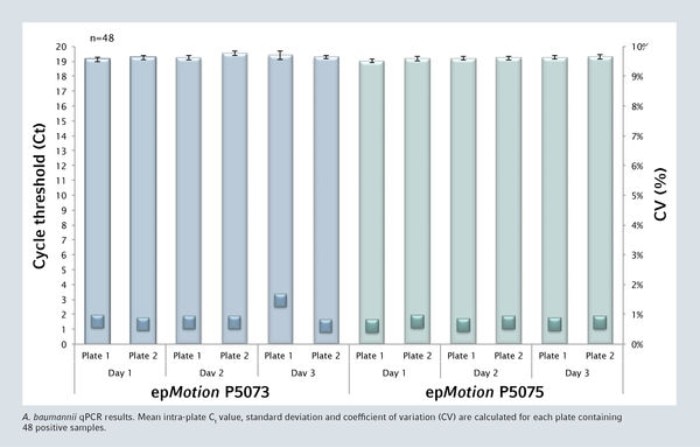
All negative samples were negative and the complete process is highly reproducible. The mean intra-plate Ct value for the 48 positive samples is very consistent with a coefficient of variation never exceeding 1.5%.
Approfondisci
Looking for more information on qPCR automation?
Approfondisci
Automation isn’t just for qPCR!
For NGS workflows, automation can reduce hands-on time, improve consistency between runs, and support the production of high-quality sequencing libraries. By automating repetitive liquid handling steps, labs can scale throughput while maintaining reliable and reproducible results.
If you’re unsure which workflows and kits are suitable for Eppendorf automation systems, the epMotion Method Overview lists protocols that have been pre-tested for epMotion automated liquid handling workstations.
Approfondisci