メニュー
JP | JPY
-
-
-
- Challenges and Chances: A Review of the 1st Stem Cell Community Day
- Summertime, and the Livin’ Is Easy…
- Follow-on-Biologics – More than Simple Generics
- Bacteria Versus Body Cells: A 1:1 Tie
- Behind the Crime Scene: How Biological Traces Can Help to Convict Offenders
- Every 3 Seconds Someone in the World Is Affected by Alzheimer's
- HIV – It’s Still Not Under Control…
- How Many Will Be Convicted This Time?
- Malaria – the Battle is Not Lost
- Physicians on Standby: The Annual Flu Season Can Be Serious
- At the Forefront in Fighting Cancer
- Molecular Motors: Think Small and yet Smaller Again…
- Liquid Biopsy: Novel Methods May Ease Cancer Detection and Therapy
- They Are Invisible, Sneaky and Disgusting – But Today It’s Their Special Day!
- How Many Cells Are in Your Body? Probably More Than You Think!
- What You Need to Know about Antibiotic Resistance – Findings, Facts and Good Intentions
- Why Do Old Men Have Big Ears?
- The Condemned Live Longer: A Potential Paradigm Shift in Genetics
- From Research to Commerce
- Chronobiology – How the Cold Seasons Influence Our Biorhythms
- Taskforce Microbots: Targeted Treatment from Inside the Body
- Eyes on Cancer Therapy
-
-

-
-
-
- Challenges and Chances: A Review of the 1st Stem Cell Community Day
- Summertime, and the Livin’ Is Easy…
- Follow-on-Biologics – More than Simple Generics
- Bacteria Versus Body Cells: A 1:1 Tie
- Behind the Crime Scene: How Biological Traces Can Help to Convict Offenders
- Every 3 Seconds Someone in the World Is Affected by Alzheimer's
- HIV – It’s Still Not Under Control…
- How Many Will Be Convicted This Time?
- Malaria – the Battle is Not Lost
- Physicians on Standby: The Annual Flu Season Can Be Serious
- At the Forefront in Fighting Cancer
- Molecular Motors: Think Small and yet Smaller Again…
- Liquid Biopsy: Novel Methods May Ease Cancer Detection and Therapy
- They Are Invisible, Sneaky and Disgusting – But Today It’s Their Special Day!
- How Many Cells Are in Your Body? Probably More Than You Think!
- What You Need to Know about Antibiotic Resistance – Findings, Facts and Good Intentions
- Why Do Old Men Have Big Ears?
- The Condemned Live Longer: A Potential Paradigm Shift in Genetics
- From Research to Commerce
- Chronobiology – How the Cold Seasons Influence Our Biorhythms
- Taskforce Microbots: Targeted Treatment from Inside the Body
- Eyes on Cancer Therapy
-
-
JP | JPY
Sorry, we couldn't find anything on our website containing your search term.
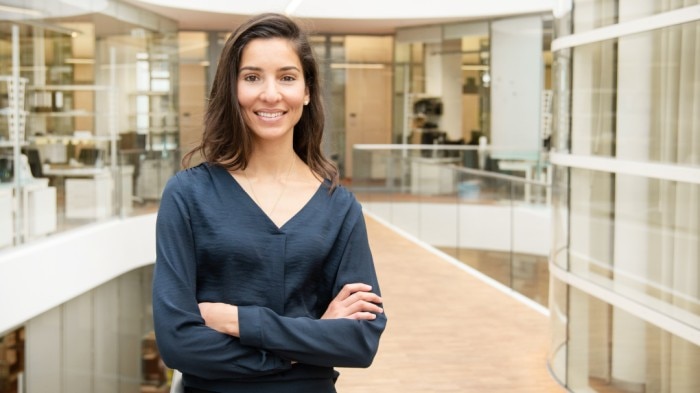
- 2022 Award Finalist Dr. Lena Pernas
2022 Award Finalist Lena Pernas, PhD.
Lena Pernas received her bachelor’s degree from UCLA and Ph.D. from Stanford University. There, she worked with John Boothroyd to eludicate how mitochondria and the human parasite Toxoplasma gondii physically interact, and how chronic toxoplasmosis affects human immune responses. After receiving her Ph.D., Lena joined the lab of Dr. Luca Scorrano at the University of Padua where she studied how mitochondria counteract microbes. Her lab at the Max Planck Institute for Biology of Ageing is interested in the mechanisms by which an infected cell actively rewires metabolic processes and organellar function to defend against the challenge of microbial infection, and how human metabolism affects disease progression.
Synopsis of research
To generate energy, mitochondria consume nutrients that invading microbes depend on. This competing interest predicts an inverse relationship between mitochondrial health and microbial fitness. Although several pathogens disrupt host mitochondrial function, it was unknown whether mitochondria act to impede pathogen replication.
As a PhD student in the lab of Dr. John Boothroyd, I identified the molecule that enable mitochondria to recognize and bind to the human parasite Toxoplasma gondii, which infects ~1/3 of the world’s human population. The dramatic changes I observed in mitochondrial shape during Toxoplasma infection led me to ask if mitochondria actively defend cells against microbes (contrary to the dogma that mitochondria are targets for microbes)? To address this question, I moved to the mitochondrial biology unit of Dr. Luca Scorrano where I discovered that host mitochondria act as nutrient competitors to Toxoplasma, and limit the parasite’s growth by restricting its access to host lipids. This work showed that mitochondrial metabolism functions as an innate immune-type defense and sheds light on how we can harness metabolism to develop anti-microbial therapies.
Synopsis of research
To generate energy, mitochondria consume nutrients that invading microbes depend on. This competing interest predicts an inverse relationship between mitochondrial health and microbial fitness. Although several pathogens disrupt host mitochondrial function, it was unknown whether mitochondria act to impede pathogen replication.
As a PhD student in the lab of Dr. John Boothroyd, I identified the molecule that enable mitochondria to recognize and bind to the human parasite Toxoplasma gondii, which infects ~1/3 of the world’s human population. The dramatic changes I observed in mitochondrial shape during Toxoplasma infection led me to ask if mitochondria actively defend cells against microbes (contrary to the dogma that mitochondria are targets for microbes)? To address this question, I moved to the mitochondrial biology unit of Dr. Luca Scorrano where I discovered that host mitochondria act as nutrient competitors to Toxoplasma, and limit the parasite’s growth by restricting its access to host lipids. This work showed that mitochondrial metabolism functions as an innate immune-type defense and sheds light on how we can harness metabolism to develop anti-microbial therapies.
もっと読む
Downloads

PDF 0.28 MB
PDF 0.33 MB