メニュー
JP | JPY
-
-
-
- Challenges and Chances: A Review of the 1st Stem Cell Community Day
- Summertime, and the Livin’ Is Easy…
- Follow-on-Biologics – More than Simple Generics
- Bacteria Versus Body Cells: A 1:1 Tie
- Behind the Crime Scene: How Biological Traces Can Help to Convict Offenders
- Every 3 Seconds Someone in the World Is Affected by Alzheimer's
- HIV – It’s Still Not Under Control…
- How Many Will Be Convicted This Time?
- Malaria – the Battle is Not Lost
- Physicians on Standby: The Annual Flu Season Can Be Serious
- At the Forefront in Fighting Cancer
- Molecular Motors: Think Small and yet Smaller Again…
- Liquid Biopsy: Novel Methods May Ease Cancer Detection and Therapy
- They Are Invisible, Sneaky and Disgusting – But Today It’s Their Special Day!
- How Many Cells Are in Your Body? Probably More Than You Think!
- What You Need to Know about Antibiotic Resistance – Findings, Facts and Good Intentions
- Why Do Old Men Have Big Ears?
- The Condemned Live Longer: A Potential Paradigm Shift in Genetics
- From Research to Commerce
- Chronobiology – How the Cold Seasons Influence Our Biorhythms
- Taskforce Microbots: Targeted Treatment from Inside the Body
- Eyes on Cancer Therapy
-
-

-
-
-
- Challenges and Chances: A Review of the 1st Stem Cell Community Day
- Summertime, and the Livin’ Is Easy…
- Follow-on-Biologics – More than Simple Generics
- Bacteria Versus Body Cells: A 1:1 Tie
- Behind the Crime Scene: How Biological Traces Can Help to Convict Offenders
- Every 3 Seconds Someone in the World Is Affected by Alzheimer's
- HIV – It’s Still Not Under Control…
- How Many Will Be Convicted This Time?
- Malaria – the Battle is Not Lost
- Physicians on Standby: The Annual Flu Season Can Be Serious
- At the Forefront in Fighting Cancer
- Molecular Motors: Think Small and yet Smaller Again…
- Liquid Biopsy: Novel Methods May Ease Cancer Detection and Therapy
- They Are Invisible, Sneaky and Disgusting – But Today It’s Their Special Day!
- How Many Cells Are in Your Body? Probably More Than You Think!
- What You Need to Know about Antibiotic Resistance – Findings, Facts and Good Intentions
- Why Do Old Men Have Big Ears?
- The Condemned Live Longer: A Potential Paradigm Shift in Genetics
- From Research to Commerce
- Chronobiology – How the Cold Seasons Influence Our Biorhythms
- Taskforce Microbots: Targeted Treatment from Inside the Body
- Eyes on Cancer Therapy
-
-
JP | JPY
Sorry, we couldn't find anything on our website containing your search term.
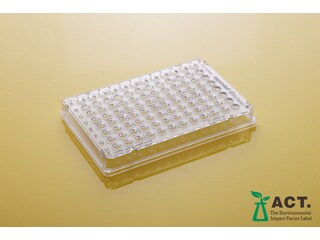
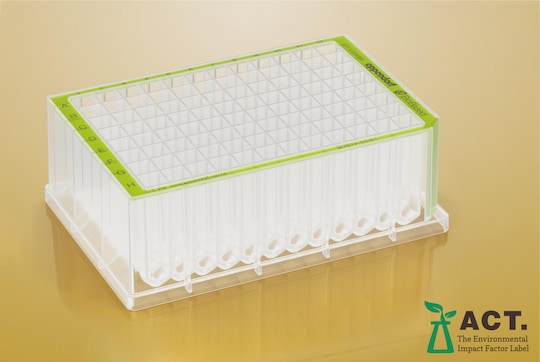
Eppendorf Deepwell Plates BioBased
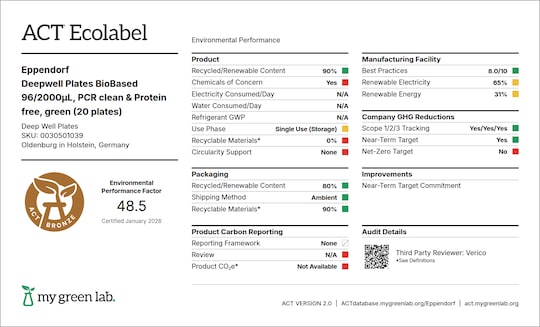
Deepwell Plates BioBased, ACT Label

Deepwell Plates BioBased

Deepwell Plates BioBased

Deepwell Plates , Consumables BioBased Family

DWP 96-2000 BioBased (green) (0030501039) ACT 2.0 label

Independent sustainability certification needed? The ACT certification of My Green Lab for Eppendorf DWP 96-2000 BioBased (green)
製品情報
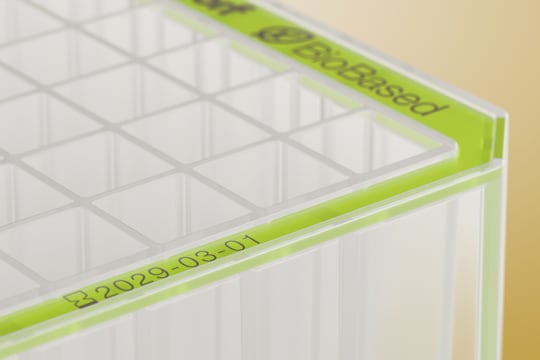
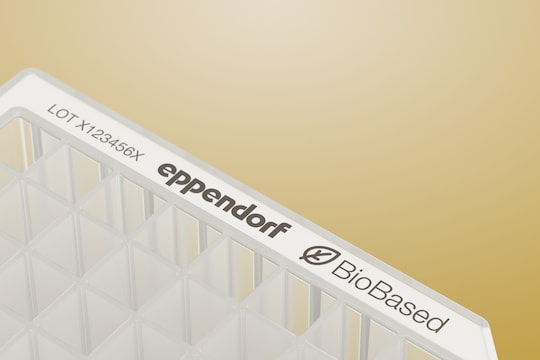
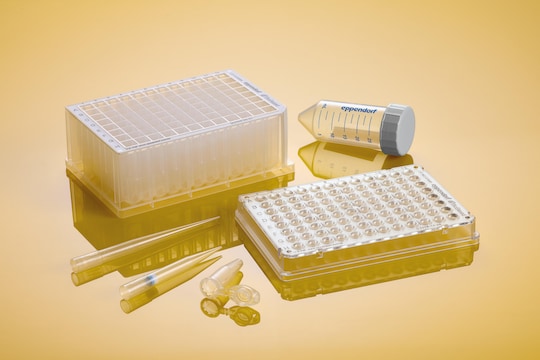
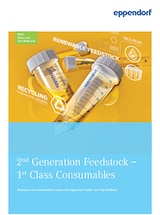
Eppendorf Deepwell Plates BioBased を入手して、持続可能性の目標を達成してください。弊社の高性能プレートは、追跡可能性のためにロット番号と有効期限がレーザ彫り込まれた96ウェルフォーマットで提供されます。

追加でダウンロードできる材料がありますこのページの最後に
製品 (2)
2 製品
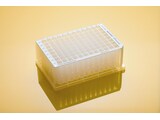
Eppendorf Deepwell Plates BioBased 96/2000 µL
|
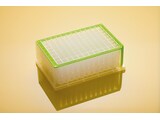
Eppendorf Deepwell Plates BioBased 96/2000 µL
|
製品をもっと見せる
お客様のショッピングカートに追加されました。
製品情報
アプリケーション
特徴
製品情報
さらなる信頼性、安定性、効率のためにEppendorf Deepwell Plates BioBasedを選んでください。96ウェルフォーマットの両方には白または縁があり、これらのディープウェルプレートは手動と自動と両方で高いパフォーマンスを提供します。縁にOptiTrack®マトリックス、ハイコントラスト英数字ラベル、、ロット番号、有効期限、レーザー刻印があり、最大30 %速くサンプルを見つけることができ、ピペッティングの手間を軽減できます。PCRクリーンでタンパク質を含まない認定純度により、分子生物学およびタンパク質分析アプリケーションが可能です。少なくとも 95% の再生可能な資源 (例: 植物油精製または廃食用油からの廃棄物や残留物、 マスバランスアプローチ、詳細についてはeppendorf.link/biobasedを参照) から作られた第 2 世代のバイオベースポリマーを使用することで、Deepwell プレートの製品関連の二酸化炭素排出量が大幅に削減されました。標準および一般品質要件に準拠した「一般品質証明書」、製品固有そしてロット固有の純度証明書、並びに「ACT Certificates」 (My Green Lab®による独立環境衝撃要因証明書)は、Eppendorfに期待することができる良く知られたプレミアム品質が持続可能性要因と結びついていることを証明します。それはバイオベースのを継続的に使用すると実験室のカーボンフットプリントに明らかに見ることができます。86 ºCのサンプル保管から100 ºCのDNA変性まですべてのためのEppendorf Deepwell Platesを信頼し、お客様の実験室に新しい標準を設定してください。

Eppendorf consumables BioBasedとその梱包材の廃棄
材料のリサイクルは日々ますます重要になっています。例えば、ヨーロッパでは厚紙材のほとんど100 %がすでに再利用されています。Eppendorf consumables BioBasedの梱包材はほとんどが厚紙ですが、さまざまな材料で出来ています。
Eppendorf消耗品とは発送用段ボールと折り畳み式段ボール両方が少なくとも92 %再利用の厚紙で出来ている梱包で搬送されます。
チューブの厚紙梱包材を収集することによって貴重な原料をリサイクルするグローバルな持続可能性イニシアチブをサポートしてください。お客様の組織や地域の指定された収集コンテナ内に梱包材を使い捨てます。
使用後は、チューブ自体は汚染される可能性があるものとして定義されます。この汚染は生物災害、薬害、または原子力災害に基づくことがあります。従って、これらの容器のリサイクルは挑戦になることがあります。多くの国々でクリティカルな廃棄物は法規に従って焼却される必要があります。しかしながら、エネルギーおよび熱は汚染された実験室消耗品のサーマルリサイクルによって回収することができます。
クリティカルなプラスチック廃棄物の量を軽減するためには少なくとも二つの廃棄物コンテナを使用する必要があります:クリティカルな廃棄物用に一つ、そして非クリティカルな廃棄物用に一つです。これらの二つのグループの定義は地域の規程によることがあるので、それに従ってお客様の実験室で連絡・研修を受けてください。その他の地域の破棄物リサイクルオプションについては、お客様の地域の生物安全性担当者および地域廃棄物管理にお問い合わせください。
認定地域リサイクリングパートナーを是非お勧めします。「ローカルであること」を保つことは輸送の影響を減らすことになるでしょう。そして実験室廃棄物の安全で持続可能な取り扱いのためには「公認された」見地を持つことが推奨されます。
Founded in 2010 through a multi-stakeholder initiative, the International
Sustainability and Carbon Certification (ISCC) is a globally applicable and
leading certification system designed to enhance traceable, sustainable,
deforestation-free, and climate-friendly supply chains. ISCC certifications are
widely recognised and cover sustainable agricultural biomass, biogenic
wastes and residues, non-biological renewable materials and recycled
carbon-based materials. The development and implementation of different
certification standards is ISCC’s tool to promote its mission to mitigate climate
change and bring more traceability into global markets and supply chains.
The ISCC PLUS standard, in particular, supports the transition to a circular
economy and bioeconomy. This voluntary certification standard validates the
sustainability characteristics of alternative feedstocks throughout the entire
supply chain, from origin to end consumer.
Sustainability and Carbon Certification (ISCC) is a globally applicable and
leading certification system designed to enhance traceable, sustainable,
deforestation-free, and climate-friendly supply chains. ISCC certifications are
widely recognised and cover sustainable agricultural biomass, biogenic
wastes and residues, non-biological renewable materials and recycled
carbon-based materials. The development and implementation of different
certification standards is ISCC’s tool to promote its mission to mitigate climate
change and bring more traceability into global markets and supply chains.
The ISCC PLUS standard, in particular, supports the transition to a circular
economy and bioeconomy. This voluntary certification standard validates the
sustainability characteristics of alternative feedstocks throughout the entire
supply chain, from origin to end consumer.
RecoverMax®ウェル設計で最大の回収
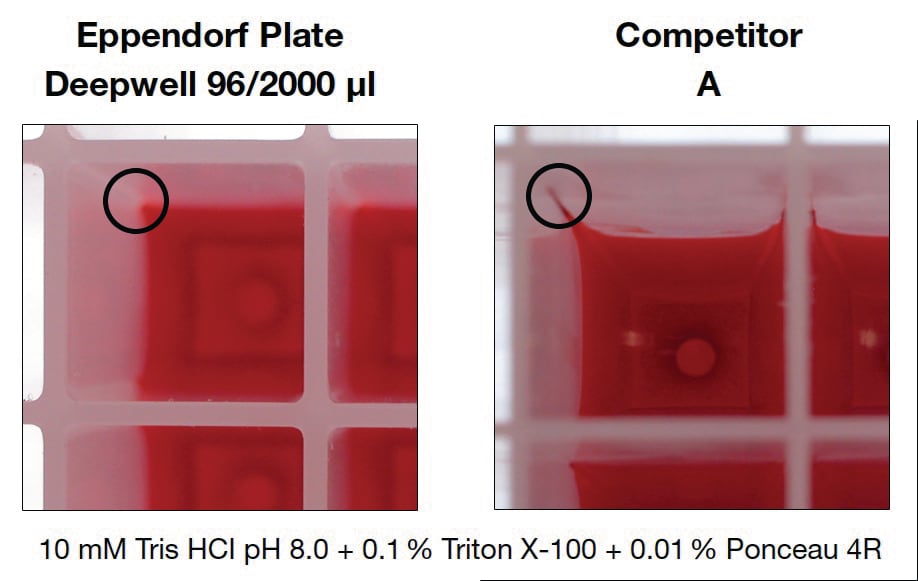
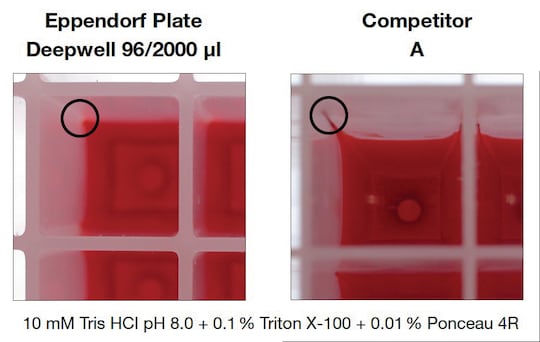
DeepwellプレートがRecoverMax® サンプルの最大回収と最適化されたウェル形状で優れたミキシング特性が得られます。ウェルコーナーの丸型でスムーズな設計がサンプルを損失から保護し、残余量を最小化し、四角いウェルプレートのスムーズな輪郭はウィッキングや交差汚染をほとんど根絶します。
詳細については、アプリケーションノート145を参照してください:Eppendorf Plate® Deepwell 96 と 384:RecoverMax®. アプリケーションノート184も参照してください:Eppendorf Deepwell Plate: 自動ピペッティングシステムEppendorf epMotion®で使用中の残余量判定。
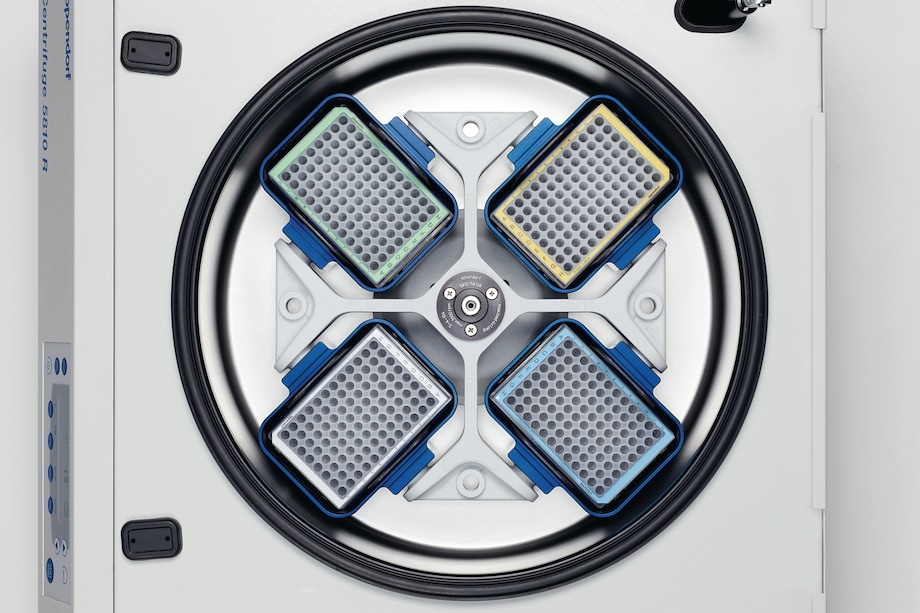
究極の堅牢性と精度、ロボット工学に最適
• 96フォーマット
• 2,000 µL、近日中に容量を追加可能
• トレーサビリティ確保のため、各プレートにロット番号と有効期限をレーザー刻印
• Eppendorf PCR cleanおよびprotein-free純度グレード
• 緑と白のプレートボーダー
• g–Safe®:最大6,000 x gという優れた遠心分離の安定性により、高速なプロトコルおよびサンプル品質の改善を実現。
• 縁が高くなっており、表面が滑らかなので信頼できるクロージング、ヒートシーリングも付いています
• 耐薬品性、機械的耐久性、温度安定性が高いポリプロピレン製です。
• オートクレーブ可能(121 °C、20 分)。
• スリップ剤、可塑剤、殺生物剤などのサンプルに影響を及ぼす恐れのある物質は用いておりません
詳細については、アプリケーションノート56を参照してください:純正Eppendorf Tubes®とプレート用に最高級の素材:ポリプロピレンの特性と薬品耐性。アプリケーションノート 146:Eppendorf Plate® Deepwell 96 と 384:g–Safe®.
もっと読む
読む量をもっと少なくする
アプリケーション
- 高処理量のDNAおよびRNA単離
- 高処理量のプラスミド精製
- サンプルの保管および調製
- cDNAまたはゲノムバンクの保管
- siRNAまたはオリゴヌクレオチドライブラリの保存
- タンパク質解析
- 温度または溶媒に対する高い安定性を求められる分析要領
- 希釈系列
- 組織や植物のライセート調製
- バクテリアと酵母の培養
特徴
- プロセスの差別化のため、2 色の異なるリムをご用意
- ロボットアプリケーションに適した形状の一貫性
- 各プレートにロット番号と有効期限をレーザー刻印
- 隆起したウェルリムと滑らかな表面により、信頼性の高い(ヒート)シールと容易で確実なスタッキングを実現
- RecoverMax®ウェルデザイン: 最大のサンプル回収と優れた混合特性のための最適なウェル形状です。
- 残余容量が最低、ウェル間での高い均質性
- 高品質のポリプロピレン製なので耐薬品性、機械的耐久性、温度安定性が高いです
- スリップ剤、可塑剤、または殺虫剤なしで製造–生物学的検定に悪影響を及ぼす可能性のある物質が素材に含まれていません
- オートクレーブ可能です(121 °C、20 分)
- サンプル識別に必要な時間をOptiTrack® matrix:最大30 %節約でき、ハイコントラストの英数字ラベルでピペッティングの誤りが少なくなります。
ダウンロード: Eppendorf Deepwell Plates BioBased
同時にご考慮下さい。