メニュー
JP | JPY
-
-
-
- Challenges and Chances: A Review of the 1st Stem Cell Community Day
- Summertime, and the Livin’ Is Easy…
- Follow-on-Biologics – More than Simple Generics
- Bacteria Versus Body Cells: A 1:1 Tie
- Behind the Crime Scene: How Biological Traces Can Help to Convict Offenders
- Every 3 Seconds Someone in the World Is Affected by Alzheimer's
- HIV – It’s Still Not Under Control…
- How Many Will Be Convicted This Time?
- Malaria – the Battle is Not Lost
- Physicians on Standby: The Annual Flu Season Can Be Serious
- At the Forefront in Fighting Cancer
- Molecular Motors: Think Small and yet Smaller Again…
- Liquid Biopsy: Novel Methods May Ease Cancer Detection and Therapy
- They Are Invisible, Sneaky and Disgusting – But Today It’s Their Special Day!
- How Many Cells Are in Your Body? Probably More Than You Think!
- What You Need to Know about Antibiotic Resistance – Findings, Facts and Good Intentions
- Why Do Old Men Have Big Ears?
- The Condemned Live Longer: A Potential Paradigm Shift in Genetics
- From Research to Commerce
- Chronobiology – How the Cold Seasons Influence Our Biorhythms
- Taskforce Microbots: Targeted Treatment from Inside the Body
- Eyes on Cancer Therapy
-
-

-
-
-
- Challenges and Chances: A Review of the 1st Stem Cell Community Day
- Summertime, and the Livin’ Is Easy…
- Follow-on-Biologics – More than Simple Generics
- Bacteria Versus Body Cells: A 1:1 Tie
- Behind the Crime Scene: How Biological Traces Can Help to Convict Offenders
- Every 3 Seconds Someone in the World Is Affected by Alzheimer's
- HIV – It’s Still Not Under Control…
- How Many Will Be Convicted This Time?
- Malaria – the Battle is Not Lost
- Physicians on Standby: The Annual Flu Season Can Be Serious
- At the Forefront in Fighting Cancer
- Molecular Motors: Think Small and yet Smaller Again…
- Liquid Biopsy: Novel Methods May Ease Cancer Detection and Therapy
- They Are Invisible, Sneaky and Disgusting – But Today It’s Their Special Day!
- How Many Cells Are in Your Body? Probably More Than You Think!
- What You Need to Know about Antibiotic Resistance – Findings, Facts and Good Intentions
- Why Do Old Men Have Big Ears?
- The Condemned Live Longer: A Potential Paradigm Shift in Genetics
- From Research to Commerce
- Chronobiology – How the Cold Seasons Influence Our Biorhythms
- Taskforce Microbots: Targeted Treatment from Inside the Body
- Eyes on Cancer Therapy
-
-
JP | JPY
Sorry, we couldn't find anything on our website containing your search term.
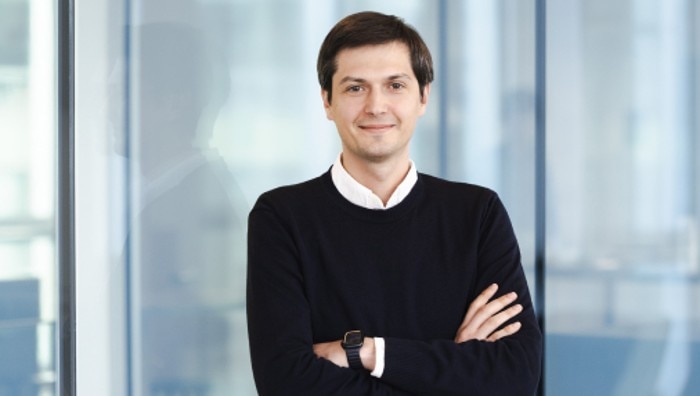
- 2024 Award Winner Dr. Clemens Plaschka
2024 Award Winner Dr. Clemens Plaschka
Appointment at time of winning the Award
Group Leader at IMP – Institute of Molecular Pathology, Vienna, Austria
Clemens Plaschka, born 1989, receives the € 20.000,-- award for his research on the molecular machines that generate and export messenger RNA.
The award is given in recognition of his ground-breaking discoveries revealing the mechanisms by which messenger RNA is produced and matured. mRNA production involves multiple complex cellular machines that process and guide the maturation and ultimate export of mRNA from the nucleus to the cytoplasm.
The Jury: „ Plaschka’s structural and mechanistic investigations have revealed fundamental insights into how cells express genes and his work has implications for human diseases involving mutations in core mRNA processing machines.”
Clemens Plaschka: „I am absolutely delighted to receive the 2024 Eppendorf Award for Young European Investigators. This award is a special recognition for our highly motivated research team, whose efforts have made this possible. I am also very thankful for the exceptional support by the IMP and Boehringer Ingelheim, the ERC, our colleagues at the Vienna BioCenter and beyond, as well as my family. The award recognizes our contributions to reveal the structural mechanisms by which a human mRNA is made. Yet many questions remain. In the coming years, we look forward to further understanding the molecular processes that regulate how mRNA is made and destroyed.”
The official prize ceremony took place on June 27, 2024 at the Advanced Training Centre of the
EMBL in Heidelberg. The laudation honoring Clemens Plaschka‘s achievements was held by Award
Jury Chair Prof. Laura Machesky, University of Cambrdige, United Kingdom.
Clemens Plaschka, born 1989, receives the € 20.000,-- award for his research on the molecular machines that generate and export messenger RNA.
The award is given in recognition of his ground-breaking discoveries revealing the mechanisms by which messenger RNA is produced and matured. mRNA production involves multiple complex cellular machines that process and guide the maturation and ultimate export of mRNA from the nucleus to the cytoplasm.
The Jury: „ Plaschka’s structural and mechanistic investigations have revealed fundamental insights into how cells express genes and his work has implications for human diseases involving mutations in core mRNA processing machines.”
Clemens Plaschka: „I am absolutely delighted to receive the 2024 Eppendorf Award for Young European Investigators. This award is a special recognition for our highly motivated research team, whose efforts have made this possible. I am also very thankful for the exceptional support by the IMP and Boehringer Ingelheim, the ERC, our colleagues at the Vienna BioCenter and beyond, as well as my family. The award recognizes our contributions to reveal the structural mechanisms by which a human mRNA is made. Yet many questions remain. In the coming years, we look forward to further understanding the molecular processes that regulate how mRNA is made and destroyed.”
The official prize ceremony took place on June 27, 2024 at the Advanced Training Centre of the
EMBL in Heidelberg. The laudation honoring Clemens Plaschka‘s achievements was held by Award
Jury Chair Prof. Laura Machesky, University of Cambrdige, United Kingdom.
もっと読む
もっと読む
Downloads

JPG 0.37 MB
Clemens Plaschka
PDF 0.44 MB
PDF 0.36 MB
Podcast
In this podcast, Clemens Plaschka, winner of the Eppendorf Award for Young European Investigators 2024, outlines his research on the steps that package mRNA and transport it out of the nucleus.