メニュー
JP | JPY
-
-
-
- Challenges and Chances: A Review of the 1st Stem Cell Community Day
- Summertime, and the Livin’ Is Easy…
- Follow-on-Biologics – More than Simple Generics
- Bacteria Versus Body Cells: A 1:1 Tie
- Behind the Crime Scene: How Biological Traces Can Help to Convict Offenders
- Every 3 Seconds Someone in the World Is Affected by Alzheimer's
- HIV – It’s Still Not Under Control…
- How Many Will Be Convicted This Time?
- Malaria – the Battle is Not Lost
- Physicians on Standby: The Annual Flu Season Can Be Serious
- At the Forefront in Fighting Cancer
- Molecular Motors: Think Small and yet Smaller Again…
- Liquid Biopsy: Novel Methods May Ease Cancer Detection and Therapy
- They Are Invisible, Sneaky and Disgusting – But Today It’s Their Special Day!
- How Many Cells Are in Your Body? Probably More Than You Think!
- What You Need to Know about Antibiotic Resistance – Findings, Facts and Good Intentions
- Why Do Old Men Have Big Ears?
- The Condemned Live Longer: A Potential Paradigm Shift in Genetics
- From Research to Commerce
- Chronobiology – How the Cold Seasons Influence Our Biorhythms
- Taskforce Microbots: Targeted Treatment from Inside the Body
- Eyes on Cancer Therapy
-
-

-
-
-
- Challenges and Chances: A Review of the 1st Stem Cell Community Day
- Summertime, and the Livin’ Is Easy…
- Follow-on-Biologics – More than Simple Generics
- Bacteria Versus Body Cells: A 1:1 Tie
- Behind the Crime Scene: How Biological Traces Can Help to Convict Offenders
- Every 3 Seconds Someone in the World Is Affected by Alzheimer's
- HIV – It’s Still Not Under Control…
- How Many Will Be Convicted This Time?
- Malaria – the Battle is Not Lost
- Physicians on Standby: The Annual Flu Season Can Be Serious
- At the Forefront in Fighting Cancer
- Molecular Motors: Think Small and yet Smaller Again…
- Liquid Biopsy: Novel Methods May Ease Cancer Detection and Therapy
- They Are Invisible, Sneaky and Disgusting – But Today It’s Their Special Day!
- How Many Cells Are in Your Body? Probably More Than You Think!
- What You Need to Know about Antibiotic Resistance – Findings, Facts and Good Intentions
- Why Do Old Men Have Big Ears?
- The Condemned Live Longer: A Potential Paradigm Shift in Genetics
- From Research to Commerce
- Chronobiology – How the Cold Seasons Influence Our Biorhythms
- Taskforce Microbots: Targeted Treatment from Inside the Body
- Eyes on Cancer Therapy
-
-
JP | JPY
Sorry, we couldn't find anything on our website containing your search term.
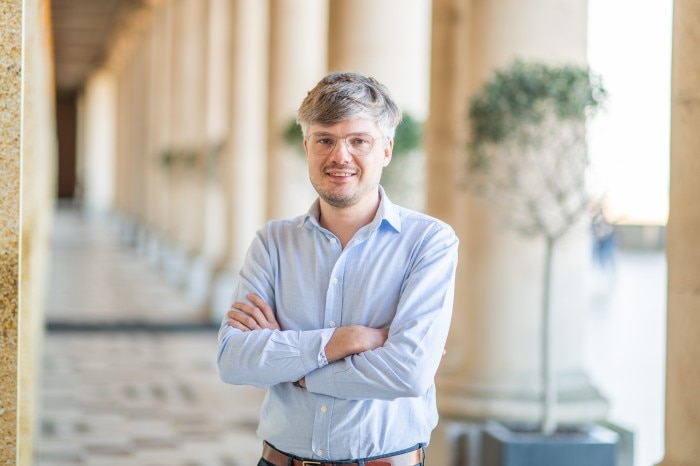
- 2026 Award Finalist Dr. Sebastiaan De Schepper
2026 Award Finalist Dr. Sebastiaan De Schepper
Sebastiaan De Schepper is Group Leader at the VIB-Center for Molecular Neurology and Research Professor at the University of Antwerp, Belgium. His research focuses on how peripheral immune systems shape vulnerability to neurodegenerative diseases through the gut–brain axis. His team uses advanced mouse models, human stem cell–derived systems and high-dimensional immune profiling, to unravel how tissue-resident and circulating immune cells regulate neuroinflammation and protein aggregation in disorders such as Parkinson’s disease. Before establishing his laboratory at VIB in 2025, he was a Sir Henry Wellcome Fellow at the UK Dementia Research Institute (UCL). He is the recipient of an ERC Starting Grant (2026) and an FWO Odysseus Fellowship (2025) supporting his research programme on neuroimmune mechanisms in neurodegeneration.
Synopsis of the research:
My research investigates how peripheral immune mechanisms contribute to the initiation and progression of Parkinson’s disease along the gut-brain axis. In my recent study (De Schepper et al., Nature, 2026), we demonstrate that intestinal immune responses can drive Parkinson’s disease–like neurodegeneration. Using patient-derived α-synuclein fibrils and in vivo models of gut-to-brain propagation, we show that intestinal macrophages (De Schepper et al., Cell 2018) take up pathological α-synuclein and activate infiltrating T cells in the intestinal wall. These activated T cells subsequently expand and migrate through the circulation to the brain, where they enter via the meninges and promote degeneration of dopaminergic neurons, the pathological hallmark of the disease. Blocking immune-cell trafficking significantly reduced α-synuclein spreading and neuronal loss, demonstrating a causal role for peripheral immune activation in disease propagation. Our findings challenge traditional brain-centric models of Parkinson’s disease by establishing immune mechanisms in the gut as drivers of pathology spreading toward the brain. They also highlight peripheral immune pathways as potential targets for early intervention in neurodegenerative disease.
Synopsis of the research:
My research investigates how peripheral immune mechanisms contribute to the initiation and progression of Parkinson’s disease along the gut-brain axis. In my recent study (De Schepper et al., Nature, 2026), we demonstrate that intestinal immune responses can drive Parkinson’s disease–like neurodegeneration. Using patient-derived α-synuclein fibrils and in vivo models of gut-to-brain propagation, we show that intestinal macrophages (De Schepper et al., Cell 2018) take up pathological α-synuclein and activate infiltrating T cells in the intestinal wall. These activated T cells subsequently expand and migrate through the circulation to the brain, where they enter via the meninges and promote degeneration of dopaminergic neurons, the pathological hallmark of the disease. Blocking immune-cell trafficking significantly reduced α-synuclein spreading and neuronal loss, demonstrating a causal role for peripheral immune activation in disease propagation. Our findings challenge traditional brain-centric models of Parkinson’s disease by establishing immune mechanisms in the gut as drivers of pathology spreading toward the brain. They also highlight peripheral immune pathways as potential targets for early intervention in neurodegenerative disease.
もっと読む

PDF 0.25 MB
PDF 0.08 MB