メニュー
JP | JPY
-
-
-
-
- Challenges and Chances: A Review of the 1st Stem Cell Community Day
- Summertime, and the Livin’ Is Easy…
- Follow-on-Biologics – More than Simple Generics
- Bacteria Versus Body Cells: A 1:1 Tie
- Behind the Crime Scene: How Biological Traces Can Help to Convict Offenders
- Every 3 Seconds Someone in the World Is Affected by Alzheimer's
- HIV – It’s Still Not Under Control…
- How Many Will Be Convicted This Time?
- Malaria – the Battle is Not Lost
- Physicians on Standby: The Annual Flu Season Can Be Serious
- At the Forefront in Fighting Cancer
- Molecular Motors: Think Small and yet Smaller Again…
- Liquid Biopsy: Novel Methods May Ease Cancer Detection and Therapy
- They Are Invisible, Sneaky and Disgusting – But Today It’s Their Special Day!
- How Many Cells Are in Your Body? Probably More Than You Think!
- What You Need to Know about Antibiotic Resistance – Findings, Facts and Good Intentions
- Why Do Old Men Have Big Ears?
- The Condemned Live Longer: A Potential Paradigm Shift in Genetics
- From Research to Commerce
- Chronobiology – How the Cold Seasons Influence Our Biorhythms
- Taskforce Microbots: Targeted Treatment from Inside the Body
- Eyes on Cancer Therapy
-

-
-
-
-
- Challenges and Chances: A Review of the 1st Stem Cell Community Day
- Summertime, and the Livin’ Is Easy…
- Follow-on-Biologics – More than Simple Generics
- Bacteria Versus Body Cells: A 1:1 Tie
- Behind the Crime Scene: How Biological Traces Can Help to Convict Offenders
- Every 3 Seconds Someone in the World Is Affected by Alzheimer's
- HIV – It’s Still Not Under Control…
- How Many Will Be Convicted This Time?
- Malaria – the Battle is Not Lost
- Physicians on Standby: The Annual Flu Season Can Be Serious
- At the Forefront in Fighting Cancer
- Molecular Motors: Think Small and yet Smaller Again…
- Liquid Biopsy: Novel Methods May Ease Cancer Detection and Therapy
- They Are Invisible, Sneaky and Disgusting – But Today It’s Their Special Day!
- How Many Cells Are in Your Body? Probably More Than You Think!
- What You Need to Know about Antibiotic Resistance – Findings, Facts and Good Intentions
- Why Do Old Men Have Big Ears?
- The Condemned Live Longer: A Potential Paradigm Shift in Genetics
- From Research to Commerce
- Chronobiology – How the Cold Seasons Influence Our Biorhythms
- Taskforce Microbots: Targeted Treatment from Inside the Body
- Eyes on Cancer Therapy
-
JP | JPY
Sorry, we couldn't find anything on our website containing your search term.
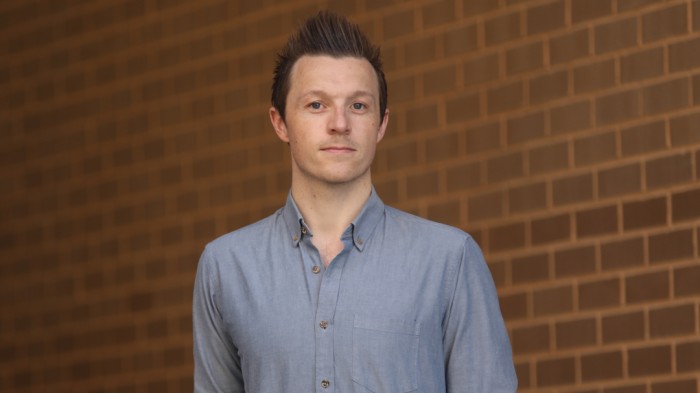
- 2021 Prize Finalist Dr. Justin Rustenhoven
2021 Prize Finalist Dr. Justin Rustenhoven
Washington University in St. Louis USA
Justin Rustenhoven received his undergraduate degrees and Ph.D. in Pharmacology at the University of Auckland in New Zealand. His doctoral thesis in the laboratory of Professor Mike Dragunow focused on the contribution of brain pericytes in neuroinflammatory responses. Dr. Rustenhoven is currently a postdoctoral research fellow in the laboratory of Professor Jonathan Kipnis at Washington University in St. Louis, where he explores the mechanisms underlying immune surveillance of the central nervous system from the brain borders. Here, he investigates how the brain and spinal cord and its surrounding tissues engage in a bidirectional neuroimmune dialogue to recognize perturbations and respond accordingly to promote brain homeostasis.
A Privileged Brain
Our immune system and central nervous system (CNS) continuously surveil our environment and adjust on demand to maintain homeostasis. Yet despite their commonalities, the classical dogma suggested a disconnect between these two systems and an inability to mount a functional immune response to nervous tissue insults – referred to as CNS “immune privilege”. But why would our brain, arguably our most complex and delicate organ, lack such a fundamental arrangement to detect dysfunction? Justin Rustenhoven, under the guidance of Professor Jonathan Kipnis, aimed to address this question and in doing so uncovered a privileged bidirectional dialogue between the immune system and the CNS, situated at the brains border. His experiments revealed how immune cells situated in tissues surrounding the brain continuously surveil the CNS environment through soluble factors in the cerebrospinal fluid to recognize perturbations. Further, he demonstrated that the CNS contains its own bespoke immune reservoir in the skull and vertebrae bone marrow, capable of dispensing immune cells directly to the brain and spinal cord following diverse insults. These findings revealed the uniqueness of our brains immunological orchestration, allowing for the recognition of CNS dysfunction from a distal site, and a local reservoir of tailor-made cells with preferential CNS access, ready to respond to perceived insults.
A Privileged Brain
Our immune system and central nervous system (CNS) continuously surveil our environment and adjust on demand to maintain homeostasis. Yet despite their commonalities, the classical dogma suggested a disconnect between these two systems and an inability to mount a functional immune response to nervous tissue insults – referred to as CNS “immune privilege”. But why would our brain, arguably our most complex and delicate organ, lack such a fundamental arrangement to detect dysfunction? Justin Rustenhoven, under the guidance of Professor Jonathan Kipnis, aimed to address this question and in doing so uncovered a privileged bidirectional dialogue between the immune system and the CNS, situated at the brains border. His experiments revealed how immune cells situated in tissues surrounding the brain continuously surveil the CNS environment through soluble factors in the cerebrospinal fluid to recognize perturbations. Further, he demonstrated that the CNS contains its own bespoke immune reservoir in the skull and vertebrae bone marrow, capable of dispensing immune cells directly to the brain and spinal cord following diverse insults. These findings revealed the uniqueness of our brains immunological orchestration, allowing for the recognition of CNS dysfunction from a distal site, and a local reservoir of tailor-made cells with preferential CNS access, ready to respond to perceived insults.
もっと読む
Downloads

PDF 2.17 MB