メニュー
JP | JPY
-
-
-
-
- Challenges and Chances: A Review of the 1st Stem Cell Community Day
- Summertime, and the Livin’ Is Easy…
- Follow-on-Biologics – More than Simple Generics
- Bacteria Versus Body Cells: A 1:1 Tie
- Behind the Crime Scene: How Biological Traces Can Help to Convict Offenders
- Every 3 Seconds Someone in the World Is Affected by Alzheimer's
- HIV – It’s Still Not Under Control…
- How Many Will Be Convicted This Time?
- Malaria – the Battle is Not Lost
- Physicians on Standby: The Annual Flu Season Can Be Serious
- At the Forefront in Fighting Cancer
- Molecular Motors: Think Small and yet Smaller Again…
- Liquid Biopsy: Novel Methods May Ease Cancer Detection and Therapy
- They Are Invisible, Sneaky and Disgusting – But Today It’s Their Special Day!
- How Many Cells Are in Your Body? Probably More Than You Think!
- What You Need to Know about Antibiotic Resistance – Findings, Facts and Good Intentions
- Why Do Old Men Have Big Ears?
- The Condemned Live Longer: A Potential Paradigm Shift in Genetics
- From Research to Commerce
- Chronobiology – How the Cold Seasons Influence Our Biorhythms
- Taskforce Microbots: Targeted Treatment from Inside the Body
- Eyes on Cancer Therapy
-

-
-
-
-
- Challenges and Chances: A Review of the 1st Stem Cell Community Day
- Summertime, and the Livin’ Is Easy…
- Follow-on-Biologics – More than Simple Generics
- Bacteria Versus Body Cells: A 1:1 Tie
- Behind the Crime Scene: How Biological Traces Can Help to Convict Offenders
- Every 3 Seconds Someone in the World Is Affected by Alzheimer's
- HIV – It’s Still Not Under Control…
- How Many Will Be Convicted This Time?
- Malaria – the Battle is Not Lost
- Physicians on Standby: The Annual Flu Season Can Be Serious
- At the Forefront in Fighting Cancer
- Molecular Motors: Think Small and yet Smaller Again…
- Liquid Biopsy: Novel Methods May Ease Cancer Detection and Therapy
- They Are Invisible, Sneaky and Disgusting – But Today It’s Their Special Day!
- How Many Cells Are in Your Body? Probably More Than You Think!
- What You Need to Know about Antibiotic Resistance – Findings, Facts and Good Intentions
- Why Do Old Men Have Big Ears?
- The Condemned Live Longer: A Potential Paradigm Shift in Genetics
- From Research to Commerce
- Chronobiology – How the Cold Seasons Influence Our Biorhythms
- Taskforce Microbots: Targeted Treatment from Inside the Body
- Eyes on Cancer Therapy
-
JP | JPY
Sorry, we couldn't find anything on our website containing your search term.
- 2024 Prize Finalist Dr. Rosemary Jane Cater
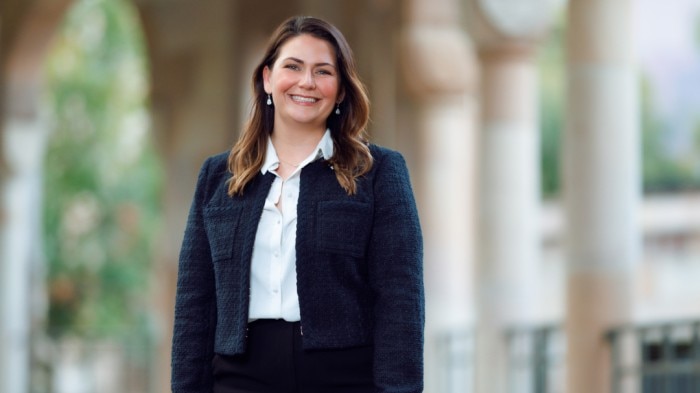
2024 Prize Finalist Dr. Rosemary Cater
University of Queensland, Institute for Molecular Bioscience, Brisbane, Australia
Rosemary Cater is a Senior Research Fellow and Group Leader at the University of Queensland’s Institute for Molecular Bioscience in Australia. She fulfilled her Ph.D. under the supervision of Prof. Renae Ryan at the University of Sydney, where she used electrophysiology and x-ray protein crystallography to understand how glutamate transporters serve a secondary function as chloride channels. She then went on to complete her post-doctoral training in the lab of Prof. Filippo Mancia at Columbia University, where she used single-particle cryo-electron microscopy and antigen-binding technology to determine structures of small membrane proteins. The overarching goal of the Cater Lab is to understand the molecular mechanisms of transport at the blood-brain barrier.
Essay: “Brain Nutrient Uptake: Food for Thought”
The human brain requires essential dietary nutrients to support its daily function. Transporter proteins in the blood-brain barrier facilitate nutrient delivery by selectively binding to these molecules and mediating their passage into the brain. Cater’s research uncovered how two critical nutrients – choline and omega-3 fatty acids – are taken up into the brain by the transporters FLVCR2 and MFSD2A, respectively. Choline is vital for cell membrane synthesis, epigenetic modification, and neurotransmission, yet its pathway into the brain has been a mystery for over 50 years. Cater and her team recently demonstrated that FLVCR2 is a key blood-brain barrier transporter for choline and provided atomic details of how FLVCR2 binds and transports this essential nutrient (Cater et al., Nature, 2024). She has also used an integrative structural biology approach to show how MFSD2A binds to omega-3s and transports these essential fatty acids into the brain (Cater et al., Nature, 2021). Her research has the potential to revolutionize neurotherapeutic delivery by guiding the design of therapeutics that mimic these nutrients to enable uptake across the blood-brain barrier which is a major bottleneck in neurotherapeutic development.
Essay: “Brain Nutrient Uptake: Food for Thought”
The human brain requires essential dietary nutrients to support its daily function. Transporter proteins in the blood-brain barrier facilitate nutrient delivery by selectively binding to these molecules and mediating their passage into the brain. Cater’s research uncovered how two critical nutrients – choline and omega-3 fatty acids – are taken up into the brain by the transporters FLVCR2 and MFSD2A, respectively. Choline is vital for cell membrane synthesis, epigenetic modification, and neurotransmission, yet its pathway into the brain has been a mystery for over 50 years. Cater and her team recently demonstrated that FLVCR2 is a key blood-brain barrier transporter for choline and provided atomic details of how FLVCR2 binds and transports this essential nutrient (Cater et al., Nature, 2024). She has also used an integrative structural biology approach to show how MFSD2A binds to omega-3s and transports these essential fatty acids into the brain (Cater et al., Nature, 2021). Her research has the potential to revolutionize neurotherapeutic delivery by guiding the design of therapeutics that mimic these nutrients to enable uptake across the blood-brain barrier which is a major bottleneck in neurotherapeutic development.
もっと読む
Downloads

PDF 0.86 MB