メニュー
JP | JPY
-
-
-
- Challenges and Chances: A Review of the 1st Stem Cell Community Day
- Summertime, and the Livin’ Is Easy…
- Follow-on-Biologics – More than Simple Generics
- Bacteria Versus Body Cells: A 1:1 Tie
- Behind the Crime Scene: How Biological Traces Can Help to Convict Offenders
- Every 3 Seconds Someone in the World Is Affected by Alzheimer's
- HIV – It’s Still Not Under Control…
- How Many Will Be Convicted This Time?
- Malaria – the Battle is Not Lost
- Physicians on Standby: The Annual Flu Season Can Be Serious
- At the Forefront in Fighting Cancer
- Molecular Motors: Think Small and yet Smaller Again…
- Liquid Biopsy: Novel Methods May Ease Cancer Detection and Therapy
- They Are Invisible, Sneaky and Disgusting – But Today It’s Their Special Day!
- How Many Cells Are in Your Body? Probably More Than You Think!
- What You Need to Know about Antibiotic Resistance – Findings, Facts and Good Intentions
- Why Do Old Men Have Big Ears?
- The Condemned Live Longer: A Potential Paradigm Shift in Genetics
- From Research to Commerce
- Chronobiology – How the Cold Seasons Influence Our Biorhythms
- Taskforce Microbots: Targeted Treatment from Inside the Body
- Eyes on Cancer Therapy
-
-

-
-
-
- Challenges and Chances: A Review of the 1st Stem Cell Community Day
- Summertime, and the Livin’ Is Easy…
- Follow-on-Biologics – More than Simple Generics
- Bacteria Versus Body Cells: A 1:1 Tie
- Behind the Crime Scene: How Biological Traces Can Help to Convict Offenders
- Every 3 Seconds Someone in the World Is Affected by Alzheimer's
- HIV – It’s Still Not Under Control…
- How Many Will Be Convicted This Time?
- Malaria – the Battle is Not Lost
- Physicians on Standby: The Annual Flu Season Can Be Serious
- At the Forefront in Fighting Cancer
- Molecular Motors: Think Small and yet Smaller Again…
- Liquid Biopsy: Novel Methods May Ease Cancer Detection and Therapy
- They Are Invisible, Sneaky and Disgusting – But Today It’s Their Special Day!
- How Many Cells Are in Your Body? Probably More Than You Think!
- What You Need to Know about Antibiotic Resistance – Findings, Facts and Good Intentions
- Why Do Old Men Have Big Ears?
- The Condemned Live Longer: A Potential Paradigm Shift in Genetics
- From Research to Commerce
- Chronobiology – How the Cold Seasons Influence Our Biorhythms
- Taskforce Microbots: Targeted Treatment from Inside the Body
- Eyes on Cancer Therapy
-
-
JP | JPY
Sorry, we couldn't find anything on our website containing your search term.
- 2026 Finalist Zuri Sullivan Ph.D.
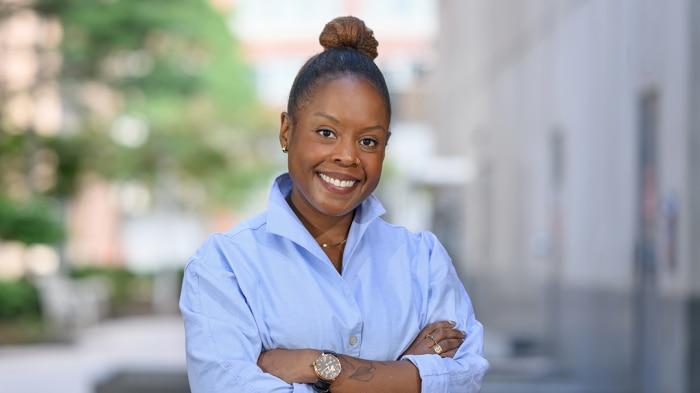
2026 Prize Finalist Zuri Sullivan, Ph.D.
Member of the Whitehead Institute for Biomedical Research, Whitehead Career Development Professor of Biology at MIT, and HHMI Hanna H. Gray Faculty Fellow
Her research spans microbial pathogenesis, immunology, and neuroscience to understand host defense across biological scales. She began studying Mycobacterium tuberculosis at Harvard, then moved to Durban, South Africa as a Fulbright Scholar to study human immunity to HIV and tuberculosis. At Yale, in Ruslan Medzhitov’s laboratory, she investigated how immunity regulates intestinal physiology. As an HHMI Hanna H. Gray Fellow in Catherine Dulac’s laboratory at Harvard, she studied how the brain responds to immune threats. Her laboratory now investigates sickness as an integrated, organism-wide host defense program.Essay: “Immunity, at scale”
Host defense operates at many biological scales, from antimicrobial programs within individual cells to coordinated responses across tissues. Zuri Sullivan’s research asks how immunity extends to the scale of the whole organism through sickness – the reorganization of temperature, appetite, sleep, activity, and social behavior that accompanies infection. By comparing bacterial, viral, and parasitic infection, allergy, and colitis in mice, she found that different immune challenges produce distinct physiological and behavioral states. Brain-wide activity mapping showed that these sickness states are also represented differently in the brain: activity in a small set of regions could predict the animal’s peripheral immune state. Spatial transcriptomics further revealed distinct, cell-type-specific molecular responses in the hypothalamus. Together, this work shows that the brain monitors immune state with unexpected specificity and reframes sickness as an integrated component of host defense – immunity at the organismal scale. Her laboratory now builds on this framework to ask how the brain generates sickness during live infection and how sickness itself shapes host-pathogen interactions.
もっと読む
Downloads

PDF 1.09 MB