-
-
-
- Challenges and Chances: A Review of the 1st Stem Cell Community Day
- Summertime, and the Livin’ Is Easy…
- Follow-on-Biologics – More than Simple Generics
- Bacteria Versus Body Cells: A 1:1 Tie
- Behind the Crime Scene: How Biological Traces Can Help to Convict Offenders
- Every 3 Seconds Someone in the World Is Affected by Alzheimer's
- HIV – It’s Still Not Under Control…
- How Many Will Be Convicted This Time?
- Malaria – the Battle is Not Lost
- Physicians on Standby: The Annual Flu Season Can Be Serious
- At the Forefront in Fighting Cancer
- Molecular Motors: Think Small and yet Smaller Again…
- Liquid Biopsy: Novel Methods May Ease Cancer Detection and Therapy
- They Are Invisible, Sneaky and Disgusting – But Today It’s Their Special Day!
- How Many Cells Are in Your Body? Probably More Than You Think!
- What You Need to Know about Antibiotic Resistance – Findings, Facts and Good Intentions
- Why Do Old Men Have Big Ears?
- The Condemned Live Longer: A Potential Paradigm Shift in Genetics
- From Research to Commerce
- Chronobiology – How the Cold Seasons Influence Our Biorhythms
- Taskforce Microbots: Targeted Treatment from Inside the Body
- Eyes on Cancer Therapy
-
-

-
-
-
- Challenges and Chances: A Review of the 1st Stem Cell Community Day
- Summertime, and the Livin’ Is Easy…
- Follow-on-Biologics – More than Simple Generics
- Bacteria Versus Body Cells: A 1:1 Tie
- Behind the Crime Scene: How Biological Traces Can Help to Convict Offenders
- Every 3 Seconds Someone in the World Is Affected by Alzheimer's
- HIV – It’s Still Not Under Control…
- How Many Will Be Convicted This Time?
- Malaria – the Battle is Not Lost
- Physicians on Standby: The Annual Flu Season Can Be Serious
- At the Forefront in Fighting Cancer
- Molecular Motors: Think Small and yet Smaller Again…
- Liquid Biopsy: Novel Methods May Ease Cancer Detection and Therapy
- They Are Invisible, Sneaky and Disgusting – But Today It’s Their Special Day!
- How Many Cells Are in Your Body? Probably More Than You Think!
- What You Need to Know about Antibiotic Resistance – Findings, Facts and Good Intentions
- Why Do Old Men Have Big Ears?
- The Condemned Live Longer: A Potential Paradigm Shift in Genetics
- From Research to Commerce
- Chronobiology – How the Cold Seasons Influence Our Biorhythms
- Taskforce Microbots: Targeted Treatment from Inside the Body
- Eyes on Cancer Therapy
-
-
- Service & disposal
Service
Product lifetime is a complex topic, as proving the lifetime of a product is challenging: For instance, a 10-year-old centrifuge might have been stored in its box for 9.5 years and only be used for six months, appearing brand new in its 10th year.Conversely, a workhorse centrifuge that performed its job for 10 years every day might start showing the first signs of wear at that point. However, high-quality centrifuges that receive proper maintenance and service can operate efficiently for 10 years or longer.In terms of spare parts availability, we strive to provide support for up to 7 years after purchase or after production has ceased, ensuring continued reliability and performance.
Disposal
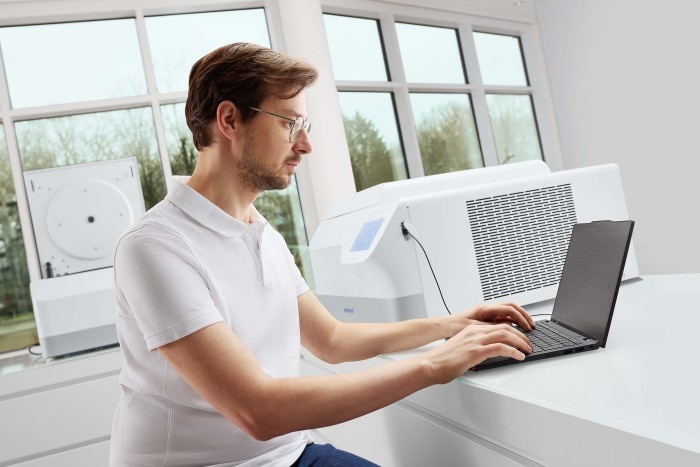
Even the highest-quality instruments eventually reach the end of their lifetime. Large instruments like centrifuges consist of various materials that all need to be recycled sustainably. We recommend users to consult their Eppendorf partners, their local waste disposal service, or their facility management team to explore recycling options available to their organizations. Eppendorf centrifuges are built to last for many years, but if they need to be replaced, all local disposal requirements of these instruments do, of course, need to be fulfilled. We strongly advice contacting a certified local recycling partner experienced in instruments with active cooling. Keeping it local reduces the impact of transportation, and turning to a certified partner ensures the cooling liquids are removed and recycled safely and sustainably, in compliance with local regulations.