メニュー
JP | JPY
-
-
-
- Challenges and Chances: A Review of the 1st Stem Cell Community Day
- Summertime, and the Livin’ Is Easy…
- Follow-on-Biologics – More than Simple Generics
- Bacteria Versus Body Cells: A 1:1 Tie
- Behind the Crime Scene: How Biological Traces Can Help to Convict Offenders
- Every 3 Seconds Someone in the World Is Affected by Alzheimer's
- HIV – It’s Still Not Under Control…
- How Many Will Be Convicted This Time?
- Malaria – the Battle is Not Lost
- Physicians on Standby: The Annual Flu Season Can Be Serious
- At the Forefront in Fighting Cancer
- Molecular Motors: Think Small and yet Smaller Again…
- Liquid Biopsy: Novel Methods May Ease Cancer Detection and Therapy
- They Are Invisible, Sneaky and Disgusting – But Today It’s Their Special Day!
- How Many Cells Are in Your Body? Probably More Than You Think!
- What You Need to Know about Antibiotic Resistance – Findings, Facts and Good Intentions
- Why Do Old Men Have Big Ears?
- The Condemned Live Longer: A Potential Paradigm Shift in Genetics
- From Research to Commerce
- Chronobiology – How the Cold Seasons Influence Our Biorhythms
- Taskforce Microbots: Targeted Treatment from Inside the Body
- Eyes on Cancer Therapy
-
-

-
-
-
- Challenges and Chances: A Review of the 1st Stem Cell Community Day
- Summertime, and the Livin’ Is Easy…
- Follow-on-Biologics – More than Simple Generics
- Bacteria Versus Body Cells: A 1:1 Tie
- Behind the Crime Scene: How Biological Traces Can Help to Convict Offenders
- Every 3 Seconds Someone in the World Is Affected by Alzheimer's
- HIV – It’s Still Not Under Control…
- How Many Will Be Convicted This Time?
- Malaria – the Battle is Not Lost
- Physicians on Standby: The Annual Flu Season Can Be Serious
- At the Forefront in Fighting Cancer
- Molecular Motors: Think Small and yet Smaller Again…
- Liquid Biopsy: Novel Methods May Ease Cancer Detection and Therapy
- They Are Invisible, Sneaky and Disgusting – But Today It’s Their Special Day!
- How Many Cells Are in Your Body? Probably More Than You Think!
- What You Need to Know about Antibiotic Resistance – Findings, Facts and Good Intentions
- Why Do Old Men Have Big Ears?
- The Condemned Live Longer: A Potential Paradigm Shift in Genetics
- From Research to Commerce
- Chronobiology – How the Cold Seasons Influence Our Biorhythms
- Taskforce Microbots: Targeted Treatment from Inside the Body
- Eyes on Cancer Therapy
-
-
JP | JPY
Sorry, we couldn't find anything on our website containing your search term.

Everyday Culture Practice
Lab Academy
- 細胞生物学
- Cell Therapy
- 再現性
- 細胞培養用消耗品
- CO₂インキュベーター
- エッセー
The use of cell culture systems for biological testing presupposes that changes in the behavior of a cell line are a direct response to an experimental stimulus. But how can you evaluate a reliable correlation between the changes in your cell culture and the experiment you performed? How can you be sure that changes are not resulting from an imbalance within the culture system?
In both cases the cells’ response might result in different cell attachment, plating efficiency, recovery or survival from sub-cultivation, death rate and / or rate of progression through the cell cycle.
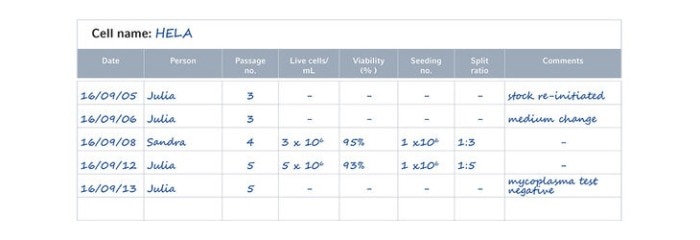
Use our template 'Cell profile' in order to record clearly and consistently the important details of cultivation.
Use our template 'Cell profile' in order to record clearly and consistently the important details of cultivation.
もっと読む
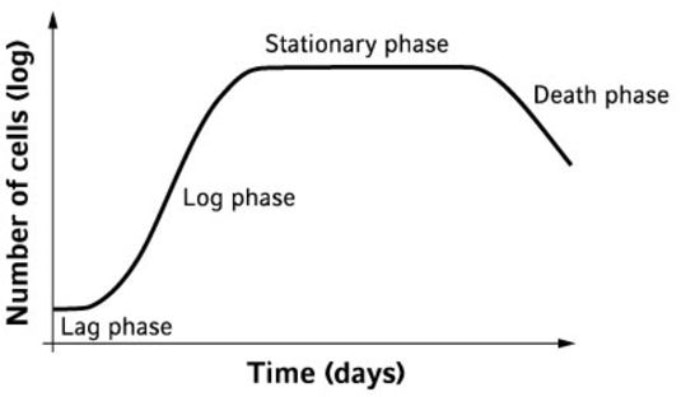
For these reasons, evaluations of this nature require profound knowledge of the cell line's baseline characteristics. A growth curve provides information about behavior during cultivation and thus facilitates the assessment whether any biological response can be attributed to the effect of a tested factor, or whether it may reflect an imbalance within the cell culture system. Once established, a growth curve visualizes growth characteristics including the population doubling time and maximum growth, depicted in four phases:
もっと読む
Cell growth curve
Lag phase: Cells recover from sub-cultivation, attach to the surface and start to spread.Log phase: Cells grow exponentially and double at a characteristic rate defining the cell line’s doubling time.
Plateau phase: The culture is confluent and cell growth
slows or even stops.
Death phase: Cells start dying and detach from the surface.
Methods to ensure cell viability
Cultivation of cells based on the information of their growth curve enables comparable handling independent of the individual person working with the cells, since the critical parameters are pre-determined: optimal seeding density as well as the essential intervals of sub-cultivation. Careful documentation of each sub-cultivation is crucial: the date of sub-cultivation, the person performing it as well as the current passage number of the cell line must be recorded. A test of viability ensures that a viable and proliferative cell line is on hand. This test can be performed by classic dye exclusion tests, colorimetric assays or the use of Cell Viability Analyzers. It is recommended to record the number of live cells per mL as well as the percentage of viability. A healthy and proliferative cell culture is characterized by a viability rate between 80-95 %. Cell cultures showing viability below 80 % should not be used for further experiments. Instead, a new culture should be initiated from frozen stock. Based on viability counts, the seeding number of cells required for passaging can be determined and expressed as the corresponding split ratio. Any special occurrences, observations or incidents during cultivation should also be reported in order to keep every person working with this cell line informed.もっと読む
Related documents

Template
PDF 0.44 MB