-
-
-
- Challenges and Chances: A Review of the 1st Stem Cell Community Day
- Summertime, and the Livin’ Is Easy…
- Follow-on-Biologics – More than Simple Generics
- Bacteria Versus Body Cells: A 1:1 Tie
- Behind the Crime Scene: How Biological Traces Can Help to Convict Offenders
- Every 3 Seconds Someone in the World Is Affected by Alzheimer's
- HIV – It’s Still Not Under Control…
- How Many Will Be Convicted This Time?
- Malaria – the Battle is Not Lost
- Physicians on Standby: The Annual Flu Season Can Be Serious
- At the Forefront in Fighting Cancer
- Molecular Motors: Think Small and yet Smaller Again…
- Liquid Biopsy: Novel Methods May Ease Cancer Detection and Therapy
- They Are Invisible, Sneaky and Disgusting – But Today It’s Their Special Day!
- How Many Cells Are in Your Body? Probably More Than You Think!
- What You Need to Know about Antibiotic Resistance – Findings, Facts and Good Intentions
- Why Do Old Men Have Big Ears?
- The Condemned Live Longer: A Potential Paradigm Shift in Genetics
- From Research to Commerce
- Chronobiology – How the Cold Seasons Influence Our Biorhythms
- Taskforce Microbots: Targeted Treatment from Inside the Body
- Eyes on Cancer Therapy
-
-

-
-
-
- Challenges and Chances: A Review of the 1st Stem Cell Community Day
- Summertime, and the Livin’ Is Easy…
- Follow-on-Biologics – More than Simple Generics
- Bacteria Versus Body Cells: A 1:1 Tie
- Behind the Crime Scene: How Biological Traces Can Help to Convict Offenders
- Every 3 Seconds Someone in the World Is Affected by Alzheimer's
- HIV – It’s Still Not Under Control…
- How Many Will Be Convicted This Time?
- Malaria – the Battle is Not Lost
- Physicians on Standby: The Annual Flu Season Can Be Serious
- At the Forefront in Fighting Cancer
- Molecular Motors: Think Small and yet Smaller Again…
- Liquid Biopsy: Novel Methods May Ease Cancer Detection and Therapy
- They Are Invisible, Sneaky and Disgusting – But Today It’s Their Special Day!
- How Many Cells Are in Your Body? Probably More Than You Think!
- What You Need to Know about Antibiotic Resistance – Findings, Facts and Good Intentions
- Why Do Old Men Have Big Ears?
- The Condemned Live Longer: A Potential Paradigm Shift in Genetics
- From Research to Commerce
- Chronobiology – How the Cold Seasons Influence Our Biorhythms
- Taskforce Microbots: Targeted Treatment from Inside the Body
- Eyes on Cancer Therapy
-
-
- Articles Pipette tip geometry
If you have any questions or would like to contact us, please visit the Support Center.
Pipetting knowledge hub
もっと読む
Pipette tip geometry
もっと読む
Optimized pipette tip geometry: How Eppendorf designs enhance accuracy, precision, and ergonomics
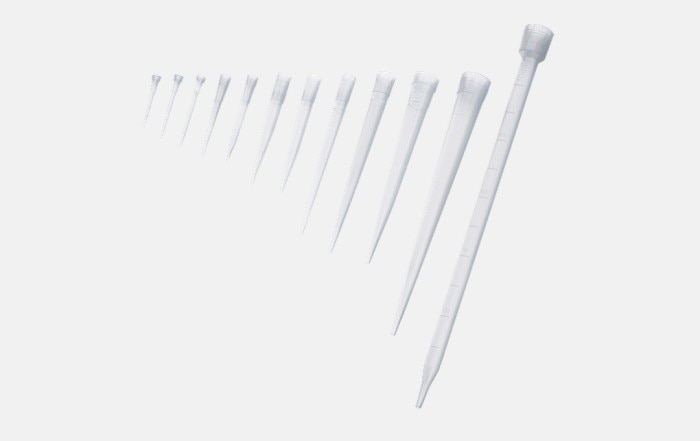
Pipette tips are deceptively simple tools whose shape has a strong influence on pipetting accuracy, sample integrity, and user comfort. Although many tips appear similar at first glance, important differences exist in cone angle, length, bore diameter, and the geometry of the tip opening. These features determine how well a tip fits the pipette, how liquid flows through it, and how effectively a droplet is dispensed.
Standard conical tips, used for most aqueous solutions, have a straightforward narrowing cone that transitions to a small opening. This design is adequate for general tasks, but it can become limiting in specific applications. When working with deep or narrow vessels, extended or narrow tips are often preferred. These have a longer, slimmer body that allows access into microcentrifuge tubes, deepwell plates, or narrow vials. However, if the bore becomes too narrow, flow resistance can increase, making pipetting slightly harder and sometimes less gentle on sensitive samples.
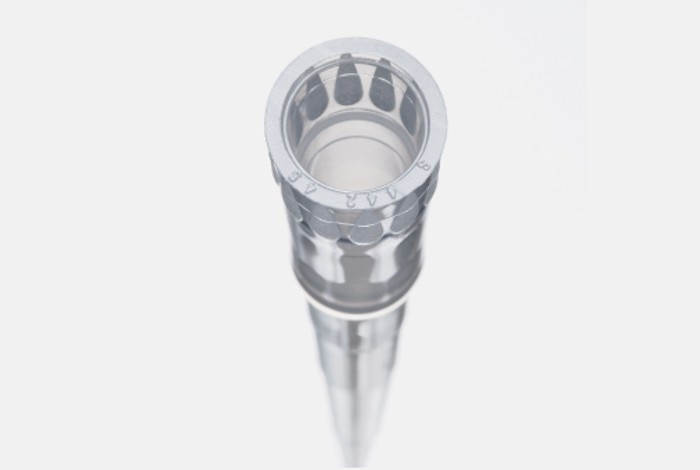
Within this landscape, Eppendorf pipette tips are designed as part of a matched system with Eppendorf pipettes. The shape of the tip cone is carefully coordinated with the pipette’s nosecone geometry. This optimized fit provides a reliable seal with lower mounting force. Because the plastic is not over-deformed when the tip is attached, the seal remains tight without excessive friction, and tips are easier to eject. This has two practical consequences: reduced strain on the user’s hand and more consistent pipetting performance due to a stable mechanical interface.
Inside the Eppendorf tip, the internal channel is shaped to support predictable fluid dynamics. The transition from the wider upper section to the narrow lower part is smooth, with minimal steps or dead volume. This promotes laminar flow and a stable air cushion, which is particularly important in air-displacement pipettes. Stable behavior of the air column leads to more accurate aspiration and dispensing, especially at the lower end of the pipette’s range and when handling viscous liquids.
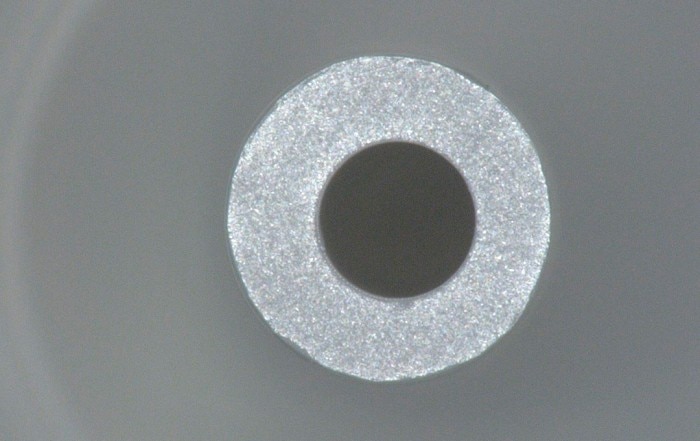
The geometry at the very end of the tip is equally important. The design and finish of the orifice determine how droplets form and detach. A well-formed tip end allows liquid to be dispensed cleanly, with minimal formation of hanging drops or liquid “strings.” This reduces the risk of under-delivery and improves the user’s control when touching off against the wall of a tube or well. In assays such as PCR or qPCR, where microliter or sub-microliter differences can be significant, this droplet behavior directly contributes to data quality.
Eppendorf epT.I.P.S.® LoRetention® combine this geometric optimization with a hydrophobic inner surface. The combination of surface properties and internal shape reduces the contact area and eliminates corners where liquid could remain trapped. As a result, more of the aspirated volume is actually delivered to the target vessel, which is particularly valuable when working with expensive enzymes, nucleic acids, or protein preparations.
In summary, the shape of pipette tips influences fit, flow, droplet formation, and sample recovery. Eppendorf pipette tips are beneficial because their geometry is specifically engineered to match their pipettes, giving a reliable seal with low mounting force, a smooth and predictable internal flow path, and a well-formed tip opening for clean dispensing. When combined with low-retention surfaces, this design improves accuracy, precision, user ergonomics, and the efficient use of valuable reagents in everyday laboratory work.
Read our Application Note: The tip of the iceberg
Did you know that pipette tip quality crucially influences lab accuracy? This application note highlights how tip design, material, and sterilization methods affect pipetting precision and consistency.